Nero

Variety
Nero
Approved Data
created by Sylvia K. at 02.02.2021
Season Overview
Planting
Harvest
Harvest
J
F
M
A
M
J
J
A
S
O
N
D
1ST YEAR
FOLLOWING YEARS
Description
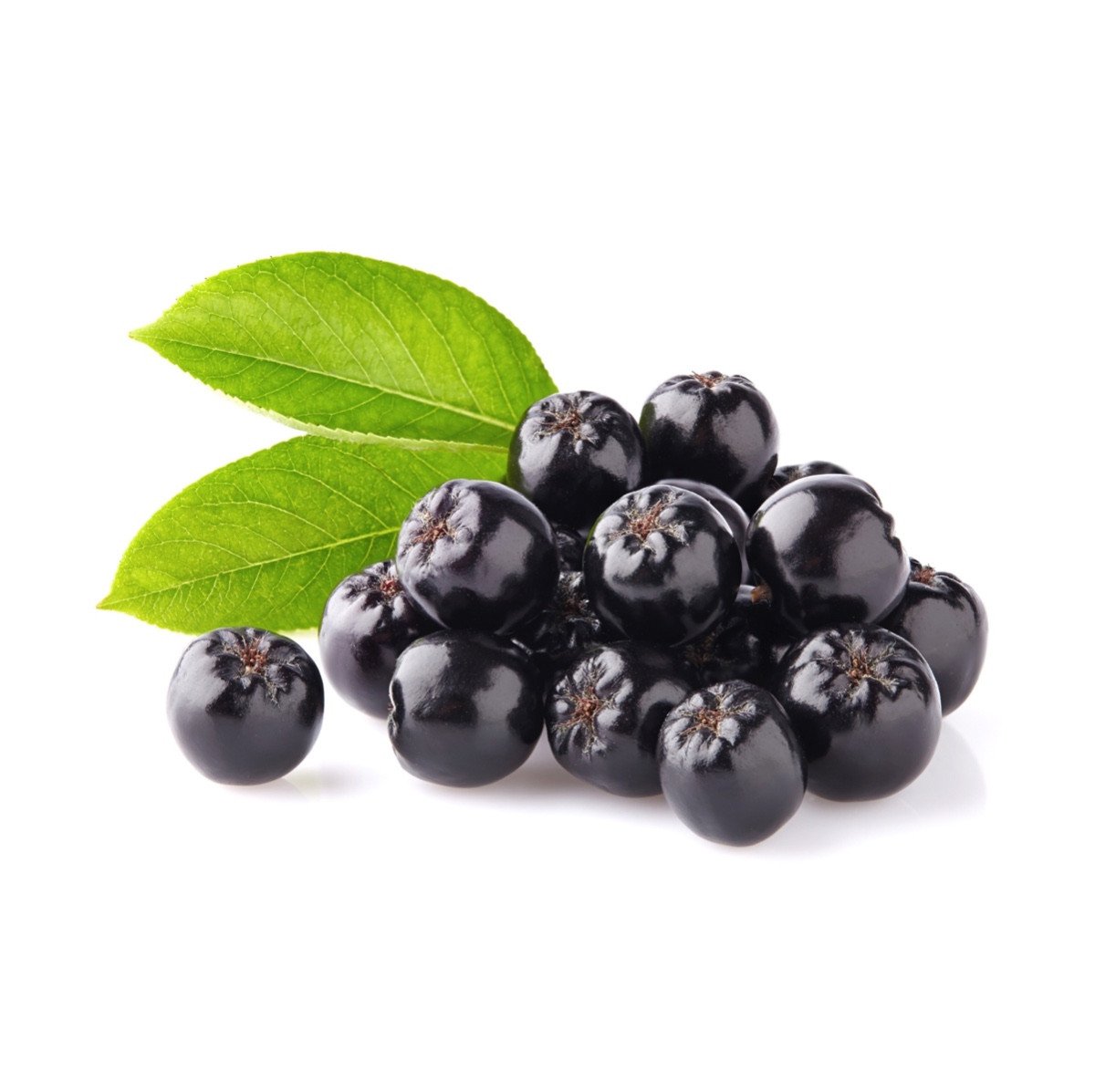
The black chokeberry (Aronia melanocarpa), also called bald chokeberry or black rowan, is a shrub from the rose family (Rosaceae). It is native to eastern North America, where it has been prized by Native Americans for hundreds of years as a vitamin-rich winter food. Around 1900, the Russian botanist and plant breeder Ivan Vladimirovich Mitchurin discovered it and brought it to Russia. Because of its extreme frost hardiness, it was soon cultivated on a large scale and used primarily as a source of color for the food and pharmaceutical industries. Aronia plantations now exist in many Eastern European countries as well as in Scandinavia. The vitamin-rich fruit has been found in the territory of the former GDR since the 1970s, but more and more fruit growers in the rest of Germany are discovering the wild fruit as an interesting alternative to the classic fruit varieties.
F1 Hybrid
Frostproof
Growing tips
Black chokeberry is generally undemanding and extremely adaptable. You can usually do without fertilizing, as the shrub produces good yields even without additional nutrients. However, the plant is grateful for occasional applications of compost. Pruning After the first year, you should remove shoots that are too tight in early spring and shorten new ground shoots by about a third so that they branch out well. Every two to three years, the oldest main shoots should be cut out in late winter for rejuvenation. Propagation Aronia melanocarpa can be propagated by sowing, cuttings in summer, division, runners or piling up. Chokeberry is best sown immediately after harvest in summer. Seeds stored in dry conditions are subject to germination inhibition and must therefore be cold stratified for 12 to 16 weeks before sowing.
Details


Light requirement
Semi-shaded

Water requirement
Moist

Soil
Medium (loamy)

Nutrient requirement
Medium

Dark germinator

Germination temperature
20 - 22 °C (Degrees Celsius)

Plant distance
110 cm

Row spacing
110 cm

Seeding depth
0.5 cm

Companion Plants
Aronia berries
Beetroot
Black salsify
Blueberry
Buddleja / Butterfly Bushes
Carrots
Catnip
Chard
Chives
Clover / Trefoil
Comfrey
Common marigold
Coneflower (Echinacea)
Crocus
Currant
Daisies
Dogwood
Elderberry
Forsythia
Funk
Garden cosmos / Mexican aster
Garlic
Garlic chives
Geranie/Pelargonie
Gooseberry
Grasses - feather-bristled grasses, lamp-cleaning grasses
Grasses - Fescue
Grasses - Sedges
Hazelnut
Hellebores
Honigbeere (Lonicera kamtschatica)
Hydrangea / Hortensia
Large cranberry / American cranberry
Lettuce (Lettuce)
Lingonberry / Partridgeberry / Mountain cranberry
Lung herbs
Lupine / Bluebonnet
Make
Nasturtium
Onion
Onion (Spring onion)
Parsnip
Peony
Phacelia / Scorpionweed / Heliotrope
Phlox, flame flower
Privet
Purple bellflower, silver bellflower
Quadriceps
Rhododendron
Rock pear (Amelanchier)
Rose
Rudbeckia (Coneflower / Black-eyed-susans)
Scented nettles
Snowdrop
Spinach (Summer)
Spinach (Winter)
Spirea
Strawberry
Sunflower
Sweet woodruff / Sweetscented bedstraw
Tagetes / Marigolds
Weigela
Wild garlic
Women's coats
Yarrow

Antagonistic Plants
Aubergine / Eggplant
Begonias
Blackberry / Brambles
Broccoli
Broccoli raab / Stem cabbage / Cima di rapa
Brussels sprouts
Brussels sprouts
Cabbage (Cabbage)
Cabbage (Pointed cabbage)
Cabbage (red cabbage)
Cabbage (Savoy cabbage)
Cauliflower
Chili
Chinese kale - Kai-lan / Chinese broccoli
Collard greens
Collard greens (Kale)
Collard greens (Tuscan kale / Dinosaur kale / Palm tree kale)
Common mugwort
Coriander / Cilantro
Corn / Maize
Courgette / Zucchini
Cucumber (African horned cucumber / Kiwano)
Cucumber (Caigua)
Cucumber (Melothria)
Cucumber / Gherkin
Dill
Fennel
Florence fennel / Finocchio
Garden squash - Patisson / UFO squash
Grasses - Bamboos
Grasses - reeds, cattails, bulrushes
Hair cucumbers / snake gourds
horse chestnut
Ivy
Kohlrabi / German turnip / Turnip cabbage
Lavender
Lovage
Maples
Melissa
Mizuna / Japanese mustard greens
Napa cabbage / Chinese cabbage
Okra
Oregano
Ornamental pumpkin
Pak Choi
Parsley
Pepper / Paprika
Potato
Pumpkin / Squash
Rapeseed
Rapeseed - Sheer cabbage / Siberian cabbage
Rapini / Broccoli rabe
Raspberry
Rhubarb
Rutabaga / Swedish turnip
Sage
Savory
Sponge gourd / Egyptian cucumber / Vietnamese luffa
Stem herbs
Succulents
Thyme
Tomato (Bush tomato)
Tomato (Cocktail bush tomato)
Tomato (Cocktail Stake Tomato)
Tomato (Stake tomato)
Turnip
Turnip greens - Choy Sum / Chinese flowering cabbage
Turnip greens - Mizuna
Turnip greens - Tatsoi
Turnips - Oilseed turnips
Turnips - Wild turnips
Vegetable cabbage - Forage cabbage
Vegetable cabbage - Ribbed cabbage / Portuguese cabbage
Vegetable cabbage - wild cabbage / ancient cabbage
Walnut family
Willows
Yalta tomatoes

Diseases
Septoria
Root Rot
Angular leaf spot of cucumber
Powdery mildews
Pests
Caterpillars
Spotted wing drosophila
Aphids
Common winter moth