Willows

Willows
Salix
Plant family
- others -
Season Overview
Planting
Harvest
Harvest
J
F
M
A
M
J
J
A
S
O
N
D
1ST YEAR
FOLLOWING YEARS
Details


Light requirement
Sunny

Water requirement
Wet

Soil
Heavy (clay)

Nutrient requirement
Medium

Light germinator

Germination temperature
15 – 25 °C (Degrees Celsius)

Plant distance
600 cm

Row spacing
600 cm

Seeding depth
0.5 cm
Instructions
Description
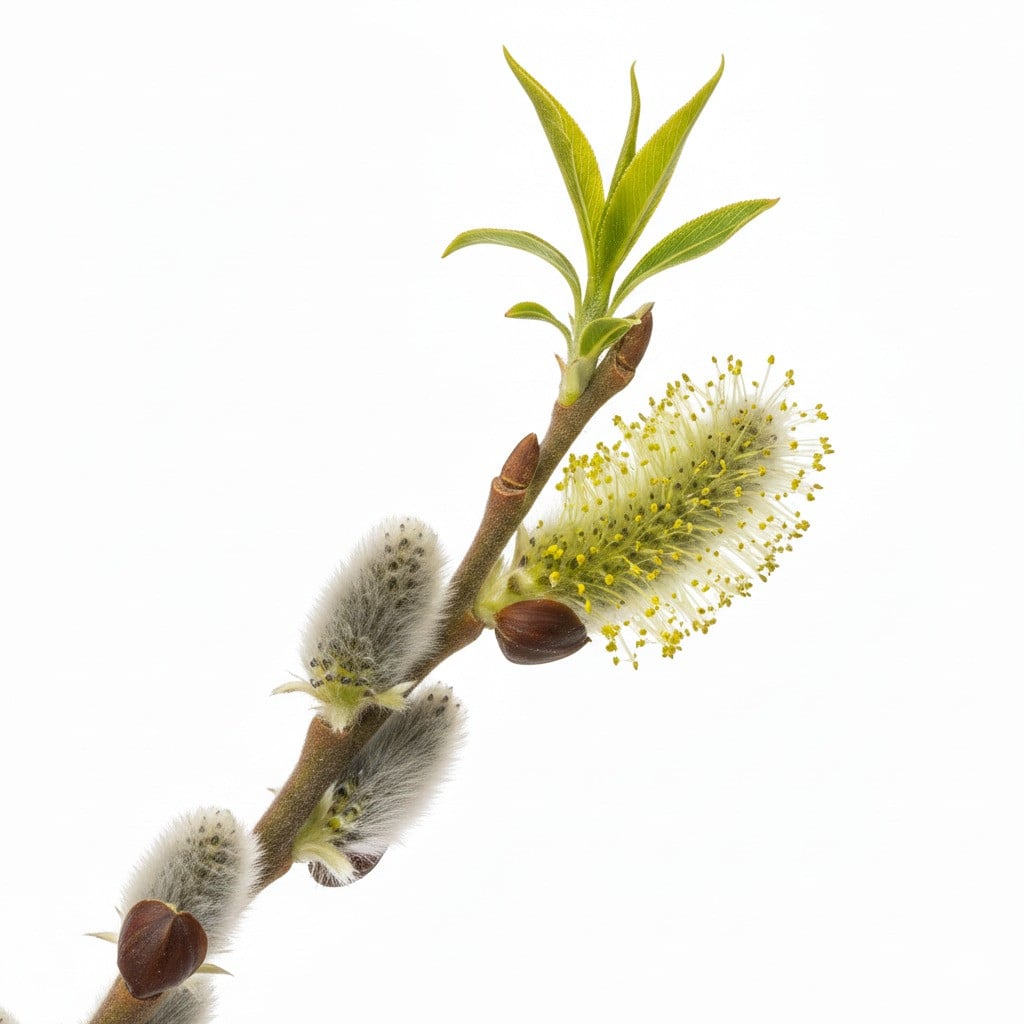
The 400 to 500 species of willow (bot. Salix) belong to the willow family and are very diverse. While some species remain small and inconspicuous, other representatives of this genus grow into trees with a considerable height of 30 meters. The early bloomers, which flower from March to May, give the starting signal for pollinating insects in spring. With their soft, gray fur, the buds are known as willow catkins and make a beautiful decoration in flower arrangements. Willows require more care in the first few years. They are robust and make few demands on their environment, which is why they are good pioneer trees. Due to their diverse growth behavior, some varieties of this genus can be found as dense hedges, in flowerbeds and in the form of an impressive avenue of trees. Leaves The leaves of willows vary in shape. The range of leaf shapes extends from ovate to lanceolate-narrow. The leaf margins and leaf colors offer the same variety. The short-stalked leaves are light green to swamp green and, depending on the species, have distinct hairs on the underside. Leaves are the easiest way to distinguish willow species from one another. Flowering Willows flower in the spring from March to May. The soft fur gives the buds the well-known name willow catkins. Willows are dioecious. The representatives of this genus bear all-male or all-female inflorescences. These can be distinguished from each other after flowering. The male flowers are easily recognizable by their yellow stamens, while the female flowers are a subtle silvery-green. The early flowering of willows is the starting signal for pollinators such as bees and bumblebees, which become active in spring. Fruit The fruits of the willows ripen one month after pollination. Small, multi-seeded capsule fruits develop from the fertilized female inflorescences. When the fruits are ripe, they burst open and release the seeds. Growth The growth of the various willow species is diverse and ranges from 30-metre high trees to three-centimetre small dwarf shrubs. Willows are fast-growing and mature within 30 years.
Origin:
Willows are common in temperate climatic regions in the northern hemisphere and some tropical regions in the southern hemisphere.
Growing tips
Location Willows are light trees and thrive best in a sunny or semi-shady location. In order to meet the high water requirements of willows, it is advisable for some species to ensure a constant water supply through proximity to water. In addition, the willow needs a loamy-clayey or sandy-clayey soil. The large-growing species form extensive roots. It is advisable not to plant them in the immediate vicinity of houses, terraces and man-made ponds. Willows can be cultivated as avenue trees, hedges and bedding plants. Utilization Annual willow rods, especially those of the willow (salix viminalis), are an excellent wickerwork material. Thin willow rods are popular for binding in tree nurseries and horticulture. Due to their low demands on the environment, willows are frequent pioneer trees, improve raw soils and thus make it easier for new tree species to take root. With their rapid root growth, some willow species, such as the willow (salix caprea), are well suited to stabilizing soils. Care/pruning Due to the high water requirement of this species, young willows and willow cuttings in particular need to be watered regularly. Water containing lime should be avoided when watering. In addition, a structured supply of nutrients is essential for young willows and cuttings. Due to their vigorous growth, willows draw energy from their surroundings. Fertilizing in autumn with humus or leaves replenishes the nutrient layers. The willow genus is characterized by its pronounced insensitivity to pruning. Radical pruning of all branches is possible without damaging the willow. It is advisable to primarily cut light-robbing side branches. If there is a desire to change the growth form of the crown, the central leader branches can be shortened. Pruning is done in late fall so that the canes can be used for basket weaving. Willows can also be pruned in spring and summer after flowering. It is advisable to cut the branches back by a maximum of half in summer so that the willow can still retain sufficient foliage. In the period up to February, thick branches and the trunk should be shortened. Diseases/pests Willows are resistant to diseases and pests. Exceptions are fungal diseases such as willow rust and willow scab. In most cases, willow rust causes visual defects such as yellowish to reddish discolored leaf spots. If a willow is affected by willow scab, it is important to take countermeasures. The pathogen Pollaccia saliciperda triggers this disease and can cause the death of leaves and shoot tips. Control is possible by applying fungicides, phosphorus or potash. It is advisable to cut affected willow sections down to the healthy shoot area and remove the infected wood.

Companion Plants

Antagonistic Plants

Diseases
No diseases

Pests
Gall mites
Aphids
Pea leaf weevil