Hellebores

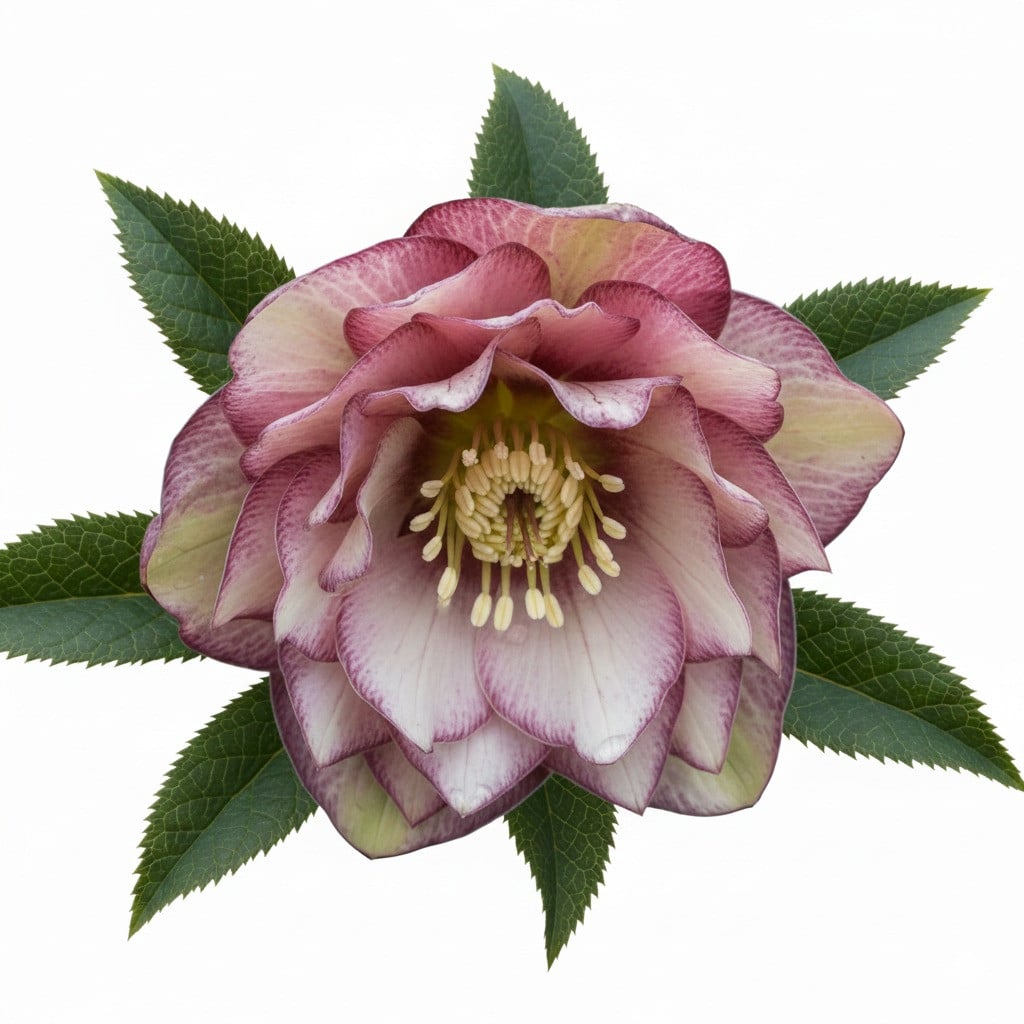
Hellebores
Helleborus
Plant family
Buttercup family (Ranunculaceae)
Season Overview
Propagating
Planting
Harvest
Harvest
J
F
M
A
M
J
J
A
S
O
N
D
1ST YEAR
FOLLOWING YEARS
Details


Light requirement
Semi-shaded

Water requirement
Moist

Soil
Medium (loamy)

Nutrient requirement
Medium

Light germinator

Germination temperature
7 - 10 °C (Degrees Celsius)

Plant distance
50 cm

Row spacing
50 cm

Seeding depth
0.2 cm
Instructions
Description
The genus Helleborus belongs to the buttercup family (Ranunculaceae) and is also known as Christmas rose, snow rose or Lenten rose. The genus comprises 15 to 25 species native to Europe and Asia Minor, extending into Central Asia and China. The German name "Nieswurz" refers to the powder made from ground underground plant parts, which triggers sneezing. People once used it to clear their sinuses, hoping to sneeze out illness or evil spirits. Hellebores are herbaceous, perennial, rhizome-forming plants. Many species are popular ornamentals; some have naturalized in the wild. Almost all species are frost-hardy. Hellebores are early bloomers, flowering in winter or early spring. The Lenten rose is particularly popular as a decorative garden plant, with distinctive cup-shaped flowers resembling wild roses. These beautiful early spring bloomers are perennial and undemanding. Leaves Hellebores have long-stalked leaves divided into petiole and blade. The dark green leaves grow from the rhizomes of the rootstock. They are leathery and robust. The leaf blade is often divided and the leaf margin singly or doubly serrated. The evergreen foliage is attractive year-round. Flowers Helleborus plants bloom from February to late April. The inflorescence rises above the foliage and bears one or more flowers, often giving the plant a bouquet-like appearance. The cup-shaped flowers have five large sepals, averaging up to six centimetres in size. Flower colours vary by species. There are red, purple, yellow, white or greenish sepals. The number of petals ranges from five to fifteen. Each flower has 30 to 60 stamens and several free-standing carpels. As flowering progresses, the colour of the petals changes — they fade and take on a greenish hue. Some flowers are spotted, striped or speckled. Fruit After flowering, follicles develop from the ovary. These open in early summer and allow the ripe seeds to fall to the ground. Growth Hellebores grow in loose clumps. They are herbaceous, perennial plants with rhizomes. The undemanding Helleborus plants are long-lived and grow up to 40 centimetres tall.
Origin:
Europe, Kleinasien, Zentralasien, China
Growing tips
Location The hellebore genus makes few demands on the location or soil. They thrive in light shade under shrubs or trees and also do well in sunny spots. The substrate should be well-drained, humus-rich and not too dry. hellebores are ideal for the shade garden. The plants also cut a fine figure in classic herbaceous borders or in larger plant troughs. Use In our latitudes, hellebores are used as a decorative early spring plant. The plants adorn corners of the garden under trees, at the edge of shrubs or create an enchanting sight in herbaceous borders. In combination with cranesbill, ferns, silver primrose or lady's mantle, the hellebore is an enchanting inhabitant of the garden bed. The hellebore has been a well-known remedy since ancient times. It is still cultivated today and is used in natural medicine for various illnesses or as a laxative. Care/pruning The hellebore genus is undemanding and uncomplicated. It is not necessary to prune the plants. The gardener simply cuts off the faded shoots after flowering or, if necessary, after seeding. The foliage is decorative all year round. The plant species is long-lived and will delight the gardener for many years.

Companion Plants

Antagonistic Plants
Aubergine / Eggplant
Broccoli
Broccoli raab / Stem cabbage / Cima di rapa
Brussels sprouts
Brussels sprouts
Cabbage (Cabbage)
Cabbage (Pointed cabbage)
Cabbage (red cabbage)
Cabbage (Savoy cabbage)
Carrots
Cauliflower
Celery (Celeriac / Celery root)
Celery (Celery)
Celery (Leaf celery / Chinese celery)
Chili
Chinese kale - Kai-lan / Chinese broccoli
Collard greens
Collard greens (Kale)
Collard greens (Tuscan kale / Dinosaur kale / Palm tree kale)
Coriander / Cilantro
Corn / Maize
Cucumber / Gherkin
Dahlia
Grasses - Bamboos
Grasses - feather-bristled grasses, lamp-cleaning grasses
Grasses - Fescue
Grasses - Pampas grass
Ivy
Kohlrabi / German turnip / Turnip cabbage
Larkspur
Lavender
Napa cabbage / Chinese cabbage
Okra
Parsnip
Pepper / Paprika
Potato
Radish
Radishes
Rose
Rosemary
Sage
Stem herbs
Succulents - Agave family
Succulents - Cacti
Succulents - Crassulaceae
Sweet potato
Sweet woodruff / Sweetscented bedstraw
Thyme
Tomato (Bush tomato)
Tomato (Cocktail bush tomato)
Tomato (Cocktail Stake Tomato)
Tomato (Stake tomato)
Vegetable cabbage - wild cabbage / ancient cabbage

Diseases
Root Rot
Black spot of roses
Powdery mildews

Pests
Land snails
Aphids