Boxwood family

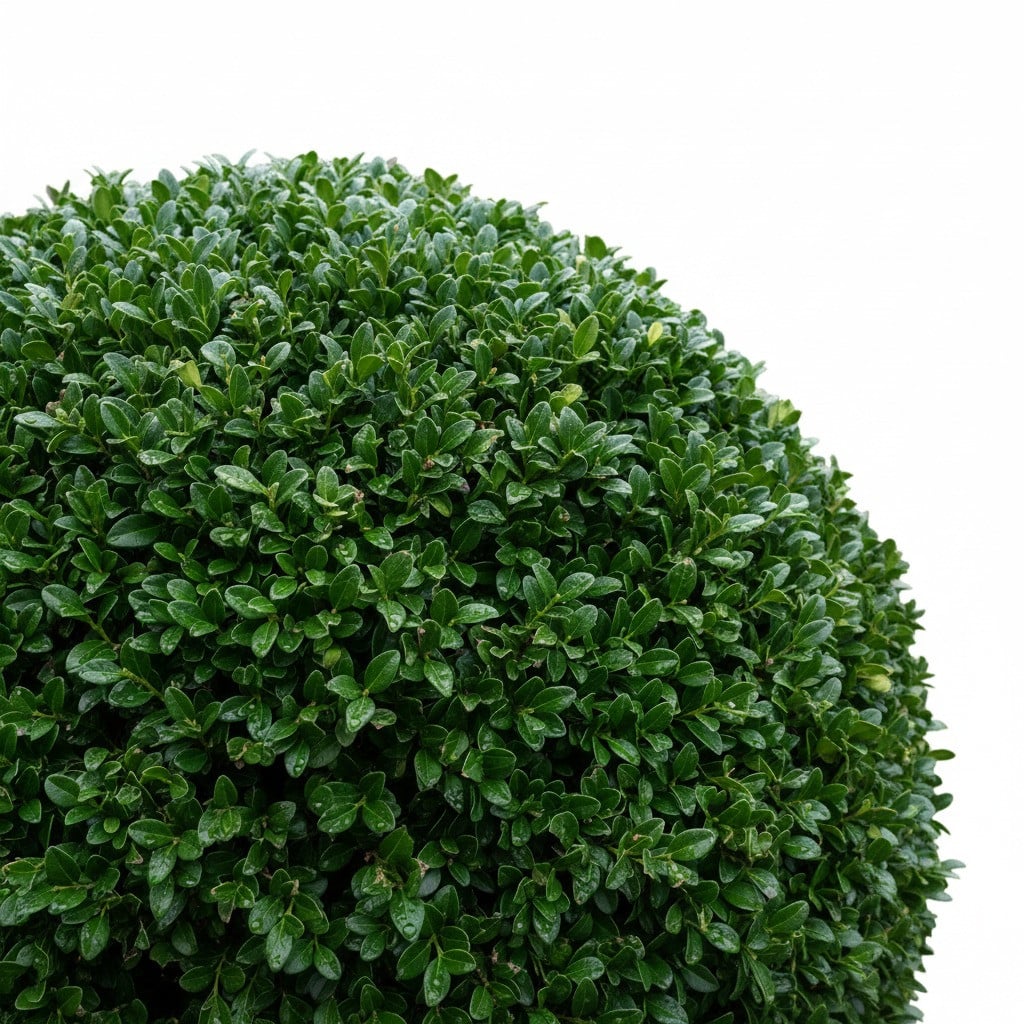
Boxwood family
Buxaceae
Plant family
- others -
Season Overview
Propagating
Planting
Harvest
Harvest
J
F
M
A
M
J
J
A
S
O
N
D
1ST YEAR
FOLLOWING YEARS
Details


Light requirement
Semi-shaded

Water requirement
Moist

Soil
Medium (loamy)

Nutrient requirement
High

Dark germinator

Germination temperature
15 - 25 °C (Degrees Celsius)

Plant distance
50 cm

Row spacing
50 cm

Seeding depth
1 cm
Instructions
Description
The boxwood family (bot. Buxaceae) is a plant family belonging to the order Buxales (boxwood-like). The Buxaceae family includes six genera comprising around 100 species. The boxwood plants are found all over the world as perennials, evergreen shrubs and, more rarely, as trees. Boxwoods prefer temperate to tropical zones for their distribution. The only species found in Central Europe is the common boxwood (Buxus sempervire). This is often found here as an ornamental shrub. Leaves The leaves have a leathery, whole-margined structure. The opposite or alternate leaves have smooth to toothed leaf edges. Some species also have helically arranged leaves. Boxwoods do not have stipules. Flowering The boxwood family has male and female flowers, which are arranged in inflorescences or individually in a radial pattern. The male flowers consist of four perianth petals and four to six stamens. Female flowers, on the other hand, have six perianths and three carpels, which are fused to form a rudimentary, upper ovary. The flowers of most species have a white-yellowish hue. Fruit Depending on the species, box plants form a drupe or a capsule fruit. The mostly blue-green, split open capsules contain two to six black seeds. Growth Depending on the species, boxwoods can reach a height of up to 20 meters in their area of distribution. They grow in the form of shrubs, perennials and trees. Distribution The boxwood family is mainly found in southern Europe and western Asia. In southern Germany, boxwoods are mostly found on south-facing slopes. Utilization As boxwoods have a high utility value as a garden plant, many different cultivars have emerged from the family. This results in a wide variety of leaf colors and shapes. Boxwoods tolerate pruning well. This allows many design options in the form of borders, hedges or geometrically shaped cuts of individual plants. The hard, pale yellow wood of our native species has very fine, narrow annual rings and is suitable for woodturning and carving. The wood is used in the manufacture of wind instruments such as flutes and clarinets. In the past, the wood was popular for engraving work.
Origin:
Southern Europe, Western Asia, worldwide in temperate to tropical zones
Growing tips
Choice of location Partial shade to sun: Boxwoods prefer a location with partial to full sunlight. Sheltered from wind: Choose a location that is protected from strong winds to protect the plants. Soil preparation Well-drained soil: Boxwoods grow best in well-drained, loamy or sandy soil. Nutrient-rich: Mix compost or well-rotted manure into the soil to improve the nutrient supply. Planting Planting distance: Maintain the correct planting distance to avoid competition for water and nutrients. Planting hole: Dig a planting hole twice the size of the root ball. Loosen the soil at the bottom of the hole to encourage the roots. Watering and fertilizing Water regularly: Keep the soil evenly moist, but avoid waterlogging. Water regularly, especially during dry periods. Fertilize: Fertilize the plants every 4-6 weeks during the growing season with a balanced liquid fertilizer. Care and pruning Pruning: Boxwood plants tolerate pruning well. Prune them regularly to maintain the desired shape and strengthen the plant. Mulching: Cover the soil around the plants with a layer of mulch to retain moisture and prevent weed growth. Pest control Regular inspection: Check the plants regularly for pests such as box tree moths and scale insects. Remove infested leaves immediately. Encourage natural enemies: Encourage natural enemies of pests, such as birds and beneficial insects, by providing them with suitable habitats.


Antagonistic Plants

Diseases
Root Rot
Pests
Spider mites
Schildläuse