Pink China

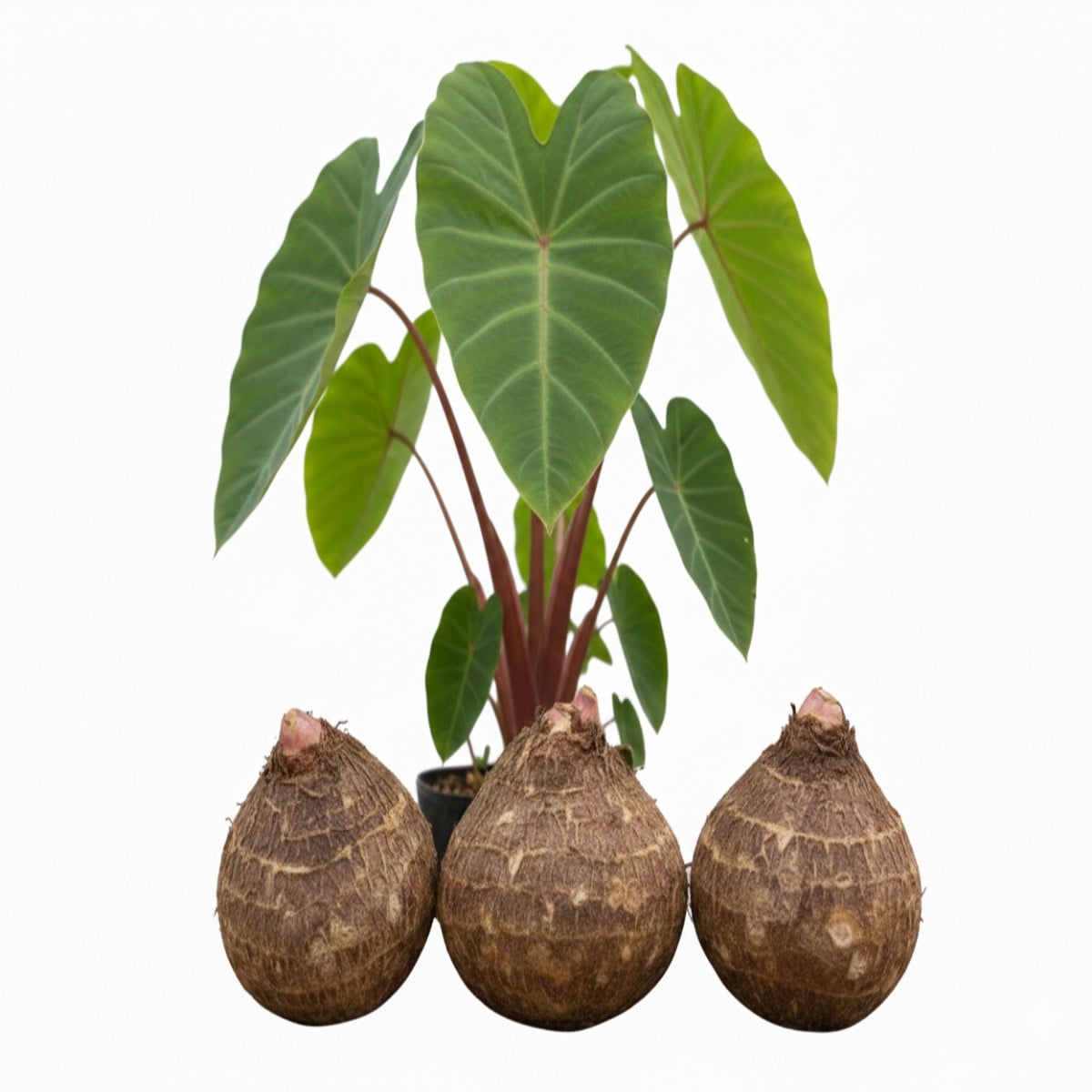
Variety
Pink China
created by Alexandro at 21.02.2026
Features
Growth habit
lifespan: perennial
growth habit: high
growth habit: upright
growth habit: upright leaf position
leaves: loosely leafed
fast growth
height: 80 - 100 cm
heigth: 100 - 120 cm
wide: 60 - 70 cm
wide: 90 - 100 cm
wide: 80 - 90 cm
growth habit: upright flower stems
large leaves
propagation by offsets
dies back in late autumn
Life cycle: sprouts in spring
Blütenform: trompetenförmig
Blätter: herzförmig
Color
green
light yellow
Fruit: yellow-green
Stem and leaf veins red
creamy
Blattrippen: hellgrün
Wurzel: braun
Wurzelfleisch: weiß
Blätter: cremeweiß
Taste
nutty
mild
Earthy
Resistances
Late blight resistant
Blight resistant
Snail resistant
Sunburn resistant
heat resistant
hardy with protection
hardy down to -10°C
hardy down to -15°C
krankheitstolerant
Location
planting: greenhouse
planting: outdoor
planting: raised bed
Heat requirement: high
planting: house wall / wall
Soil: permeable soil
Soil moisture: water-retentive
fertilization: high
Fertilization: nutrient-rich
fertilization: humus-enriched
soil moisture: moist
light: Full sun
Soil moisture: moist to wet
Fruit shape
Fruit dressing: Berry dressing
globular
Cultivation Break
3 Years
Season Overview
Propagating
Planting
Harvest
Harvest
J
F
M
A
M
J
J
A
S
O
N
D
1ST YEAR
FOLLOWING YEARS
Description
Colocasia 'Pink China' is an extremely robust and hardy variety of elephant ear. Its trademark features are its bright pink stems, which contrast sharply with its large, heart-shaped dark green leaves. Highlight: Considered the most frost-hardy taro variety (can overwinter in the garden with protection). Growth: Reaches a height of approx. 100–150 cm and loves moist, nutrient-rich soil. Appearance: Tropical flair with a striking pink spot in the center of the leaf. Taro, scientifically known as Colocasia esculenta, is one of the oldest cultivated plants known to mankind and plays a central role as a staple food, especially in the tropical and subtropical regions of the world. The plant is visually impressive with its enormous, heart- or arrow-shaped leaves, which have earned it the apt nickname "elephant ear." These leaves sit on long, sturdy stems that grow directly from the underground tuber. However, the real significance of the taro lies in its starchy tuber. This has a brownish, often fibrous or ring-shaped skin and flesh that can vary from pure white to cream-colored to a characteristic purple speckle, depending on the variety. In terms of taste, the cooked tuber is reminiscent of a mixture of potato and chestnut, often with a subtle nutty note. Botanically speaking, taro belongs to the arum family. This explains its rather inconspicuous flower, which consists of a yellowish spadix and a protective bract, but is very rarely seen in cultivation. An important feature of the entire plant is the presence of calcium oxalate crystals. These protect the plant from predators, but cause severe irritation of the mucous membranes in humans. For this reason, taro must not be eaten raw under any circumstances; only thorough cooking, steaming, or roasting renders the crystals harmless and makes the tuber a nutritious and versatile ingredient for hearty stews, purées, or even sweet desserts.
F1 Hybrid
Frostproof
Growing tips
The schedule Bring forward: Indoors from February/March. The bulb needs a "head start" as it takes 7-9 months to mature. Planting out: Only after the Ice Saints (mid-May), when the night temperatures are stable above 12 to 15 °C. Harvest: October/November, as soon as the leaves turn yellow and before the first frost. Location & soil Light: Sunny to semi-shady and protected from the wind (otherwise the large leaves will bend). Soil: Heavy, loamy and extremely rich in nutrients. Sandy soils must be heavily enriched with compost. Spacing: Give each plant approx. 60 to 80 cm of space. The right care Warmth: 22 to 30 °C is ideal for germination. Water: The soil must never dry out. Taro loves "wet feet" and even tolerates slight waterlogging. Mulching helps to prevent evaporation. Fertilizer: As a heavy feeder, it needs liquid fertilizer every 2 weeks (nitrogen for leaves until August, then potassium for the bulb). Harvest & storage Harvest: Dig up carefully. Separate the large mother bulb and the small daughter bulbs (sprouts). Overwintering: Store the small children in sand in a dry and cool place (approx. 12 °C) for replanting the following year. Important safety advice Never eat raw! All parts of the plant contain calcium oxalate crystals, which are only destroyed by heat (cooking, frying, baking). Raw taro causes severe swelling in the mouth. If you don't have space in a bed, a 20-liter pot is ideal. The soil moisture and heat (black pot in the sun) are often much easier to control there than in the garden soil.
Details


Light requirement
Semi-shaded

Water requirement
Moist

Soil
Medium (loamy)

Nutrient requirement
High

Dark germinator

Germination temperature
22 - 28 °C (Degrees Celsius)

Plant distance
70 cm

Row spacing
100 cm

Seeding depth
8 cm

Companion Plants

Antagonistic Plants
Abyssinian cabbage / Ethiopian mustard
Almond tree
Apple
Apricot
Aubergine / Eggplant
Bean ((Scarlet) runner bean)
Bean (Broad bean / Faba bean / Field bean)
Bean (Dwarf bean)
Bean (Hyacinth bean / Lablab-bean)
Bean (Lima Bean)
Bean (Runner bean)
Beetroot
Black salsify
Blueberry
Broccoli
Broccoli raab / Stem cabbage / Cima di rapa
Brussels sprouts
Brussels sprouts
Buddleja / Butterfly Bushes
Cabbage (Cabbage)
Cabbage (Pointed cabbage)
Cabbage (red cabbage)
Cabbage (Savoy cabbage)
Carrots
Cauliflower
Celery (Celeriac / Celery root)
Celery (Celery)
Celery (Leaf celery / Chinese celery)
Celtuce / Stem lettuce
Cherry laurel
Chili
Chinese kale - Kai-lan / Chinese broccoli
Chives
Chives
Collard greens
Collard greens (Kale)
Collard greens (Tuscan kale / Dinosaur kale / Palm tree kale)
Courgette / Zucchini
Cucumber (African horned cucumber / Kiwano)
Cucumber (Caigua)
Cucumber (Melothria)
Cucumber / Gherkin
Forsythia
Garden squash - Patisson / UFO squash
Garlic
Garlic chives
Garlic mustard
Gooseberry
Grasses - reeds, cattails, bulrushes
Hair cucumbers / snake gourds
Hellebores
Kohlrabi / German turnip / Turnip cabbage
Lavender
Leek and Savory
Leeks
Lettuce (Common chicory)
Lettuce (Endive / Escarole / Erisée)
Lettuce (Lamb's lettuce)
Lettuce (Lettuce)
Lettuce (Oriental greens / Brown mustard)
Lettuce (Puntarelle / Cicoria di catalogna / Cicoria asparago)
Lettuce (Radicchio / Italian chicory)
Lettuce (Sugar loaf)
Maples
Mizuna / Japanese mustard greens
Napa cabbage / Chinese cabbage
Nightshades (Other)
Onion
Onion (Spring onion)
Oregano
Ornamental alliums
Ornamental pumpkin
Pak Choi
Parsnip
Peach
Pear
Pepper / Paprika
Physalis
Pines
Plum
Plum (tree)
Potato
Privet
Pumpkin / Squash
Purple bellflower, silver bellflower
Rapeseed
Rapeseed - Sheer cabbage / Siberian cabbage
Rapini / Broccoli rabe
Raspberry
Rose
Rosemary
Rutabaga / Swedish turnip
Sage
Salpichroa
Sea coal
Sour cherry / Tart cherry
Soybean
Spirea
Sponge gourd / Egyptian cucumber / Vietnamese luffa
Spruce trees
Stem herbs
Succulents
Thyme
Tomato (Bush tomato)
Tomato (Cocktail bush tomato)
Tomato (Cocktail Stake Tomato)
Tomato (Stake tomato)
Turnip
Turnip greens - Choy Sum / Chinese flowering cabbage
Turnip greens - Mizuna
Turnip greens - Tatsoi
Turnip-rooted chervil
Turnips - Oilseed turnips
Turnips - Wild turnips
Vegetable cabbage - Forage cabbage
Vegetable cabbage - Ribbed cabbage / Portuguese cabbage
Vegetable cabbage - wild cabbage / ancient cabbage
Walnut family
Wild Cherry / Bird Cherry / Sweet Cherry
Wild garlic
Willows
Yalta tomatoes

Diseases
Root Rot
Septoria
Angular leaf spot of cucumber
Powdery mildews
Brown rot

Pests
Thrips
Aphids
Land snails
Spider mites
Voles