Sichuan pepper (Zanthoxylum)

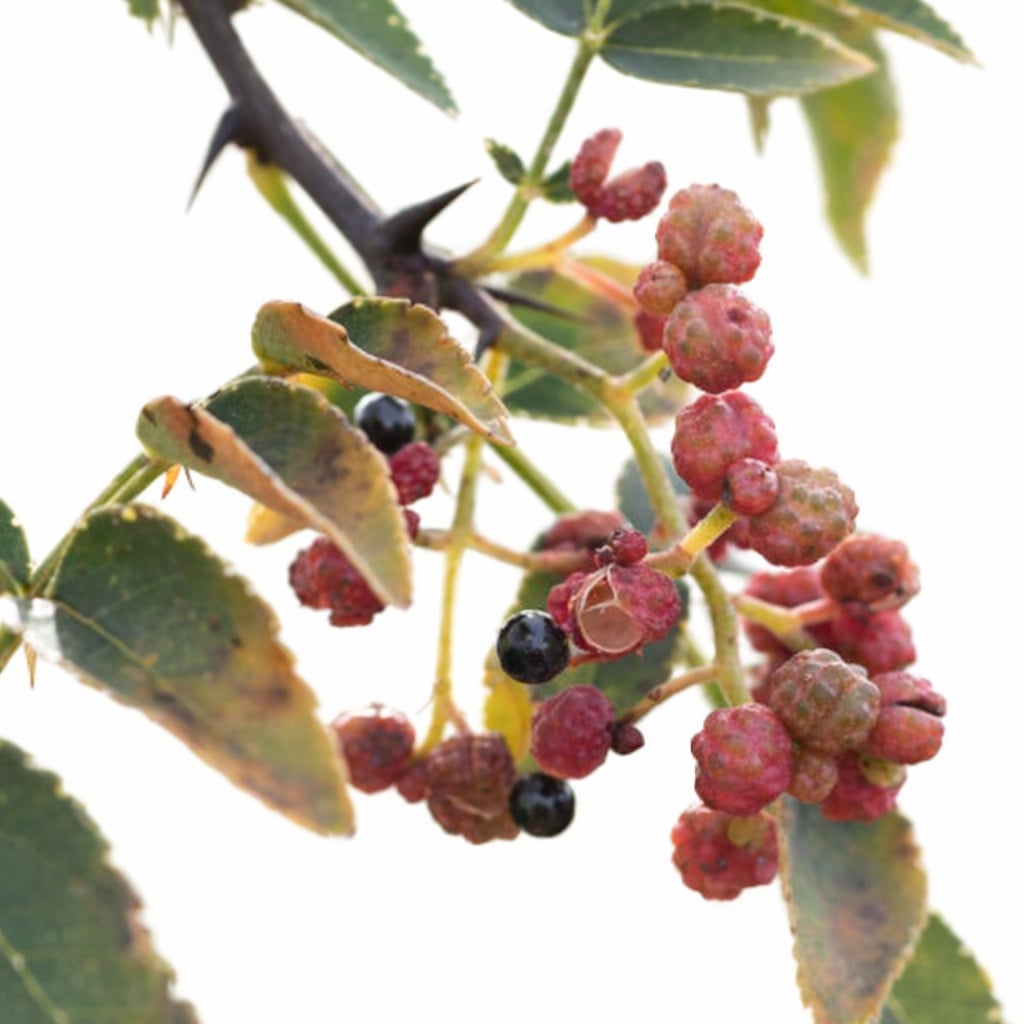
Sichuan pepper (Zanthoxylum)
Zanthoxylum
Plant family
Rue family (Rutaceae)
Cultivation Break
0 Years
Season Overview
Planting
Harvest
Harvest
J
F
M
A
M
J
J
A
S
O
N
D
1ST YEAR
FOLLOWING YEARS
Details


Light requirement
Sunny

Water requirement
Moist

Soil
Light (sandy)

Nutrient requirement
Low

Light germinator

Germination temperature
20 - 25 °C (Degrees Celsius)

Plant distance
200 cm

Row spacing
200 cm

Seeding depth
0.5 cm
Instructions
Description
The Szechuan pepper is a perennial, hardy shrub or small tree from the genus Zanthoxylum and belongs to the rue family. Characteristics: - Height of growth: approx. 2-5 m - Thorns on the branches - Feathery leaves with a slightly lemony scent - Yellow-green flowers in spring - Reddish fruits in the fall, the peel of which is used as a spice The dried fruit peels have a lemony, spicy aroma and cause a typical tingling sensation on the tongue. Habitat: Sunny to semi-shady, relatively robust and hardy in Central Europe. 🌱
Origin:
weltweit (Tropen, Subtropen, Warm-gemäßigte Regionen)
Growing tips
Location - Sunny to semi-shady - Preferably sheltered from the wind - Soil: loose, humusy, well-drained Planting distance - 2-3 m apart (shrub grows 2-5 m tall and wide) - In a tub: large pot ≥ 50-60 cm diameter Water - Keep evenly moist, avoid waterlogging - Established plants can also cope with short dry periods Nutrients - Low to medium - Spring: some compost or organic fertilizer - After flowering: optionally some slow-release fertilizer Sowing - Sowing depth: 0.5-1 cm - Row spacing in the growing bed: 20-30 cm - Pricking out at a distance of 1.5-3 m Harvest - Fruits in fall (September-October) when they turn red and open - Use dried peel as a spice Care - Perennial, hardy - Thorns present → do not plant directly on paths - Prune back vigorously if the shrub becomes too large

Companion Plants
Basil
Bean (Broad bean / Faba bean / Field bean)
Bean (Dwarf bean)
Beetroot
Black salsify
Buddleja / Butterfly Bushes
Carrots
Catnip
Celery (Celeriac / Celery root)
Celery (Celery)
Celery (Leaf celery / Chinese celery)
Chard
Chives
Comfrey
Common marigold
Common mugwort
Coriander / Cilantro
Corn / Maize
Currant
Daisies
Dill
Dogwood
Forsythia
Garden cosmos / Mexican aster
Garlic
Geranie/Pelargonie
Gooseberry
Grasses - Sedges
Hazelnut
Lavender
Lettuce (Lettuce)
Lung herbs
Lupine / Bluebonnet
Make
Melissa
Nasturtium
Onion
Onion (Spring onion)
Oregano
Papaya / Pawpaw
Parsley
Parsnip
Privet
Purple bellflower, silver bellflower
Quadriceps
Raspberry
Rock pear (Amelanchier)
Root parsley
Rose
Rosemary
Sage
Savory
Scented nettles
Spinach (Summer)
Spinach (Winter)
Spirea
Stem herbs
Strawberry
Succulents
Sunflower
Sweet woodruff / Sweetscented bedstraw
Tagetes / Marigolds
Thyme
Weigela
Wild garlic
Women's coats
Yarrow

Antagonistic Plants
Begonias
Blueberry
Broccoli
Brussels sprouts
Brussels sprouts
Cabbage (Cabbage)
Cabbage (Pointed cabbage)
Cabbage (red cabbage)
Cabbage (Savoy cabbage)
Cauliflower
Chinese kale - Kai-lan / Chinese broccoli
Collard greens
Collard greens (Kale)
Collard greens (Tuscan kale / Dinosaur kale / Palm tree kale)
Coneflower (Echinacea)
Courgette / Zucchini
Cucumber (African horned cucumber / Kiwano)
Cucumber (Caigua)
Cucumber (Melothria)
Cucumber / Gherkin
Elderberry
Fennel
Florence fennel / Finocchio
Funk
Garden squash - Patisson / UFO squash
Grasses - Bamboos
Grasses - reeds, cattails, bulrushes
Hair cucumbers / snake gourds
Hellebores
horse chestnut
Hydrangea / Hortensia
Ivy
Jerusalem artichoke / Topinambur
Kohlrabi / German turnip / Turnip cabbage
Lovage
Maples
Ornamental pumpkin
Peony
Phlox, flame flower
Pines
Pumpkin / Squash
Rhododendron
Rudbeckia (Coneflower / Black-eyed-susans)
Sea coal
Sponge gourd / Egyptian cucumber / Vietnamese luffa
Spruce trees
Tomato (Bush tomato)
Tomato (Cocktail bush tomato)
Tomato (Cocktail Stake Tomato)
Tomato (Stake tomato)
Vegetable cabbage - Forage cabbage
Vegetable cabbage - Ribbed cabbage / Portuguese cabbage
Vegetable cabbage - wild cabbage / ancient cabbage
Walnut family
Willows
Yalta tomatoes

Diseases
Root Rot

Pests
Aphids
Spider mites
Caterpillars