Taormina

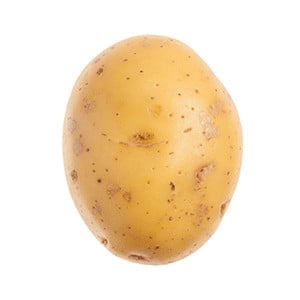
Variety
Taormina
created by Möwe at 07.05.2026
Features
Growth habit
lifespan: annual
growth habit: bushy
Color
light yellow
Taste
mild
Resistances
Blight resistant
Late blight resistant
heat tolerant
drought tolerant
Location
planting: bed
planting: outdoor
planting: raised bed
Soil: medium-heavy
light: sunny to semi-shady
Fruit shape
egg-shaped
Cultivation Break
4 Years
Season Overview
Propagating
Planting
Harvest
J
F
M
A
M
J
J
A
S
O
N
D
Description
The potato (Solanum tuberosum) is a crop plant belonging to the nightshade family (Solanaceae). The potatoes cultivated today are descended from various landraces found in the Andes, from western Venezuela to Argentina and the island of Chiloé, as well as the Chonos Archipelago in southern Chile. The oldest known traces of wild potatoes were found on Chiloé; their age is estimated at 13,000 years. The word potato (still spelled “tartuffel” in the 17th century) is derived from tartufolo, the Italian word for truffle, which in turn is derived from the Latin terrae tuber (“earth tuber”). In common parlance, the term “potato” usually refers to the tubers that grow underground, through which the plant reproduces vegetatively and which are the only edible parts of the plant, as they contain little solanine. The potato is one of the world’s most important foodstuffs, but it is also used as animal feed and an industrial raw material. Growth Potatoes are upright or climbing, perennial herbaceous plants that can reach heights of over 1 meter. The stem is sometimes square-shaped, and in some cases even winged. Underground or just above the surface, the plant forms tuber-bearing stolons. The alternately arranged leaves consist of a short petiole and a leaf blade. The imparipinnate leaf blade is 10–30 centimeters long and 5–15 centimeters wide. The leaflets, which are opposite or alternate, are lightly to heavily downy, often varying greatly in shape and size. The larger leaflets are partly stalked and are ovate to oblong-ovate with a somewhat heart-shaped base and a pointed to tapering upper end. The smaller leaflets are broadly ovate to circular and have a base that is more heart-shaped and a blunter upper end. From June to August, white, pink, or purple, radially symmetrical, five-petaled flowers with yellow anthers appear on the above-ground leafy shoots with pinnate leaves. The hermaphroditic flowers are arranged in corymb-like inflorescences. The fruit is a yellowish-green, cherry-sized, two-chambered berry containing many seeds; due to its solanine content, it is not suitable for human consumption and is poisonous. New tubers form underground, connected to the root shoots by stolons. The tubers serve as nutrient stores. Depending on the variety, the tuber is round, oval, or elongated. The color of the tuber flesh varies from white to yellow to blue and violet. Alkaloids such as solanine and chaconine are found primarily in the potato skin and the layer beneath it, forming a natural defense barrier against bacteria and insects, for example. The solanine content increases during storage when exposed to light. Green spots and sprouts must be removed before consumption, as failure to do so can lead to symptoms of poisoning such as diarrhea, vomiting, headaches, or worse. Maturity Period The following categories are distinguished: • Early-maturing potato varieties: Growing season 90 to 110 days, Harvest: June–July Examples: Agata, Amandine, Birte Derby, Frühgold, Lady Christl, Lady Felicia • Mid-early potato varieties: Growing season 120 to 140 days, Harvest: August–September Examples: Gourmandine, Bintje, Blaue St. Galler, Victoria, Ditta, La Ratte, Nicola, Urgenta, Pamela, Naturella, Désirée, Agria, Eden, Allians • Mid-early to late-maturing potato varieties: Growing season 140 to 160 days, Harvest: September–October Examples: Ackersegen, Atlanta, Lady Jo, Lady Claire, Innovator, Lady Rosetta, Marlen, Fontane, Hermes, Eba, Markies, Panda Intended Use Potatoes for culinary purposes: ◦ Waxy table potatoes Shape: Oblong to oval Texture: firm, fine-grained, moist Cooking characteristics: does not split Flavor: mild to pleasantly robust Varieties: Annabelle, Agata, Amandine, Anais, Belana, Charlotte, Cilena, Ditta, Filea, Hansa, Kipfler, La Ratte, Linda, Marabel, Nicola, Primura, Princess, Renate, Selma, Sieglinde, Spunta, Stella, Vitelotte ◦ Mostly waxy table potatoes Shape: irregular Texture: fine-grained, moderately moist Cooking characteristics: minimal splitting Flavor: mild to pleasantly robust Varieties: Agria, Arkula, Astilla, Atica, Bamberger Hörnchen, Bolero, Christa, Colette, Désirée, Finka, Gala, Gloria, Grandifolia, Granola, Hela, Jelly, Laura, Leyla, Maja, Quarta, Rosara, Saskia, Saturna, Secura, Solara, Satina, Tizia, Ukama ◦ Floury table potatoes Shape: irregular Texture: coarse-grained, dry Cooking characteristics: frequent splitting Taste: pleasantly strong Varieties: Ackersegen, Adretta, Afra, Arkula, Aula, Bintje, Blauer Schwede, Freya, Gunda, Karat, Karlena, Koretta, Libana, Likaria, Lipsi, Mariella, Melina, Naturella, Schwarzblaue aus dem Frankenwald Varieties for further processing: ◦ Processing potato French fries: Agria, Eba, Fontane, Innovator, Markies, Felsina Potato chips: Erntestolz, Fontane, Hermes, Lady Claire, Lady Rosetta Potato flakes: Eba, Saturna ◦ Commercial potato Industrial use, high starch content: Amflora ◦ Feed potato ◦ Seed potato
Non hybrid
Not frost resistant
Growing tips
🌱 Pre-germination - Place in a bright, cool place 3-4 weeks before planting - Pre-germination: 10-15 °C (optimum) - Not too warm, otherwise the sprouts will be long and thin - Bright, but not sunny location - Promotes strong sprouts, brings an earlier harvest - Germination length: 1-2 cm, compact and greenish 🌍 Location & soil - Loose, humus-rich, deep soil is ideal - Sandy-loamy soils - pH value: slightly acidic to neutral (approx. 5.5-7) - Potatoes do not like waterlogging - Potatoes love full sun - At least 6 hours of direct sunlight per day, more is better. - Partial shade is fine, but the yield is noticeably lower - A location with good air circulation helps to avoid late blight. - Do not plant too close to walls or hedges. 🌾 Planting - Planting time: April to May, depending on weather conditions - Planting depth: approx. 8-10 cm - Spacing: 30-40 cm in the row, 60-70 cm between the rows 🪴 Hilling up - When plants are 15-20 cm high, pile up soil - Protects against light (green tubers!) and increases the yield - Repeat 2-3 times 💧 Watering - Potatoes are relatively robust, but: ◦ They need sufficient water during tuber formation (flowering period) ◦ It is better to water rarely but thoroughly 🥔 Fertilization - Lots of potassium, moderate nitrogen, some phosphorus - Organic: mature compost or well-rotted manure. - No fresh excrement - Potassium-emphasized (e.g. Kalimagnesia) promotes taste and shelf life - Basic fertilization during planting, top dressing only if the soil is very poor - Mulching (grass, straw) supports nutrient supply and moisture 🧺 Harvest - Early potatoes: as soon as the plants flower - Late varieties: when the haulm is dead - Allow to dry well before storing and store in a cool, dark, airy place 🌿 Good neighbors - Beans (bush beans), peas - Kohlrabi, spinach - Corn, ornamental grasses - Marigold, marigold, thyme, sage, borage, camomile, parsley, dill - Garlic, onions, chives - Lavender, delphinium, nasturtium, cosmea, lupine, coneflower - Currants, gooseberries, raspberries - Forsythia, weigelie 🚫 Bad neighbors - Tomatoes, peppers & chili, eggplants, okra - Cabbages, turnips, rapeseed - Pumpkins & zucchinis, cucumbers, melons - Sunflowers, asters, ferns, funkia, dahlias, ivy, forest stonecrop - Beet, chard - Mint, basil, rosemary, comfrey - Blueberries, cranberries, lingonberries, allackberry - Elderberry, lilac, blackberries 🔄 Crop rotation - Potatoes should only be grown on the same area every 3-4 years - Good preceding crops: beans, peas, cereals, kohlrabi - Poor preceding crops: tomatoes, peppers, eggplants (same plant family → higher risk of disease) 🦠 Common diseases - Late blight and tuber rot - Blackleg, black rot - Wire rot, rhizoctonia - Powdery mildew - Virus diseases (mosaic) - Dry spot disease - Fusariosis - Potato wart disease - Powdery scab / silver scurf - Leafroll disease 🐛 Common pests - Colorado potato beetle - Wireworms - Aphids - Nematodes - snails - grubs - Earthworms - woodlice - mice - Wild boar
Details


Light requirement
Sunny

Water requirement
Moist

Soil
Medium (loamy)

Nutrient requirement
High

Plant distance
35 cm

Row spacing
65 cm

Seeding depth
9 cm

Companion Plants
Bean (Broad bean / Faba bean / Field bean)
Bean (Dwarf bean)
Borage
Caraway / Meridian fennel / Persian cumin
Chamomile
Chives
Common marigold
Coneflower (Echinacea)
Corn / Maize
Currant
Dill
Forsythia
Garden cosmos / Mexican aster
Garlic
Garlic chives
Gooseberry
Grasses - Fescue
Grasses - Other
Grasses - Sedges
Kohlrabi / German turnip / Turnip cabbage
Larkspur
Lavender
Lupine / Bluebonnet
Mint
Nasturtium
Onion (Spring onion)
Oregano
Parsley
Phacelia / Scorpionweed / Heliotrope
Raspberry
Sage
Soybean
Spinach (Summer)
St. John's wort
Tagetes / Marigolds
Thyme
Weigela

Antagonistic Plants
Arctic Bramble, Mammure
Aster
Aubergine / Eggplant
Basil
Beetroot
Blackberry / Brambles
Blueberry
Broccoli raab / Stem cabbage / Cima di rapa
Brussels sprouts
Celery (Celeriac / Celery root)
Celery (Celery)
Celery (Leaf celery / Chinese celery)
Chard
Chili
Chinese kale - Kai-lan / Chinese broccoli
Comfrey
Courgette / Zucchini
Cucumber (African horned cucumber / Kiwano)
Cucumber (Caigua)
Cucumber (Melothria)
Cucumber / Gherkin
Dahlia
Elderberry
Florence fennel / Finocchio
Funk
Garden squash - Patisson / UFO squash
Hair cucumbers / snake gourds
heather family
Ivy
Jerusalem artichoke / Topinambur
Large cranberry / American cranberry
Lilac
Lingonberry / Partridgeberry / Mountain cranberry
Lovage
Make
Melon (Sugar melon)
Melon (Watermelon)
Mizuna / Japanese mustard greens
Napa cabbage / Chinese cabbage
Nightshades (Other)
Okra
Ornamental pumpkin
Pak Choi
Pepper / Paprika
Physalis
Pumpkin / Squash
Rapini / Broccoli rabe
Rosemary
Rutabaga / Swedish turnip
Sea coal
Sponge gourd / Egyptian cucumber / Vietnamese luffa
Sunflower
Tomato (Bush tomato)
Tomato (Cocktail bush tomato)
Tomato (Cocktail Stake Tomato)
Tomato (Stake tomato)
Turnip
Turnip greens - Choy Sum / Chinese flowering cabbage
Turnip greens - Mizuna
Turnip greens - Tatsoi
Turnip-rooted chervil
Turnips - Oilseed turnips
Turnips - Wild turnips
Yalta tomatoes
Diseases
Fusarium
Powdery mildews
Early blight of potato
Black spot of roses
Soft rot
Brown rot
Pests
Root knot nematodes
Stem borers
Land snails
Cutworms
Larvae
Ten-lined potato beetle
Nematodes
Aphids
Wireworms
Voles