heather family

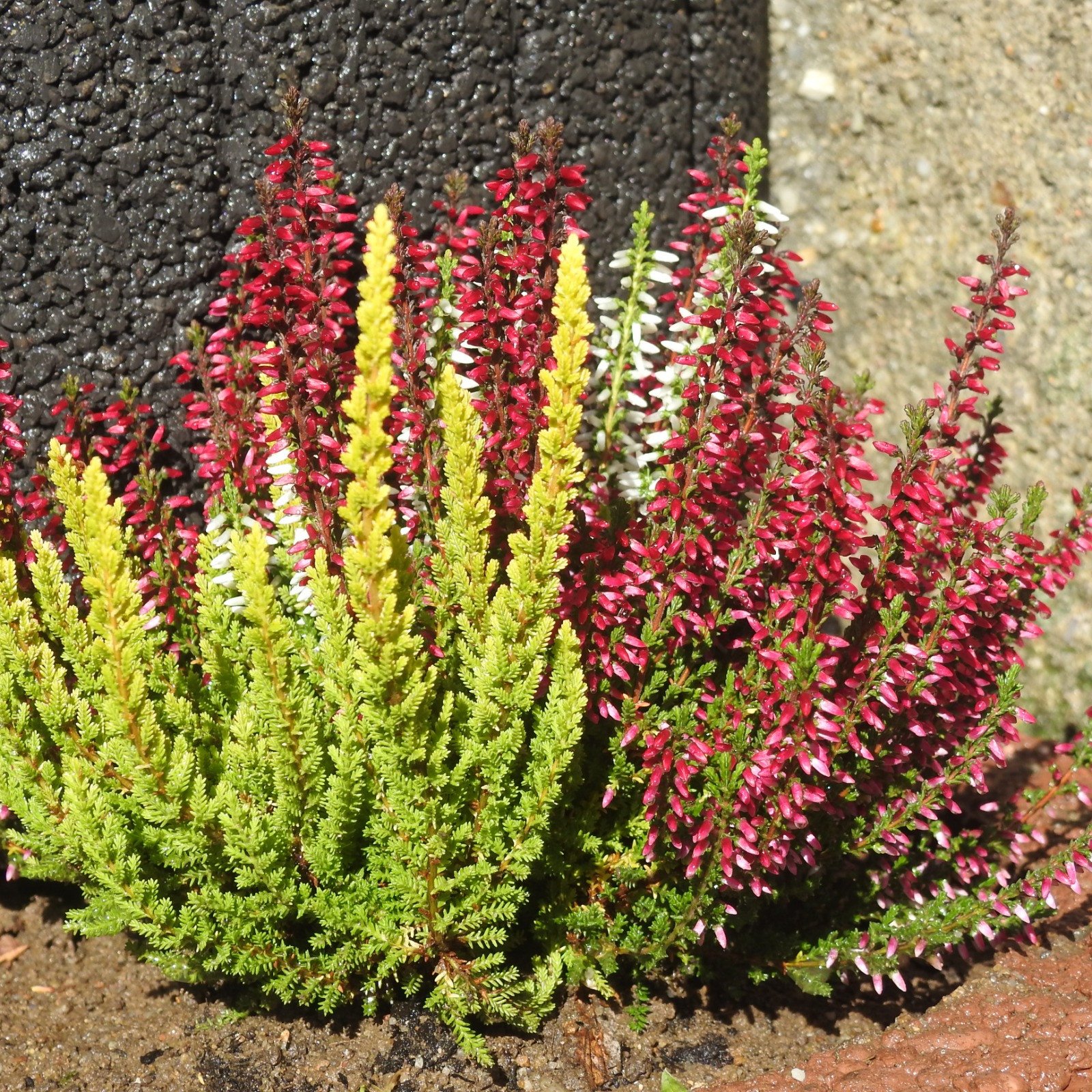
heather family
Ericaceae
Plant family
The Heath (Ericaceae)
Season Overview
Propagating
Planting
Harvest
Harvest
J
F
M
A
M
J
J
A
S
O
N
D
1ST YEAR
FOLLOWING YEARS
Details


Light requirement
Sunny

Water requirement
Moist

Soil
Light (sandy)

Nutrient requirement
Low

Light germinator

Germination temperature
18 - 22 °C (Degrees Celsius)

Plant distance
20 cm

Row spacing
20 cm

Seeding depth
0.1 cm
Instructions
Description
Heather plants (bot. Ericaceae) are a plant family in the order of heather plants (Ericales). It is divided into eight subfamilies and belongs to the large class of angiosperms (botanically Magnoliopsida). The heather family used to include around 145 genera. Today, 126 genera belong to the family. The list contains up to 4000 species. A new subfamily, the Monotropoideae, was formed when the systematics were reorganized. It consists of the crowberry family (Empetraceae), the wintergreen family (Pyrolaceae) and the spruce asparagus family (botanically Monotropaceae). The three lost their rank as a family. The Angiosperm Phylogeny Group (abbreviation APG) published the new systematics of the plants in 2009. Leaf The leaves appear small, narrow and needle-shaped. They have tiny appendages, the stipules. Some species sprout large leaves that are oval, broad and not needle-shaped. Here there are no stipules. The leaves are evergreen in some species or fall off every year in others. Their consistency is leathery or herbaceous. They sit on a long, sometimes short stalk. In some species, the leaves lie directly on the twig. They are arranged alternately. Spiral or two-line leaf arrangements occur. The leaf blade is undivided and the leaf margin is toothed or entire. Many species have rolled leaves. This is a leaf type of xerophytes (drought-tolerant plants). The underside of the leaf is depressed and the stomata, through which water evaporates, are concealed. In addition, evaporation is reduced by pubescence and limited to one side of the leaf. Flower The flowers are small to large and predominantly five-petaled and radially symmetrical. They are sometimes solitary. Terminal or axillary racemes are common. Other forms are spikes, heads, umbrella racemes or panicles that hang down for a long time. The branches are richly covered with flowers. The perianth is usually double. There are four to seven free or fused sepals. The three to seven, but usually five, petals are often fused. The flowers are bell-shaped and in most cases pink in color. Other species have yellowish, white and red flower bells and are plate-shaped. There are usually two circles with four or five free stamens. Between two and ten carpels are fused to form an ovary. The ovary is superior or inferior. Flowers with an upper ovary are pollinated by insects. The species with a lower ovary are pollinated by hummingbirds. The flowers of some species have a sweet scent. Fruit There are different types of fruit: capsule fruits berries drupes nut fruits Some species have fleshy sepals on the fruit. The berries are red, soft and usually edible. Many are rich in sugar and acid. Others contain essential oils, glycosides or tannins and bitter substances. Some species even contain acetylandromedol. This substance is toxic. Growth Heather plants are largely woody plants. They are predominantly small or larger shrubs. The dwarf shrubs grow upright, creeping or lying down. There are small trees or tall shrubs. They mainly grow on acidic soils. In many species, the roots of the plants form a symbiosis with fungi (mycorrhiza). Some of the dwarf shrubs are frost-hardy down to minus 70 degrees Celsius. Glycosides as antifreeze agents in all parts of the plant ensure frost resistance. Distribution The heather family and its species are distributed worldwide. They colonize Europe from alpine regions to the Arctic. Some genera are at home in North America. Different species grow in Eastern Europe. In the northern hemisphere, species with low, evergreen shrubs are predominant. In Mediterranean climates, taller shrubs and trees have become widespread. The southern hemisphere is home to a wide range of dwarf shrubs, taller shrubs and tree species. Various genera and species of Ericaceae can be found from the Himalayas to the Pacific Islands, East Asia and Southeast Asia. Utilization The heather plants are used in a variety of ways: Fruit shrubs The berries of some species are collected from wild-growing stands. Finland is an example of this. Black crowberries (Empetrum) are used to make compote or juice. Their black color is used as a coloring agent in food production. In Europe, Canada and the USA, and increasingly in South Africa and South America, the agricultural cultivation of fruit bushes is an economic factor. Blueberries (botanically Vaccinium myrtillus) can be eaten raw and are processed into jams, juice and dried fruit. Cranberries (botanically Vaccinium vitis-idaea) provide fruit for jams or juices. The cranberry is popular as a cranberry (Vaccinium macrocarpon). The fruits of the strawberry trees (botanically Arbutus or Arbutus unedo) are used in the production of liqueurs. Medicinal use The leaves and fruits of some species are used in medicine. The bearberry (botanically Arctostaphylos uva-ursi), also known as urinary herb, is well known. The parts of the plant, especially the leaves, have an antiseptic effect on bladder infections. Honey In Europe, South America, Mexico and New Zealand, honey from heather plants is popular and a regional economic factor. The honey is traded worldwide. Ecological function Heather plants thrive in inhospitable places. In some regions, they take on the function of forests and fortify coastal dunes. Ornamental plants Some genera produce perennial, evergreen ornamental shrubs with enchanting flowers.
Origin:
South Africa, Middle East, Europe
Growing tips
Uses The heather herbs that play a role in garden design can be counted on one hand. All species work best when planted in larger areas in the heather garden. Ideal partners are other dwarf shrubs such as heather, conifers such as junipers and pines or flowering shrubs such as rhododendrons. In winter and spring, from around January to May, the varieties of English heather (Erica darleyensis) and snow or winter heather (Erica carnea) flower in white, pink or red. They are good ground cover plants for sunny to semi-shady locations. The moor or bell heather (Erica tetralix), Cornwall heather (Erica vagans) and gray heather (Erica cinerea) bloom in summer. They grow to around 30 centimetres high and wide and can be used as ground cover in smaller or larger groups. They are often planted in heather beds. Bell heather (Erica gracilis) flowers from September to December and is therefore mainly offered in the fall. It is not hardy, even if individual nights with temperatures just below zero degrees can be tolerated. Bell heather is often planted in bowls and balcony boxes. They are also suitable for flower beds and grave planting. Planting The best time to plant is when the nurseries have the respective species in their range. It should be noted that some species only thrive in acidic soil. Others prefer calcareous locations, but also do well in normal, humus-rich garden soil. The planting area should be well loosened and the hole dug deep enough to cover the root ball with half a centimeter of garden soil. Dip the root ball in water before planting and water thoroughly for the first few weeks. If you want to use English heather as a ground cover, plant five to seven plants per square meter, or eight to ten for snow heather. Pruning It is important to cut back heather regularly so that it remains compact and does not become bare from below. English heather and snow heather are cut back regularly with hedge shears after flowering at the end of May. Cornwall heath is cut annually below the previous year's flowering shoot. Bell heather does not need to be pruned. Care Heather should never be allowed to dry out completely. During periods of low rainfall, it is essential to water, especially before the first frosts. In spring, heather should be fed with fertilizer. Compost or slow-release fertilizer promotes growth. Species that only thrive in acidic soil are given special fertilizers, for example rhododendron fertilizer Winter protection In severe frost without snow cover, hardy heathers such as tree heather and gray heather should be covered with brushwood, fir branches or fleece. Cornwall heath is relatively frost-hardy and only needs to be protected with fir greenery in the event of prolonged frosts. Snow heather, which can withstand temperatures down to -30 degrees, should also be protected from strong winter sun and wind to prevent it from drying out. Propagation Heather can be propagated by cuttings. These are cut in summer, stuck into the soil and kept as evenly moist as possible. However, it is only worth propagating rare varieties yourself, as the plants are very inexpensive. Diseases and pests Sudden wilting indicates fungal infestation. Sick plants should be removed quickly and disposed of with household waste. As a preventative measure, it is advisable to avoid waterlogging. In addition, the larvae of the weevil can cause damage to the roots. However, the beetle itself rarely feeds on the young shoots.

Companion Plants
No companion plants

Antagonistic Plants
No antagonistic plants

Diseases
No diseases

Pests
No pests