Goldsegen

Variety
Goldsegen
Approved Data
created by Gartenoase at 05.05.2023
Features
Location
planting: bed
planting: outdoor
planting: raised bed
Fruit shape
thick
Color
Wurzel: gelb
Wurzel: beige
Wurzelfleisch: gelb
Cultivation Break
4 Years
Season Overview
Propagating
Planting
Harvest
J
F
M
A
M
J
J
A
S
O
N
D
Description
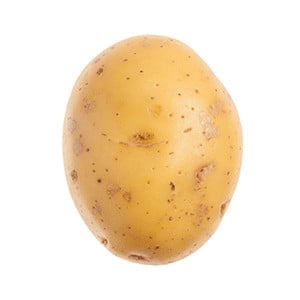
Goldsegen is an old Austrian variety that is easy to grow on poor soils, tastes excellent and keeps for a long time in storage. Yellow, floury flesh. It produces a high yield of extremely large, oval tubers. Goldsegen is at its best as a baked potato, but is also suitable for potato salad and chips. About 150 days of ripening.
Non hybrid
Not frost resistant
Growing tips
It is advisable to pre-sprout the seed potatoes. Pre-sprouting stimulates the sprouting power of the tubers and shortens the vegetation period of the plants. A suitable place for this is a bright, cool room at 10 to 12° C, where the seed potatoes are not exposed to direct sunlight. By the time of planting, several strong, approximately 2 cm long shoots should have formed. From mid-April, depending on how warm the soil is, the tubers are placed in the ground in furrows around 5 cm deep and 30-40 cm between the tubers. When the perennials have reached a height of around 15 to 20 cm, they are heaped up. At the earliest every 4 years in the same bed and not near tomatoes. This makes it less easy for diseases such as late blight. Further cultivation tips for the potato species.
Details

Light requirement
Sunny

Water requirement
Moist

Soil
Light (sandy)
Nutrient requirement
High

Plant distance
30 cm

Row spacing
75 cm

Seeding depth
5 cm

Companion Plants
Bean (Broad bean / Faba bean / Field bean)
Bean (Dwarf bean)
Borage
Caraway / Meridian fennel / Persian cumin
Chamomile
Chives
Common marigold
Coneflower (Echinacea)
Corn / Maize
Currant
Dill
Forsythia
Garden cosmos / Mexican aster
Garlic
Garlic chives
Gooseberry
Grasses - Fescue
Grasses - Other
Grasses - Sedges
Kohlrabi / German turnip / Turnip cabbage
Larkspur
Lavender
Lupine / Bluebonnet
Mint
Nasturtium
Onion (Spring onion)
Oregano
Parsley
Phacelia / Scorpionweed / Heliotrope
Raspberry
Sage
Soybean
Spinach (Summer)
St. John's wort
Tagetes / Marigolds
Thyme
Weigela

Antagonistic Plants
Arctic Bramble, Mammure
Aster
Aubergine / Eggplant
Basil
Beetroot
Blackberry / Brambles
Blueberry
Broccoli raab / Stem cabbage / Cima di rapa
Brussels sprouts
Celery (Celeriac / Celery root)
Celery (Celery)
Celery (Leaf celery / Chinese celery)
Chard
Chili
Chinese kale - Kai-lan / Chinese broccoli
Comfrey
Courgette / Zucchini
Cucumber (African horned cucumber / Kiwano)
Cucumber (Caigua)
Cucumber (Melothria)
Cucumber / Gherkin
Dahlia
Elderberry
Florence fennel / Finocchio
Funk
Garden squash - Patisson / UFO squash
Hair cucumbers / snake gourds
heather family
Ivy
Jerusalem artichoke / Topinambur
Large cranberry / American cranberry
Lilac
Lingonberry / Partridgeberry / Mountain cranberry
Lovage
Make
Melon (Sugar melon)
Melon (Watermelon)
Mizuna / Japanese mustard greens
Napa cabbage / Chinese cabbage
Nightshades (Other)
Okra
Ornamental pumpkin
Pak Choi
Pepper / Paprika
Physalis
Pumpkin / Squash
Rapini / Broccoli rabe
Rosemary
Rutabaga / Swedish turnip
Sea coal
Sponge gourd / Egyptian cucumber / Vietnamese luffa
Sunflower
Tomato (Bush tomato)
Tomato (Cocktail bush tomato)
Tomato (Cocktail Stake Tomato)
Tomato (Stake tomato)
Turnip
Turnip greens - Choy Sum / Chinese flowering cabbage
Turnip greens - Mizuna
Turnip greens - Tatsoi
Turnip-rooted chervil
Turnips - Oilseed turnips
Turnips - Wild turnips
Yalta tomatoes
Diseases
Fusarium
Powdery mildews
Early blight of potato
Black spot of roses
Soft rot
Brown rot
Pests
Root knot nematodes
Stem borers
Land snails
Cutworms
Larvae
Ten-lined potato beetle
Nematodes
Aphids
Wireworms
Voles