Wiesenknöpfe

Wiesenknöpfe
Sanguisorba
Pflanzenfamilie
Rosengewächse (Rosaceae)
Auch bekannt als
Blutkraut, Pimpernelle, Wurmkraut, Megenkraut
Saisonübersicht
Voranzucht
Pflanzung
Ernte
Ernte
J
F
M
A
M
J
J
A
S
O
N
D
1. JAHR
FOLGEJAHRE
Details


Lichtbedarf
Sonnig

Wasserbedarf
Trocken

Boden
Mittelschwer (lehmig)
Nährstoffbedarf
Niedrig

Lichtkeimer

Keimtemperatur
15 - 20 °C (Grad Celsius)

Pflanzabstand
30 cm

Reihenabstand
30 cm

Saattiefe
0.2 cm
Anleitungen
Beschreibung
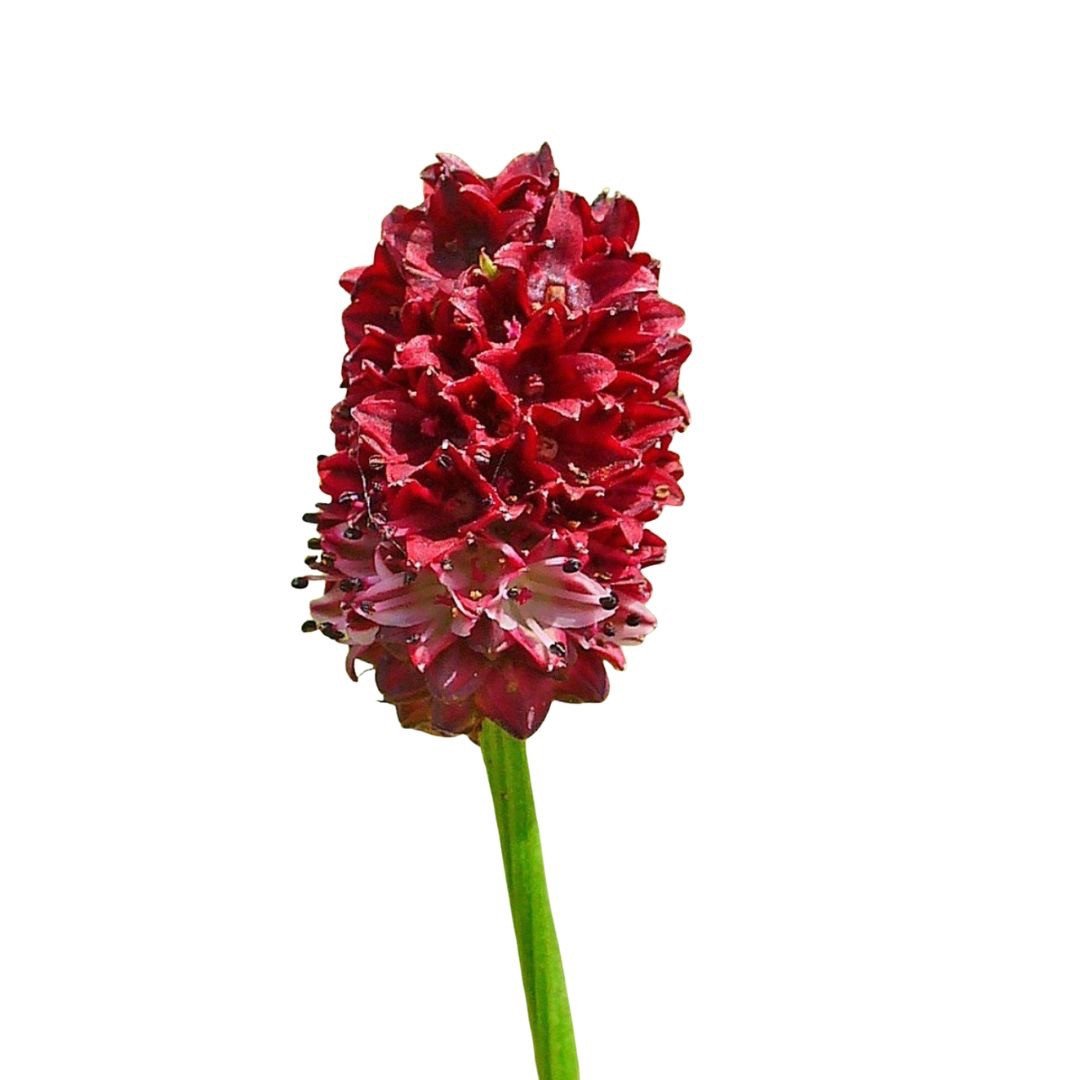
Die Pflanzengattung Wiesenknopf (bot. Sanguisorba) zählt zur Familie der Rosengewächse (Rosaceae). Darin bilden sie die Untertribus Sanguisorbinae. Es handelt sich um ausdauernde krautige Pflanzen, die in den gemäßigten Zonen der nördlichen Hemisphäre vorkommen. Das Verbreitungsgebiet der Blütenpflanzen erstreckt sich von Eurasien bis nach Nordamerika. Die erste wissenschaftliche Bestimmung und der Gattungsname stammen aus dem Jahr 1753 von dem schwedischen Pflanzenkundler Carl von Linné. Der Gattungsname stammt vom Lateinischen sanguis Blut sowie sorbere für aufsaugen und weist auf die blutstillende Wirkung. Insbesondere gilt das für die Art Sanguisorba officinalis hin, die in der Volksmedizin eine Rolle spielte. Es gibt je nach wissenschaftlicher Auffassung zwischen 15 und 30 Arten von Wiesenknopf-Pflanzen. Blatt Einige Sanguisorba-Arten bilden am Boden eine Blattrosette. Die Laubblätter der Stauden sind wechselständig an den Stängeln angeordnet und unpaarig gefiedert. Die Blätter bestehen aus 7 bis 25 kleinen Fliederblättchen. Diese besitzen einen gesägten Blattrand. Außerdem gibt es Nebenblätter, die mit dem Blattstiel verwachsen sind. Blüte Die Gattung der Wiesenknöpfe besitzen ährige oder kopfige Blütenstände mit vielen Blüten. Sie sind endständig und weisen Trag- sowie Deckblätter auf. Die Einzelblüten sind klein und meist zwittrig. Die Blüten besitzen einen Blütenbecher sowie einen Diskus. Je nach Art gibt es hauptsächlich vier, manchmal sieben kronblattartige Kelchblätter. Diese sind meist rot, rosa oder violett, weiß und seltener grün. Im Blüteninneren stehen meist vier Staubblätter. Die Blütezeit ist bei den jeweiligen Arten unterschiedlich. Sie blühen zwischen Mai und November. Frucht Die kleinen Samen bleiben durch den Winter hindurch an der Pflanze. Wuchs Wiesenknöpfe wachsen in der Regel als ausdauernde krautige Pflanzen. Sie werden bis zu 120 Zentimeter hoch und besitzen aufrechte Stängel mit wechselständigen Laubblättern. Die Blüten stehen meist kopfig an den Stängelenden. Einige Arten im Mittelmeerraum bilden auch kleine Sträucher aus, die zwischen 50 und 200 Zentimeter hoch wachsen können. Die Pflanzen besitzen meist ein verholztes Rhizom als Überdauerungsorgan. Dieses ist kahl oder schwach behaart.
Herkunft:
gemäßigte Gebiete, Eurasien, Nordamerika
Anbautipps
Standort Die Wiesenknöpfe bevorzugen einen sonnigen bis halbschattigen Standort. Sie kommen auf Mager- oder Trockenrasen, auf kalkhaltigem oder lockerem Lehmboden oder auf Nasswiesen sowie auf Moorwiesen vor. Die unterschiedlichen Arten wachsen im Tiefland und sind in alpinen Regionen bis auf 2.300 Meter nachzuweisen. Nutzung Einige Arten der Wiesenknöpfe sind beliebte sommergrüne Zierpflanzen, die vor allem in Bauerngärten anzutreffen sind. Sie schmücken Staudenbeete und lassen sich wunderbar mit anderen Gartenpflanzen kombinieren. Eine große Rolle spielen die Pflanzen jedoch nicht. Allerdings ist der Kleine Wiesenknopf als Pimpinelle ein wichtiger Bestandteil der bekannten Frankfurter Soße. Medizinisch sind die Pflanzen heute von geringer Bedeutung. Einige Arten sind eine wichtige Nahrungsgrundlage für Schmetterlinge. Pflege/Schnitt Die Pflanzen sind sommergrün und mehrjährig. Der Pflanzenfreund kann die verblühten Triebe abschneiden. Im Frühjahr treiben die Wiesenknöpfe wieder frisch aus. Krankheiten/Schädlinge Spezielle Krankheiten oder Schädlinge sind nicht bekannt.

Gute Nachbarn

Schlechte Nachbarn
Aubergine
Chili
Efeu
Gartenkürbis - Zierkürbis
Gartenkürbis - Zucchini
Gräser - Bambusse
Gräser - Federborstengräser, Lampenputzergräser
Gräser - Pampasgräser
Gräser - Schilfrohre, Pfahlrohre, Rohrkolben
Gurke
Kartoffel
Kürbis
Minze
Okra
Paprika
Sonnenblume
Süßkartoffel
Tomate (Fleischtomate / Großfruchtige)
Tomate (Kleinfruchtige)
Tomate (Salattomate / Normalfruchtige)
Tomate (Wildtomate)
Waldmeister
Walnussgewächse
Krankheiten
Blütenendfäule
Echter Mehltau
Schädlinge
Schnecken
Blattläuse
Zikaden