Sofia

Variety
Sofia
Approved Data
created by Alex&Sempi at 07.03.2026
Features
Taste
aromatic
sweet
slightly sour
Color
light green / pale green
red leaves in fall
Location
light: sunny to semi-shady
Resistances
hardy down to -30°C
Growth habit
insect pollination
Befruchtung: unfruchtbar, steril
Fruit shape
Type: Gathering fruit - Gathering stone fruit
Season Overview
Sowing
Harvest
Harvest
J
F
M
A
M
J
J
A
S
O
N
D
1ST YEAR
FOLLOWING YEARS
Description
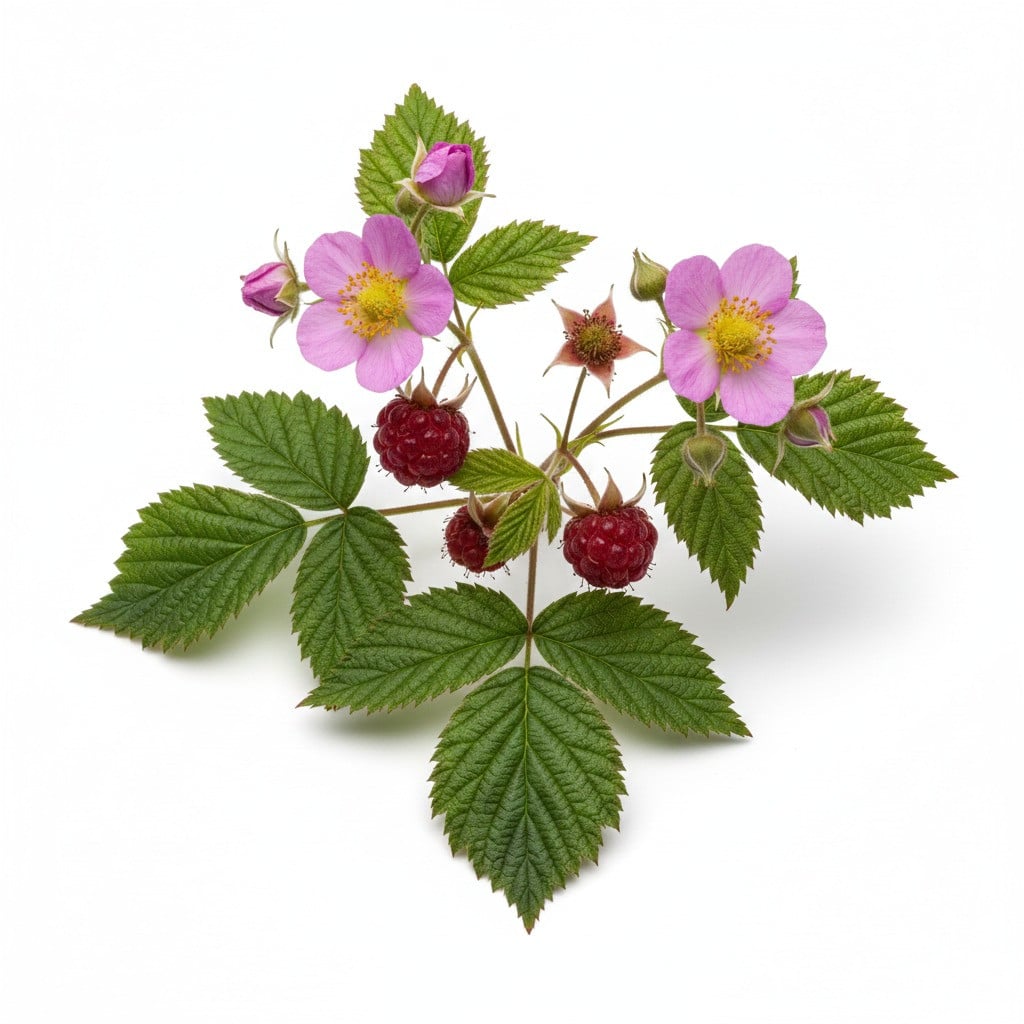
Profile of the 'Sofia' bog bilberry Growth: low-growing, 10-25 cm high Leaves: light green, pinnate leaves that turn red in autumn (2-3 cm); deciduous Location: sunny to semi-shaded Soil: moderately nutrient-rich, moist soil; slightly acidic soil (bog soil) Ripening period: from June Flowering period: pink flowers from April to May Fruit: yellow-brown-red colored fruit, rich in vitamins Taste: aromatic, sweet-sour Origin: Sweden Use: ground cover, bee pasture, group planting, container planting The Arctic raspberry (Rubus arcticus), also known as (Swedish) field berry, Arctic blackberry, Arctic raspberry, Nordic raspberry, Nordic blackberry, dwarf raspberry, polar raspberry, or mammure, is a species of the genus Rubus. The Arctic raspberry is found in northern Eurasia (Finland, northern Sweden, northern Norway, and northern Russia) as well as in North America, China, Korea, and Mongolia. In North America, it is also known by its Native American name, "nagoonberry." Allackerberries prefer moist locations such as moors, swamps, or streams at the edges of fields and meadows. The cloudberry is sometimes confused with the cloudberry (Rubus chamaemorus), which occurs in the same habitat. However, the cloudberry can be easily distinguished from the cloudberry by its almost always white flowers, its yellow-orange berries when ripe, and its differently shaped leaves. Growth This thornless, deciduous perennial plant grows to a height of about 10-30 cm. The stems are loose and finely hairy. With its bushy, flat growth and a spread of 25 cm to 30 cm, the bog bilberry tends to grow in width, making it ideal as a ground cover. The optimal location for the Allackerbeere should be sunny to semi-shaded. Leaves The alternate, stalked leaves are trifoliate to almost entire. The sessile to short-stalked, pointed to blunt leaflets or leaves are coarse to fine, partly double, serrated to toothed. The leaflets are ovate to obovate, sometimes slightly lobed, somewhat hairy on the underside and almost glabrous on the upper side. The lobed or almost entire leaves are ovate to heart-shaped. The long petiole is finely hairy. Herbaceous, often deciduous stipules are formed. Flowers The flowers appear in May, terminal and solitary, rarely in pairs or threes. The stalked flowers with double perianth are about 15-25 mm in size, the usually 5 to 8 or more petals are sometimes toothed and nailed. The partly glandular, green-reddish calyx is cup-shaped and hairy to hairless on the outside, with usually 5-8 or more narrow, pointed lobes. The intense pink to bright pink flowers are basically hermaphroditic – they have both male and female reproductive organs. Nevertheless, the fieldberry is self-sterile, meaning that the flowers cannot fertilize themselves. For fertilization, fieldberries always depend on a different gene pool – on a different variety – so that the striking flowers can produce tasty berries. Fruits In June and July, the cloudberry produces very tasty, fleshy, red, egg-shaped to round, bumpy fruits up to about 1 cm in size, aggregate fruits with a persistent calyx. The small, individual drupes are loosely clustered together. It reproduces vegetatively via runners. Subspecies and variants • Rubus arcticus subsp. arcticus: From northwestern Canada, Alaska, through northern Asia to western Russia, northern Europe, Mongolia, northeastern China, and Japan. Here, the petals are not nailed. • Rubus arcticus subsp. stellatus: a subspecies native mainly to Alaska and northwestern Canada to eastern Russia; was previously considered a separate species and designated Rubus stellatus. Here the leaves are lobed to almost entire. • Rubus arcticus subsp. acaulis: a subspecies found in large parts of Canada and Alaska to the northwestern United States and Michigan; formerly also known as Rubus acaulis • Rubus × stellarcticus, also Rubus arcticus var. stellarcticus: a cultivated variant of the Swedish fieldberry that originated in Sweden and was bred from a cross with a North American subspecies (subsp. stellatus). Use In the garden, fieldberries are mainly used as flowering and fruit-bearing ground cover. In the kitchen, cloudberry fruits are very versatile, just like raspberries and blackberries. Everything is possible, from jam, jelly, juice, or syrup to liqueur and fruit wine. Cloudberry fruits enjoy a very special reputation as the European berry with the best flavor. However, the taste is surprisingly difficult to describe and put into words. The fruits are sweet and also have a certain acidity and tanginess. Sometimes the aroma is compared to that of cranberries, sometimes to that of pineapple and other exotic fruits. As is so often the case, the truth probably lies somewhere in between.
F1 Hybrid
Frostproof
Growing tips
🌞 Location & soil - Sunny - semi-shady, cool location - Protected from the wind, but airy - Humus-rich, loose, sandy, slightly acidic soil (pH 4.5-6), lime-free - organic soil, coniferous litter, bark humus, boggy soil - Rather nutrient-poor soil - well-drained, permeable, evenly moist, no waterlogging 🌱 Sowing & planting - Stratify: 4-6 weeks - Sowing depth: 0.2 cm (light germinator) - Germination temperature: 5-15 °C - Germination time: several weeks to months - Planting time: March - May (alternatively September - October) - Planting distance: 30x30 cm - At least two different varieties required for fruiting - Keep evenly moist 💧 Care - Watering: regularly, never dry out, no waterlogging, no tap water - Fertilization: very little / spring acidic special fertilizer - No fresh compost, calcareous fertilizer and strong mineral universal fertilizer - Mulching: Coniferous litter (pine, spruce), bark mulch, leaves (oak, beech) in the fall 🌾 Harvest - Harvest time: June - July - Pick fully ripe berries individually in dry weather ❄️ Winter protection - Light layer of mulch (bark mulch, needle litter, leaves) around the root area - Keep the soil loose, avoid waterlogging - Additionally cover young plants with brushwood - must not dry out, water occasionally 🌿 Good neighbors - Cranberry, lingonberry, blueberry - Currant, gooseberry - Rhododendron, azalea, erica, calluna, ferns - Alders, spruces, pines at a distance - Wood sorrel, marsh violets, mosses, mushrooms, dwarf sedges, cotton grass 🚫 Bad neighbors - Heavy eaters (cabbage, pumpkin, nightshade plants) - Vigorous ground cover plants (ivy, forest stonecrop, periwinkle) - Maple, birch, willow, hazelnut, walnut - Strawberries, raspberries, blackberries - Mediterranean herbs, sedum - Lawns, lime-loving perennials 🍂 Diseases - Gray mold - Fruit rot - Leaf spot diseases - Rust fungi - Root rot Pests - Aphids - snails - Gall mites - Spider mites
Details

Light requirement
Semi-shaded

Water requirement
Moist

Soil
Light (sandy)
Nutrient requirement
Low

Light germinator

Germination temperature
5 - 15 °C (Degrees Celsius)

Plant distance
30 cm

Row spacing
30 cm

Seeding depth
0.2 cm

Companion Plants

Antagonistic Plants
Abyssinian cabbage / Ethiopian mustard
Anemone
Aubergine / Eggplant
Beetroot
Blackberry / Brambles
Broccoli
Broccoli raab / Stem cabbage / Cima di rapa
Brussels sprouts
Brussels sprouts
Cabbage (Cabbage)
Cabbage (Pointed cabbage)
Cabbage (red cabbage)
Cabbage (Savoy cabbage)
Cauliflower
Chili
Chinese kale - Kai-lan / Chinese broccoli
Clematis
Collard greens
Collard greens (Kale)
Collard greens (Tuscan kale / Dinosaur kale / Palm tree kale)
Courgette / Zucchini
Cucumber (African horned cucumber / Kiwano)
Cucumber (Caigua)
Cucumber (Melothria)
Cucumber / Gherkin
Garden squash - Patisson / UFO squash
Grasses - feather-bristled grasses, lamp-cleaning grasses
Grasses - Fescue
Grasses - Pampas grass
Grasses - Reedgrass
Green lavender cotton
Hair cucumbers / snake gourds
Hazelnut
Hellebores
Horsetail
Ivy
Kohlrabi / German turnip / Turnip cabbage
Lavender
Lily of the valley
Maples
Mizuna / Japanese mustard greens
Napa cabbage / Chinese cabbage
Nightshades (Other)
Okra
Oregano
Ornamental pumpkin
Pak Choi
Pepper / Paprika
Phlox, flame flower
Potato
Pumpkin / Squash
Rapeseed
Rapeseed - Sheer cabbage / Siberian cabbage
Rapini / Broccoli rabe
Raspberry
Rose
Rosemary
Rutabaga / Swedish turnip
Sage
Sea coal
Sponge gourd / Egyptian cucumber / Vietnamese luffa
Stem herbs
Stinging nettle
Strawberry
Succulents
Sweet woodruff / Sweetscented bedstraw
Thyme
Tomato (Bush tomato)
Tomato (Cocktail bush tomato)
Tomato (Cocktail Stake Tomato)
Tomato (Stake tomato)
Turnip
Turnip greens - Choy Sum / Chinese flowering cabbage
Turnip greens - Mizuna
Turnip greens - Tatsoi
Turnips - Oilseed turnips
Turnips - Wild turnips
Vegetable cabbage - Forage cabbage
Vegetable cabbage - Ribbed cabbage / Portuguese cabbage
Vegetable cabbage - wild cabbage / ancient cabbage
Walnut family
Wild garlic
Willows
Yalta tomatoes
Diseases
Root Rot
Septoria
Grey mold
Pests
Land snails
Gall mites
Spider mites
Aphids