Alder trees

Alder trees
Alnus
Plant family
- others -
Season Overview
Propagating
Planting
Harvest
Harvest
J
F
M
A
M
J
J
A
S
O
N
D
1ST YEAR
FOLLOWING YEARS
Details

Light requirement
Sunny
Water requirement
Wet

Soil
Medium (loamy)
Nutrient requirement
Low

Light germinator

Germination temperature
15 – 20 °C (Degrees Celsius)

Plant distance
550 cm

Row spacing
550 cm

Seeding depth
0.5 cm
Instructions
Description
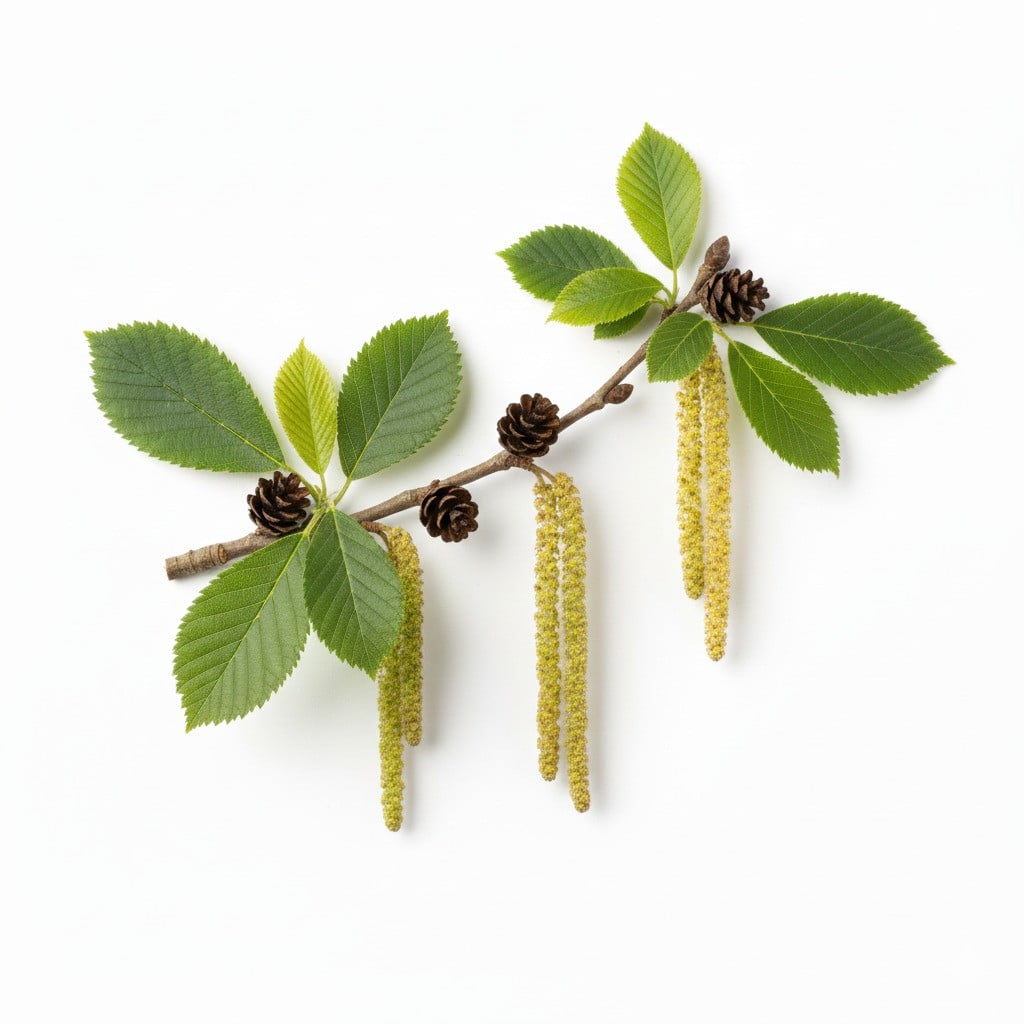
In 1754, the British botanist Philip Miller described the mystical genus in scientific terms. Alders (bot. Alnus) belong to the birch family (Betulaceae). These are deciduous trees with separate sexes. The deciduous tree genus Alnus comprises over 30 species, three of which are native to Central Europe. Alders are typical first colonizers, clearing the way for other species and making inhospitable areas arable. Accustomed to high water levels, they appear sublime and elegant. At the same time, they appear playful and delicate with their small, rounded leaves. Their fine, malleable wood provides material for furniture and musical instruments. Leaf The dense and imposing foliage of the alder shines in the most beautiful shades of green. The single, stalked leaf reaches up to nine centimeters in length. Depending on the variety, they are symmetrical, rounded, ovate or pointed. The leaf tip is not always present. The veins run parallel from the leaf blade. The upper side of the leaf is smooth, while the underside is slightly darker and sometimes tomentose. The leaf margin is finely to coarsely serrated or serrated. The leaf position is alternate. In the fall, the tree goes into hibernation due to the change in the duration and intensity of daylight. This state removes the green from the leaves. The remaining leaf pigments, such as carotenoids and xanthophyll, cause the alder leaves to turn brown. Finally, it dies and falls off. Flowering The inflorescences of the Betulaceae are called catkins. Formed the previous year, they overwinter freely. Alder trees are monoecious and have separate sexes, with female and male flowers on the same tree. The term pollen refers to mealy pollen that contains many male microspores. Alder flowers release this pollen in March and April before the leaves sprout from the striking, drooping male flowers. Wind-pollinated plants shed masses of pollen and cause problems for allergy sufferers. When they combine with the macrospores of the inconspicuous female flowers, the fruit is formed. Fruit The individual fruits of the alder are nuts. The seed contains an embryo with two thickened flat cotyledons. The individual seeds are located in the transformed former female flowers. The initially green cones later darken, become brownish, lignify and survive on the tree. Growth The small to medium-sized, slender trees grow up to 25 meters high. Their bark has so-called lenticels. These cork pores act like breathing openings and are used for air exchange. Cork warts are visible and serve as a biological adaptation to a wet outdoor environment. Another are stilt roots. Densely branched and covered with cork warts, these protrude above the soil. The smooth end tissue of young alder trunks is mostly cork. With increasing thickness and age, it often develops cracks and furrows. The bark of some alder varieties becomes woody, scaly and barky. Air conduction tissue inside the trunk is an additional site adaptation feature of the Alnus genus.
Origin:
Temperate zones of the northern hemisphere North America, Europe, Asia North Africa, Vietnam, Argentina
Growing tips
Location Alders are pioneer plants. These plant pioneers colonize bare, barren substrates such as landfills and spoil heaps and lay the foundation for the development of a new ecosystem. A special ability that enables the plant to do this arises from its symbiosis with actinomycetes (Frankia alni) living on the root system. These are able to bind atmospheric nitrogen and release it into the soil in the form of nitrogen compounds. This process is called nitrogen fixation. Such compounds serve the plant as a profitable nutrient. The advantage for the bacteria lies in the delivery of the nitrogen and protection by the plant. Air reaches all parts of the plant through the cork warts. The mutually beneficial coexistence (symbiosis) of alder and actinomycetes leads to nutrient enrichment of the soil. Other plants germinate more easily. Large pure stands of this group of woody plants develop, later followed by other species. Alders prefer wet locations. They tolerate dry soil to a limited extent. Sandy-loamy, peaty or gravelly soils in slightly acidic to alkaline pH ranges are tolerated. Suitable garden locations for alders are in sunny or semi-shady places on a well-moistened, humus-rich and lime-free substrate. Away from a body of water, it is advisable to mulch the soil. It is important to maintain a planting distance of five to six meters between the individual plants. A tree of the genus Alnus grows to a height of up to 30 meters when cultivated. Utilization Alder wood has small pores and a uniform structure. Wood rays are inconspicuous. The smooth cut surface is pale yellow to reddish brown. Alder wood is used in furniture making as a substitute for other types of wood such as cherry and mahogany, in plywood and in the manufacture of instruments. The thin, flexible wood is popular in violin making. In the past, oak wood was used as charcoal, gunpowder, for dyeing leather and as a building material. The beams of the world-famous stilt houses in Venice are made from this moisture-resistant raw material. In the garden, Alnus, standing alone or in hedges, enchants with its sublime growth and elegant appearance. These plants reinforce clayey, damp soils or embankments and improve soil quality. Care/pruning On banks, alders do not require any watering. In dry areas, they require sufficient watering during dry periods in summer. The conscientious use of nitrogen fertilizers is advisable. The fine branches of these highly specialized pioneer plants have smooth, sometimes hairy bark. For regular pruning after the third year of life, it is advisable to shorten unbranched branches with a sharp pruning saw immediately after flowering. In winter, a garden fleece protects young alders against heavy frost. Older trees are frost-hardy. Diseases/pests The pseudo-fungus Phytophthora alni causes the dangerous root or root collar rot. An infestation can be recognized by black, oozing spots on the bark and leads to the death of entire alder trees. The curling disease caused by a fungus is characterized by blistered, wavy leaves and can be controlled with copper-containing fungicides. Typical pests of alders are alder leaf beetles, alder leaf suckers, leafhoppers and gall mites. The latter cause knot-shaped protrusions, so-called galls, on the leaves. Alder canker causes stem ulcers. Infested areas or branches must be cut out. One fungal disease that can be detected in dead wood is white rot.


Antagonistic Plants
Diseases
Root Rot
Pests
Cicadas
Gall mites