Bean (Dwarf bean)

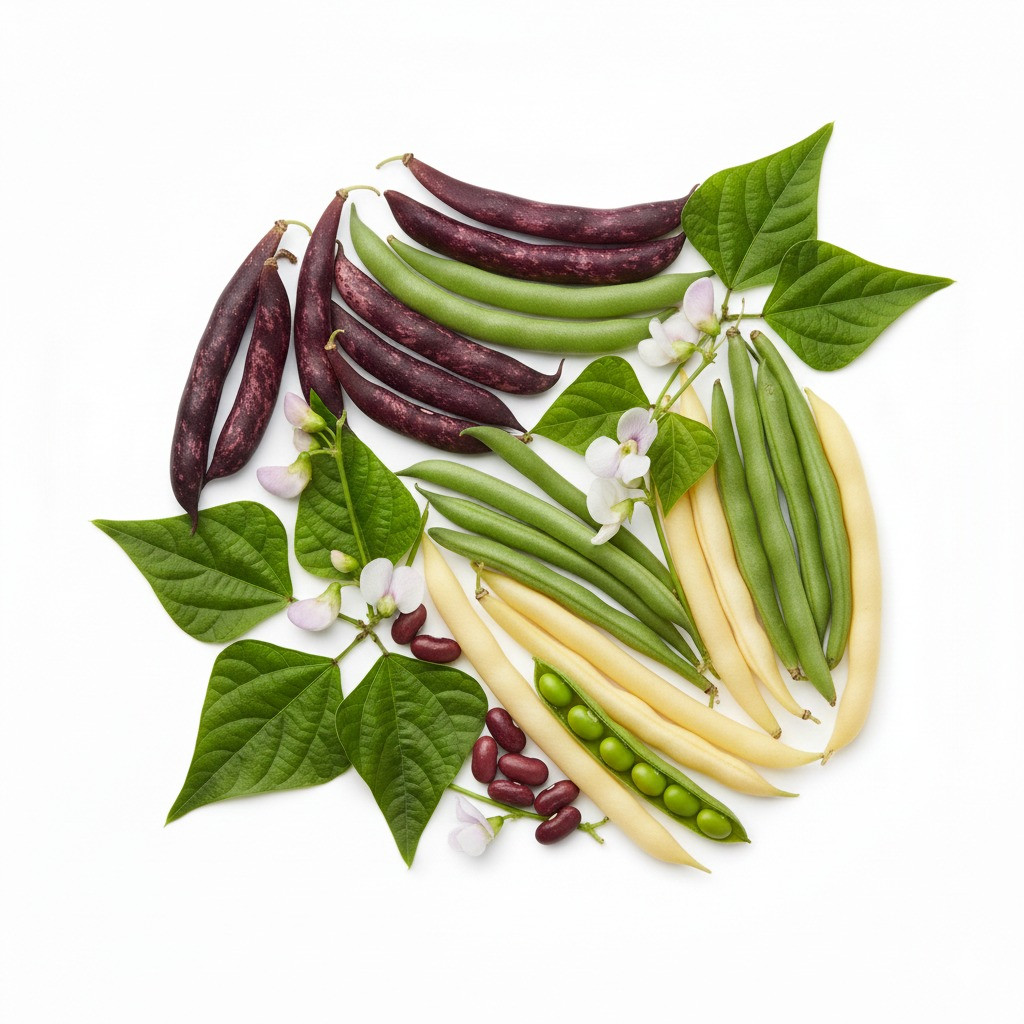
Bean (Dwarf bean)
Phaseolus vulgaris var. nanus
Plant family
Legumes (Fabaceae)
Cultivation Break
3 Years
Season Overview
Propagating
Planting
Harvest
J
F
M
A
M
J
J
A
S
O
N
D
Details


Light requirement
Sunny

Water requirement
Moist

Soil
Medium (loamy)

Nutrient requirement
Low

Dark germinator

Germination temperature
15 - 20 °C (Degrees Celsius)

Plant distance
8 cm

Row spacing
45 cm

Seeding depth
3 cm
Instructions
Beginning of May

Startdüngung
Mid of May

Sowing
Description
The bush bean is a cold-sensitive legume. Since bush beans belong to the legumes, they can go into symbiosis with nitrogen-fixing bacteria and are therefore a good preculture for crops requiring nutrients. The different varieties vary in bean size and color.
Origin:
Central America
Growing tips
Direct sowing in eyries or rows is possible until mid-July. The stability is increased by sowing in eyries and by regular hoeing around the plants. During the main harvest period you can harvest the ripe pods every three days. If you cover the seedlings with fleece or foil, early sowing is possible, even if temperatures are still low. Nitrogen fertilization is not necessary, because the nodule bacteria fix nitrogen to the roots.

Companion Plants
Abyssinian cabbage / Ethiopian mustard
Asparagus
Aubergine / Eggplant
Beetroot
Black salsify
Blackberry / Brambles
Borage
Broccoli
Broccoli raab / Stem cabbage / Cima di rapa
Brussels sprouts
Brussels sprouts
Cabbage (Cabbage)
Cabbage (Pointed cabbage)
Cabbage (red cabbage)
Cabbage (Savoy cabbage)
Calliopsis / Tickseed
Caraway / Meridian fennel / Persian cumin
Carrots
Cauliflower
Celery (Celeriac / Celery root)
Celery (Celery)
Celery (Leaf celery / Chinese celery)
Celtuce / Stem lettuce
Chard
Chili
Chinese kale - Kai-lan / Chinese broccoli
Collard greens (Kale)
Collard greens (Tuscan kale / Dinosaur kale / Palm tree kale)
Common marigold
Coneflower (Echinacea)
Corn / Maize
Courgette / Zucchini
Cucumber (Caigua)
Cucumber / Gherkin
Currant
Dill
Garden squash - Patisson / UFO squash
Gooseberry
Hair cucumbers / snake gourds
Kohlrabi / German turnip / Turnip cabbage
Lettuce (Common chicory)
Lettuce (Endive / Escarole / Erisée)
Lettuce (Lamb's lettuce)
Lettuce (Lettuce)
Lettuce (Oriental greens / Brown mustard)
Lettuce (Puntarelle / Cicoria di catalogna / Cicoria asparago)
Lettuce (Radicchio / Italian chicory)
Lettuce (Sugar loaf)
Melon (Sugar melon)
Melon (Watermelon)
Mizuna / Japanese mustard greens
Napa cabbage / Chinese cabbage
Nasturtium
Nightshades (Other)
Oregano
Ornamental pumpkin
Pak Choi
Pepper / Paprika
Physalis
Pumpkin / Squash
Radish
Radishes
Rapini / Broccoli rabe
Raspberry
Rhubarb
Rudbeckia (Coneflower / Black-eyed-susans)
Rutabaga / Swedish turnip
Sage
Savory
Spinach (Summer)
Spinach (Winter)
Sponge gourd / Egyptian cucumber / Vietnamese luffa
Strawberry
Tagetes / Marigolds
Tomato (Bush tomato)
Tomato (Cocktail bush tomato)
Tomato (Stake tomato)
Turnip
Turnip greens - Choy Sum / Chinese flowering cabbage
Turnip greens - Mizuna
Turnip greens - Tatsoi
Turnip-rooted chervil
Turnips - Oilseed turnips
Turnips - Wild turnips
Vegetable cabbage - Forage cabbage
Vegetable cabbage - wild cabbage / ancient cabbage
Yalta tomatoes

Antagonistic Plants
Bean ((Scarlet) runner bean)
Bean (Broad bean / Faba bean / Field bean)
Bean (Hyacinth bean / Lablab-bean)
Bean (Lima Bean)
Bean (Runner bean)
Chickpea
Chives
Chives
Elderberry
Evergreen
Fennel
Florence fennel / Finocchio
Forsythia
Garlic
Garlic chives
Ivy
Jerusalem artichoke / Topinambur
Larkspur
Leeks
Lentils
Lilac
Onion
Onion (Spring onion)
Ornamental alliums
Pea
Peony
Rapeseed - Sheer cabbage / Siberian cabbage
Soybean
Wild garlic

Diseases
Bacterial canker
Root Rot
Fusarium
Bean Rust
Bean Mosaic Virus
Common Bacterial Blight (Bean Blight)

Pests
Broad Bean weevil
Black bean aphid
Bean Seed Fly
Aphids
Land snails