Blueberry

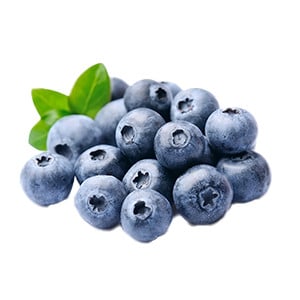
Blueberry
Vaccinium corymbosum / Vaccinium myrtillus
Plant family
The Heath (Ericaceae)
Cultivation Break
0 Years
Season Overview
Propagating
Planting
Harvest
Harvest
J
F
M
A
M
J
J
A
S
O
N
D
1ST YEAR
FOLLOWING YEARS
Details


Light requirement
Semi-shaded

Water requirement
Moist

Soil
Light (sandy)
Nutrient requirement
Low

Light germinator

Germination temperature
10 - 18 °C (Degrees Celsius)

Plant distance
125 cm

Row spacing
125 cm

Seeding depth
0.2 cm
Instructions
Description
Blueberries belong to the heath plants. The perennial dwarf shrub reaches growth heights of 10 to 60 cm/3.9-23.6 in. Its lifespan is up to 30 years. Depending on the variety, blueberries have different requirements for soil and location. Cultivated blueberries differ greatly from wild blueberries in this respect.
Origin:
They are originally from North America.
Growing tips
Blueberries have special requirements when it comes to their location. Depending on the variety, this should be full sun to partial shade and sheltered from the wind. They normally grow in moors or forests and are naturally adapted to acidic soils. Garden soils are generally not acidic enough. To make the soil more acidic and permeable, mix bark, sawdust, sand, leaves or shredded coniferous wood into the soil. The shrub will also appreciate a portion of compost. If this is too time-consuming, you can also simply buy blueberry or rhododendron soil from a specialist store. The ideal planting time is in the fall. However, you can also plant out the shrub in spring from March to April. You should then remove the flowers after planting. Heather plants are very sensitive to being planted too deep. The root ball should still protrude about 5 cm/2 in. Finally, apply a layer of mulch about 10 to 15 cm/3.9-5.9 in high. This keeps the bed sustainably moist. It takes around 6 to 8 weeks from flowering to harvest.

Companion Plants

Antagonistic Plants
Abyssinian cabbage / Ethiopian mustard
Anemone
Aubergine / Eggplant
Blackberry / Brambles
Broccoli
Broccoli raab / Stem cabbage / Cima di rapa
Brussels sprouts
Brussels sprouts
Cabbage (Cabbage)
Cabbage (Pointed cabbage)
Cabbage (red cabbage)
Cabbage (Savoy cabbage)
Cauliflower
Chili
Chinese kale - Kai-lan / Chinese broccoli
Clematis
Collard greens
Collard greens (Kale)
Collard greens (Tuscan kale / Dinosaur kale / Palm tree kale)
Courgette / Zucchini
Cucumber (African horned cucumber / Kiwano)
Cucumber (Caigua)
Cucumber (Melothria)
Cucumber / Gherkin
Garden squash - Patisson / UFO squash
Grasses - feather-bristled grasses, lamp-cleaning grasses
Grasses - Fescue
Grasses - Pampas grass
Grasses - Reedgrass
Green lavender cotton
Hair cucumbers / snake gourds
Hazelnut
Hellebores
Horsetail
Ivy
Lavender
Lily of the valley
Maples
Mizuna / Japanese mustard greens
Napa cabbage / Chinese cabbage
Nightshades (Other)
Okra
Oregano
Ornamental pumpkin
Pak Choi
Pepper / Paprika
Phlox, flame flower
Potato
Pumpkin / Squash
Rapeseed
Rapeseed - Sheer cabbage / Siberian cabbage
Rapini / Broccoli rabe
Raspberry
Rose
Rosemary
Rutabaga / Swedish turnip
Sage
Sea coal
Sponge gourd / Egyptian cucumber / Vietnamese luffa
Stem herbs
Stinging nettle
Strawberry
Succulents
Sweet woodruff / Sweetscented bedstraw
Thyme
Tomato (Bush tomato)
Tomato (Cocktail bush tomato)
Tomato (Cocktail Stake Tomato)
Tomato (Stake tomato)
Turnip
Turnip greens - Choy Sum / Chinese flowering cabbage
Turnip greens - Mizuna
Turnip greens - Tatsoi
Turnips - Oilseed turnips
Turnips - Wild turnips
Vegetable cabbage - Forage cabbage
Vegetable cabbage - Ribbed cabbage / Portuguese cabbage
Vegetable cabbage - wild cabbage / ancient cabbage
Walnut family
Wild garlic
Willows
Yalta tomatoes

Diseases
Root Rot
Septoria
Grey mold
Pests
Common winter moth
Spotted wing drosophila
Gall midges
Caterpillars
Schildläuse
Spider mites
Aphids