Pampas-Maiglöckchen / Oreganoblättrige Salpichroa

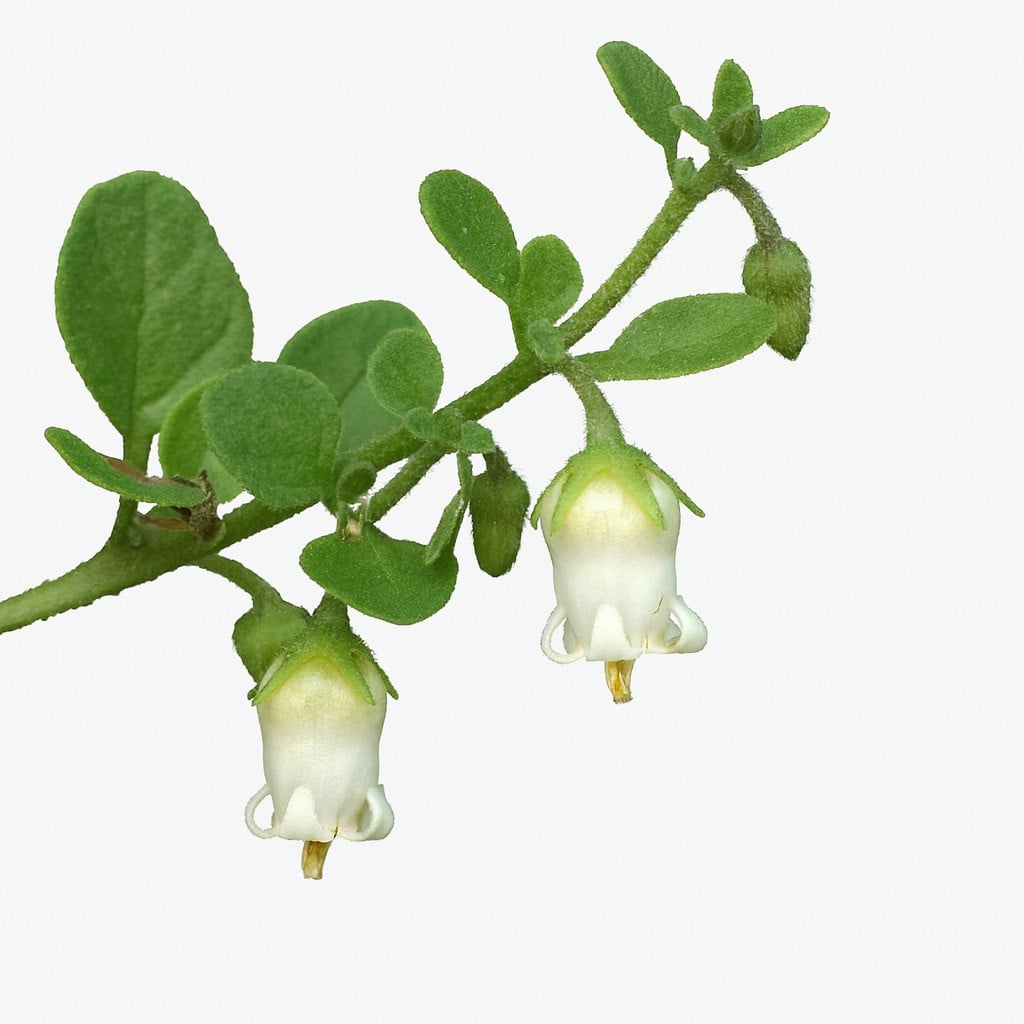
Variety
Pampas-Maiglöckchen / Oreganoblättrige Salpichroa
Approved Data
created by Alexandro at 14.12.2025
Features
Growth habit
lifespan: perennial
Game Variety
growth habit: Trailing
root type: rhizome
wide: 100 - 150 cm
dies back in late autumn
insect pollination
Blüte: hängend
Life cycle: sprouts in spring
Bell-shaped flowers
Blüte: duftend schwach
Vermehrung: samenfest
growth habit: climbing
Climbing plant
Hanging plant
growth habit: runner-forming
growth habit: ground cover
growth habit: hanging
leaves: loosely leafed
flower: flowering
root type: shallow-rooted
self-fruiting
fast growth
strong lateral shoot development
harvest: early-ripening
growth habit: broad
warm germination
cross-pollination
growth habit: prostrate
ornamental plant
self-seeding
propagation by cuttings
wide: 60 - 70 cm
growth habit: becoming woody
wide: 90 - 100 cm
height: 40 - 50 cm
wide: 50 - 60 cm
height: 30 - 40 cm
wide: 80 - 90 cm
growth habit: well-branched
hermaphroditic
wide: 70 - 80 cm
entire leaves
small flowers
small leaves
strong growth
propagation by seeds
propagation by division
propagation by runners
ground cover
Blätter: eiförmig
Geschlechtertyp: einhäusig
Keimung: Lichtkeimer
Blätter: weich/zart
Wuchsform: krautig
Wuchs: invasiv
Blätter: einfach
Blätter: elliptisch
Schnitt: nicht erforderlich
Leaves: slightly hairy
Ernteertrag: mittel
Blütenstand: einzeln, kleine Gruppen
Stamm, Stiel: behaart
Stamm, Stiel: kantig
Color
white
green
Flower: white
light yellow
glossy
medium green
bright
Blüte: hellgrün/blassgrün
Stamm, Stiel: grün
Wurzel: weiß
Wurzel: braun
Samen: braun
Fruchtfleisch: weiß
Wurzel: beige
Behaarung: weiß
Fruchtfleisch: farblos
Taste
sweet
Essbarkeit: Frucht
mild
Geschmacksrichtung: lieblich
fleshy
neutral
slightly sour
raw edible
Edible
juicy
thin skin
edible skin
Essbarkeit: Samen
Toxizität: giftig
Konsistenz: weich
Essbarkeit: nur reif
Fruit shape
elongated
egg-shaped
small
drop-shaped
smooth, sleek
Typ: Schließfrucht - Beere
Resistances
cold tolerant
resistant
robust
hardy down to -15°C
drought tolerant
Pest-resistant
hardy down to -20°C
krankheitstolerant
Location
planting: bed
planting: outdoor
light: sunny to semi-shady
Soil: permeable soil
fertilization: minimal
fertilization: humus-enriched
soil moisture: fresh to moist
Fertilization: moderately nutrient-rich
planting: raised bed
sheltered from the wind
planting: house wall / wall
soil moisture: no waterlogging
planting: hanging basket / dish
soil moisture: well-drained
biotope: forest
Soil: light
Soil: gravelly to sandy
Water: regularly
Fertilization: phosphate-rich
Soil: light to medium-heavy
planting: open balcony or terrace
Soil: sandy to loamy
fertilization: low-nitrogen
pH value: acidic to neutral (5,5-7)
planting: covered balcony or terrace
fertilization: lime-free
Soil: rocky, stony
Soil: loosened
fertilization: potassium-rich
Water: Adequate
Water: sparingly
Planting: rock garden / alpine garden
Planting: pots, tubs, or boxes
Fertilization: moderate
fertilization: sufficient
Water: Let the substrate dry in between
Fertilization: organic
biotope: steppe / grassland
Heat requirement: moderate
Düngemittel: Pflanzenjauche
Düngung: flüssig
Düngung: Langzeitdünger
Nachbarn gute: trockenheitsliebende
Nachbarn schlecht: feuchtigkeitsliebend
Nachbarn schlechte: Schattenpflanzen
Nachbarn schlechte: kalkliebend
Good companions: sun-loving
Nachbarn schlechte: stark wuchernd
Nachbarn schlechte: hoher nährstoffbedarf
Nachbarn gute: mit niedrigen Nährstoffbedarf
Nachbarn schlechte: hochwachsend
Nachbarn gute: niedrigwachsend
Gartenstil: Naturgarten
Biotop: Magerrasen, Trockenwiese
Gießen: Olla
Herkunft: Neophyt
Boden: mittelgründig (30-60)
Garden style: Mediterranean garden
Cultivation Break
4 Years
Season Overview
Propagating
Planting
Harvest
Harvest
J
F
M
A
M
J
J
A
S
O
N
D
1ST YEAR
FOLLOWING YEARS
Description
Very rare nightshade plant with incredibly fragrant, edible fruits. They smell strongly of honeydew melon and pineapple! Fruits are inverted teardrop-shaped, creamy white with a slight green tinge, with a striking orange ring around the calyx. The berries are edible and have a mild, sweet taste. It is a plant that is actually hardy in Germany and spreads by woody rhizomes. Originally from South America, it has been growing here for several years now. Both in pots and planted out in the open, it has survived every winter without damage. The roots go so deep into the soil that they are not damaged. Above ground, the plant dies back in winter and reliably sprouts again in spring. You need at least two plants for fertilization, which can also be planted very close together. They form an abundance of small, cute flowers with a shape similar to lily of the valley.
Non hybrid
Frostproof
Growing tips
Care during the season Water: Keep evenly moist, but avoid waterlogging. Fertilization: Provide regularly with organic fertilizer or compost. Distance: 40-50 cm between plants, as they spread via rhizomes. Use: Eat fresh, can only be stored for a short time. Overwintering Above ground: Plant dies back in winter. Rhizomes: Survive in the soil and sprout anew in spring. Overwinter frost-free in containers to keep the plant safe. Tips for success Mulching: Helps to retain moisture and protect rhizomes. Control: Plant spreads rapidly - cut back regularly or keep in a pot. Seed-resistant: Own seeds can be obtained and sown again the following year.
Details


Light requirement
Sunny

Water requirement
Moist

Soil
Medium (loamy)
Nutrient requirement
High

Germination temperature
20 °C (Degrees Celsius)

Plant distance
40 cm

Row spacing
50 cm

Seeding depth
1 cm

Companion Plants

Antagonistic Plants
Abyssinian cabbage / Ethiopian mustard
Aubergine / Eggplant
Beetroot
Begonias
Broccoli
Broccoli raab / Stem cabbage / Cima di rapa
Brussels sprouts
Brussels sprouts
Cabbage (Cabbage)
Cabbage (Pointed cabbage)
Cabbage (red cabbage)
Cabbage (Savoy cabbage)
Cauliflower
Celery (Celeriac / Celery root)
Celery (Celery)
Celery (Leaf celery / Chinese celery)
Chili
Chinese kale - Kai-lan / Chinese broccoli
Collard greens
Collard greens (Kale)
Collard greens (Tuscan kale / Dinosaur kale / Palm tree kale)
Corn / Maize
Courgette / Zucchini
Cucumber (Caigua)
Cucumber (Melothria)
Cucumber / Gherkin
Fuchsias
Garden squash - Patisson / UFO squash
Grasses - Bamboos
Grasses - reeds, cattails, bulrushes
Grasses - Sedges
Grasses - Sedges, Rushes
Hair cucumbers / snake gourds
Hydrangea / Hortensia
Ivy
Kohlrabi / German turnip / Turnip cabbage
Melon (Sugar melon)
Melon (Watermelon)
Mint
Mizuna / Japanese mustard greens
Napa cabbage / Chinese cabbage
Nightshades (Other)
Okra
Ornamental pumpkin
Pak Choi
Pepper / Paprika
Physalis
Potato
Pumpkin / Squash
Quadriceps
Rapeseed
Rapeseed - Sheer cabbage / Siberian cabbage
Rapini / Broccoli rabe
Sea coal
Sweet woodruff / Sweetscented bedstraw
Tomato (Bush tomato)
Tomato (Cocktail bush tomato)
Tomato (Cocktail Stake Tomato)
Tomato (Stake tomato)
Turnip
Turnip greens - Choy Sum / Chinese flowering cabbage
Turnip greens - Mizuna
Turnip greens - Tatsoi
Turnips - Oilseed turnips
Turnips - Wild turnips
Vegetable cabbage - Forage cabbage
Vegetable cabbage - Ribbed cabbage / Portuguese cabbage
Vegetable cabbage - wild cabbage / ancient cabbage
Yalta tomatoes
Diseases
Root Rot
Septoria
Downy mildew
Angular leaf spot of cucumber
Powdery mildews
Early blight of potato
Pests
Thrips
Spider mites
Land snails
Caterpillars
Aphids
White fly