Calyx

Calyx
Osteospermum
Plant family
Daisy family (Asteraceae)
Season Overview
Propagating
Planting
Harvest
Harvest
J
F
M
A
M
J
J
A
S
O
N
D
1ST YEAR
2ND YEAR
Details


Light requirement
Sunny

Water requirement
Moist

Soil
Light (sandy)

Nutrient requirement
Medium

Light germinator

Germination temperature
18 - 20 °C (Degrees Celsius)

Plant distance
25 cm

Row spacing
30 cm

Seeding depth
0.5 cm
Instructions
Description
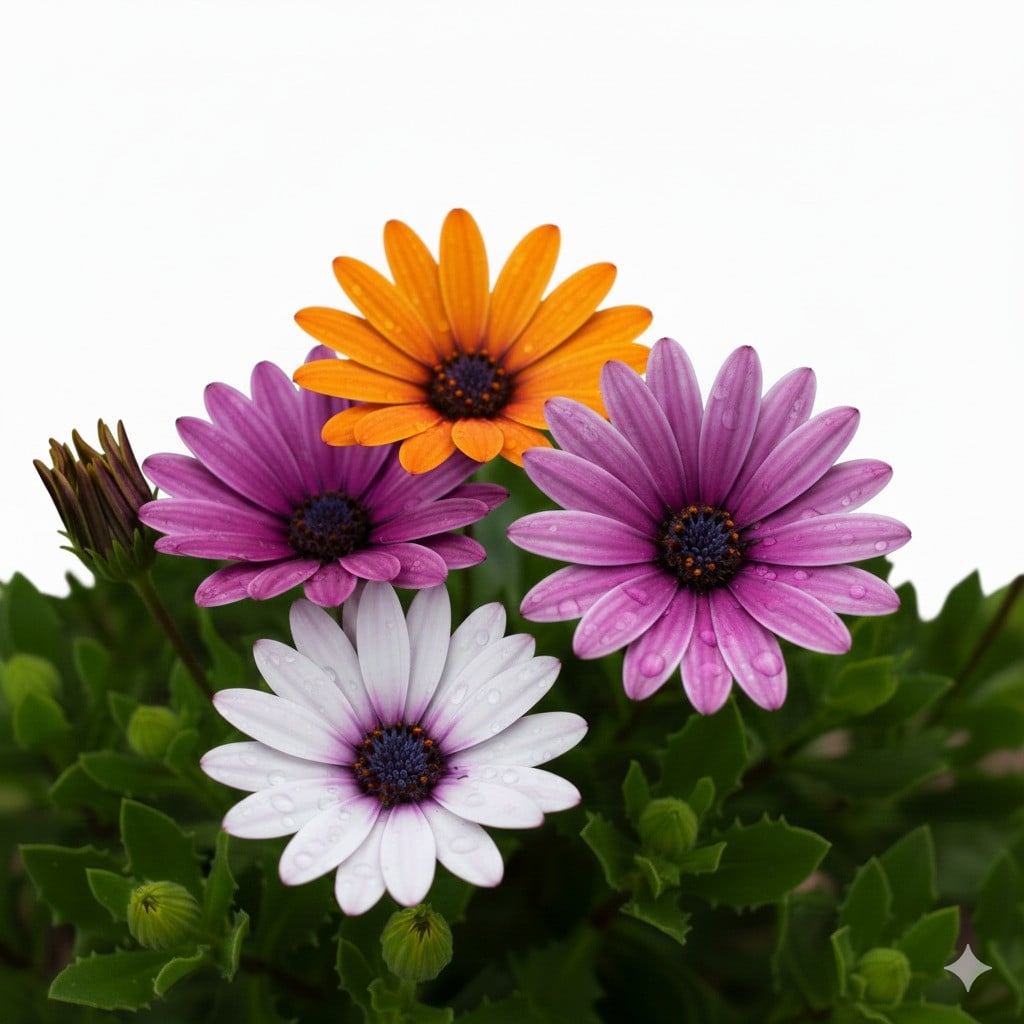
Origin Native to South Africa, the Cape basket (Osteospermum) belongs to the Asteraceae family. The numerous Osteospermum hybrids are particularly widespread and popular here, providing color in potted gardens and flower beds throughout the summer. Growth The sun-loving cape basket has a compact habit and can grow between 20 and 40 centimetres tall, depending on the variety, with its long-stemmed flowers growing somewhat taller. It grows upright and bushy. Leaves The leaves of the cape basket are elongated, lanceolate and green. Flowers The flowers only open in the sun. Osteospermum is also known as Cape daisy because of the similarity of its flowers to the daisy. With a flowering period from May to September, it is a real continuous bloomer. The capitula flowers are often bicolored, often the underside of the petals appear in a different shade, sometimes the color also changes from the inside of the flower to the edge, which makes the cape capitula extremely versatile and decorative. The color palette of the flowers ranges from violet to pale pink to yellow. Orange-flowering and white-flowering varieties are the most common here. Fruits The seeds of Osteospermum develop in so-called achenes, i.e. nut-like nuts. They are winged.
Origin:
South Africa
Growing tips
Location Cape cacti need a sunny and warm spot in a bed or on the balcony. They look more lush in small, multi-colored groups. As they love the sun and warmth so much, cape baskets should only be planted on the balcony, patio or in the flower bed after the Ice Saints. It is best to choose a spot that is slightly sheltered from the wind to prevent the flowers from breaking off. Substrate The soil for the cape baskets should be well-drained and never too wet. To prevent waterlogging, you can mix the substrate with a quarter of sand or grit. Watering Keep the plants evenly moist. Osteospermum can cope better with slight dryness than constant moisture. Overflowing saucers on the balcony or terrace should always be emptied immediately. Fertilizing Add some liquid fertilizer to the watering water of the cape baskets every 14 days. Caution: If over-fertilized, the plants can easily become lazy to flower. Other care These cheerful, colorful garden plants are very easy to care for and are therefore also suitable for gardening beginners. Our tip: Some varieties repeatedly take short flowering breaks. If you continue to care for the plants, the flowers will keep coming back. The summer flower will reward plenty of light with a full bloom, but the leaves can become spotty when it rains. For a beautiful bloom, cut back faded stems regularly so that they branch out again and produce flowers at the ends. Overwintering or winter protection Bring the cape baskets to safety before the first frost in October. The plants can be overwintered relatively easily at around 10 to 15 degrees Celsius in a bright room. During this time, Osteospermum is in a dormant phase and only needs to be watered sparingly and not fertilized. Before wintering out in early summer, you can cut the plants back to give them enough strength for the next flowering. Slowly acclimatize the overwintered plants to warmer temperatures in April and do not place them in direct sunlight straight away. Use In summer balcony planting, cape baskets have long since established themselves and developed into real favorites. They harmonize well with ornamental grasses or upright-growing summer bloomers, both in balcony boxes and in flower beds. A particularly beautiful effect is created in combination with plants that have similar characteristics. The same applies to the summer flower bed. Cape baskets are ideal for adding color to the garden. Different colored varieties of Osteospermum can be mixed and transform the bed into a colorful sea of flowers with an impressive long-distance effect. Propagation Cape baskets are sown in pots or in a cold frame in late winter and propagated there. To do this, you can harvest and dry the seeds from the previous year's plants in September. If you want to sow directly outdoors, you should wait for the last frost in April or May. The seeds will germinate after about two weeks. The sun-loving South Africans react very sensitively to cold spells with persistently wet weather, as can often still be expected at the beginning of June. The plants remain small and flowering is a long time coming. This is also the reason why planting out should not be rushed. In a warm location with well-drained soil, cape baskets flower until late summer. Ostespermum is actually a biennial and can therefore be overwintered in a cold house at the end of the season. However, the plant is usually cultivated as an annual bedding or balcony plant. If you overwinter your cape baskets, you can cut cuttings from the plants in February. Choose a non-flowering, strong stem about six to eight centimetres long and remove the leaves. Then place the cutting about a third deep in potting compost. The cutting will root quickly in a bright, warm location. Diseases and pests If you avoid stagnant air and do not keep the cape baskets too moist, you have a good chance of keeping the plant healthy for a long time. Unfortunately, cape baskets are susceptible to aphids. You can prevent an infestation by applying a decoction of field horsetail or wormwood to strengthen the plants.

Companion Plants

Antagonistic Plants

Diseases
Root Rot
Grey mold
Powdery mildews

Pests
Spider mites
Aphids
White fly