KräuterMaxi
05.06.2026, 18:20
Stuffed Maple Leaves Part 1: Fermenting the Leaves:
(This text was actually written in a slightly different context, so please excuse any awkward phrasing)
As we saw, my maple leaves were still a bit too tough. If I were to make this again today and didn’t have any wine, I would probably use large, light-green leaves from a linden tree. You could also try leaves from knotweed or hops, or even cucumber, zucchini, pumpkin, or perhaps even large bean leaves. Basically, I think maple leaves are better suited, but you should probably harvest them a bit earlier when they’re still light green and soft.
Here’s the recipe for the leaves:
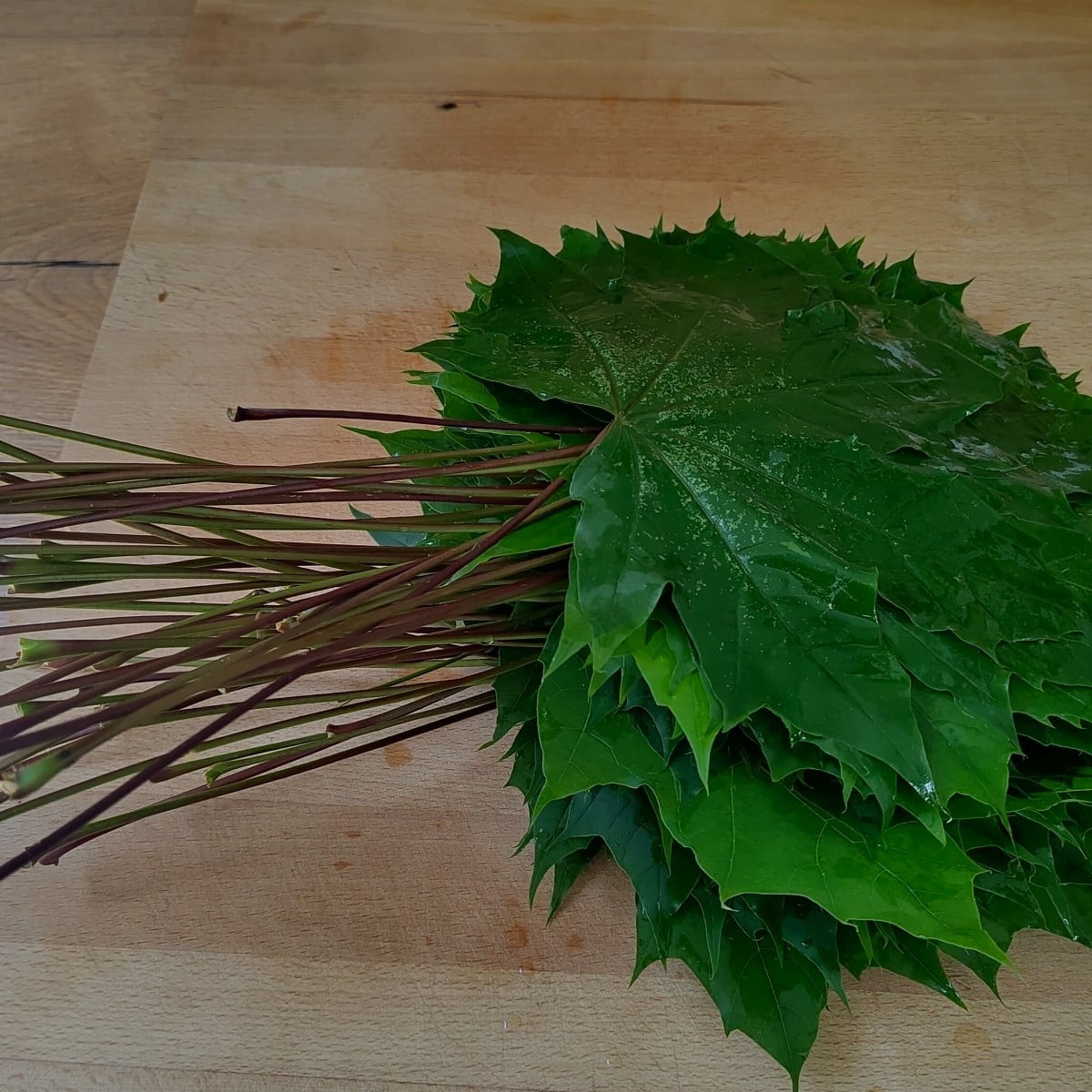
Take 60–90 leaves that are as blemish-free as possible, wash them thoroughly, and remove the stems. Then boil them for 5 minutes in boiling water. Meanwhile, take a container with a lid that holds about 1 liter and sterilize it with boiling water (pour in boiling water, let it sit for a few minutes, and then pour the water into a watering can 😉).
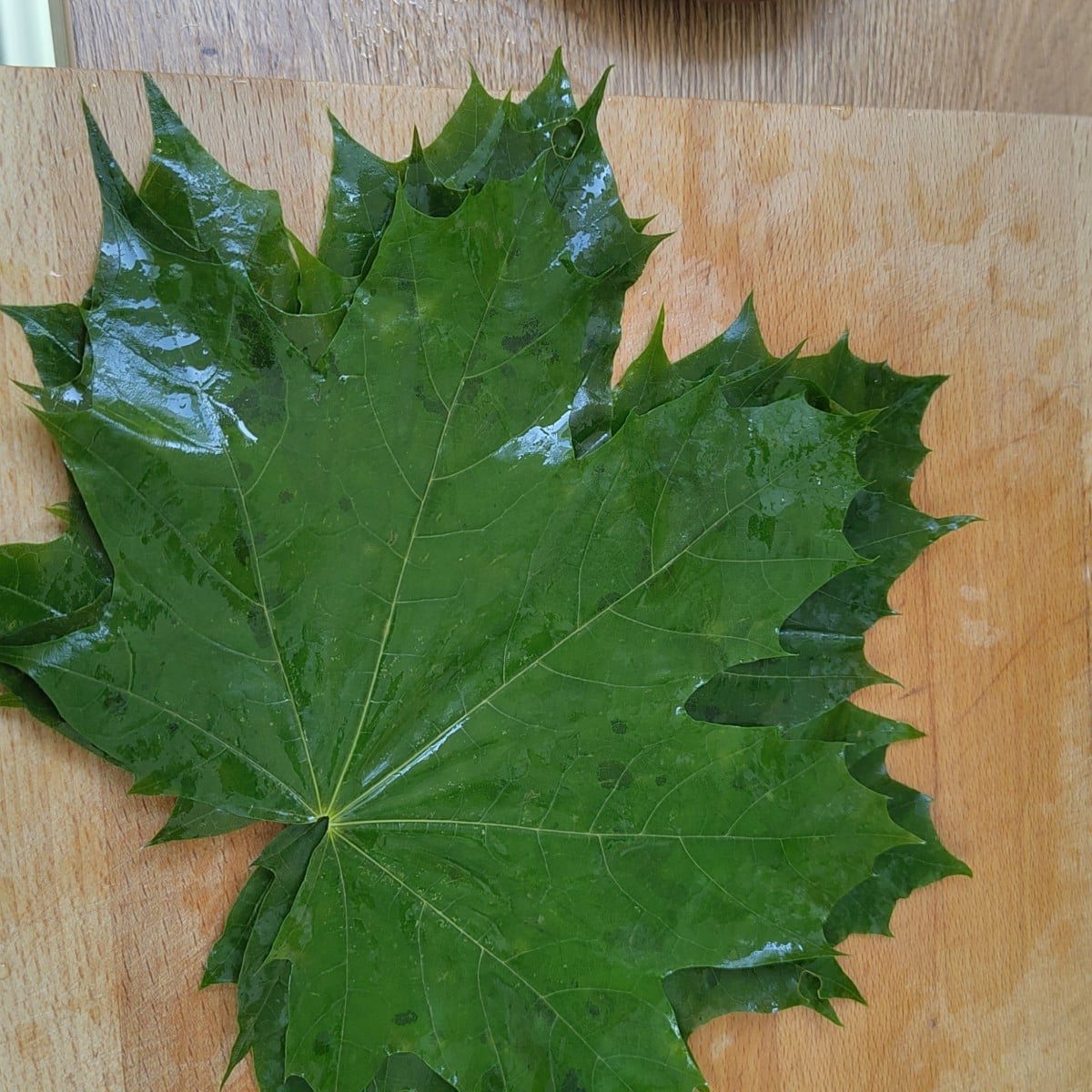
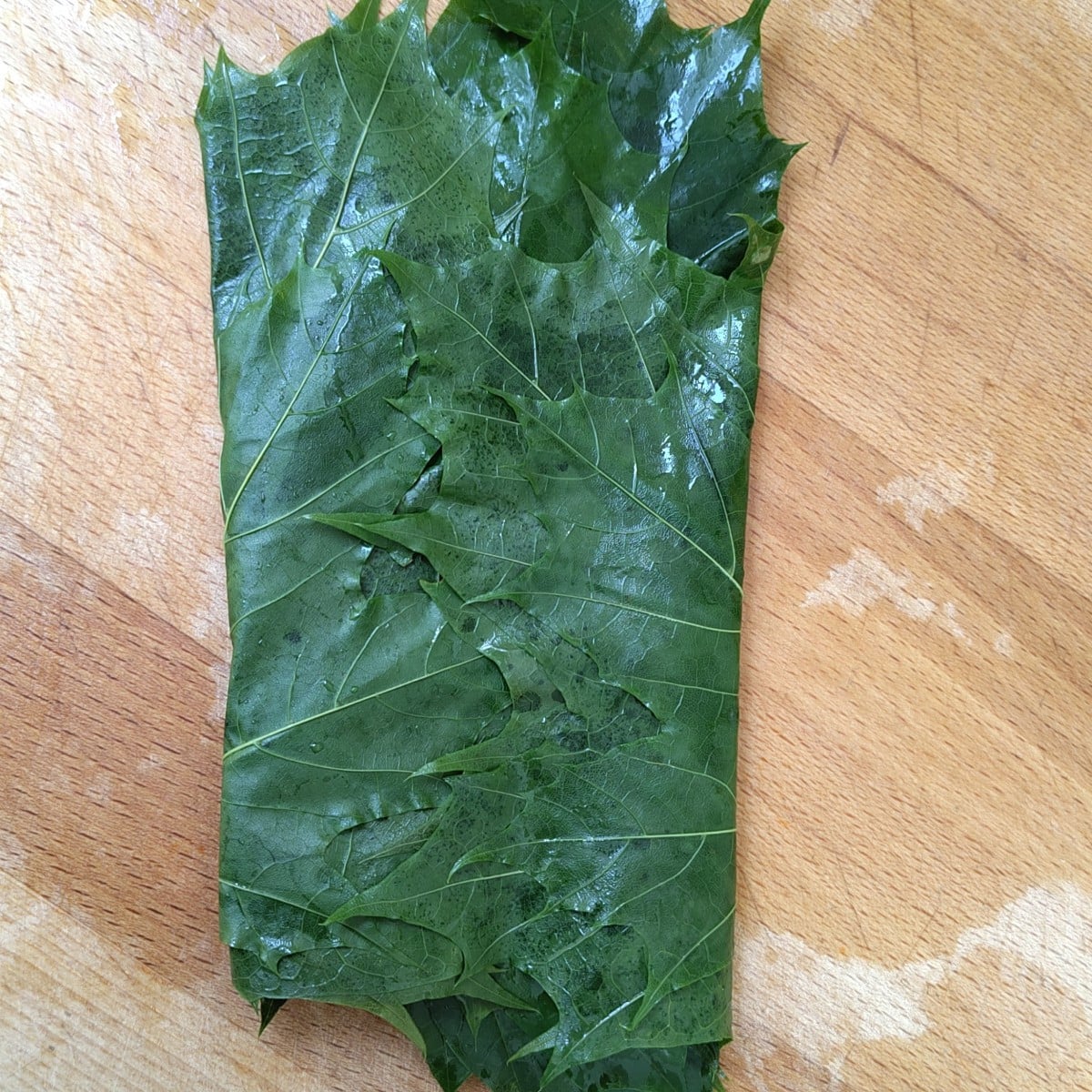
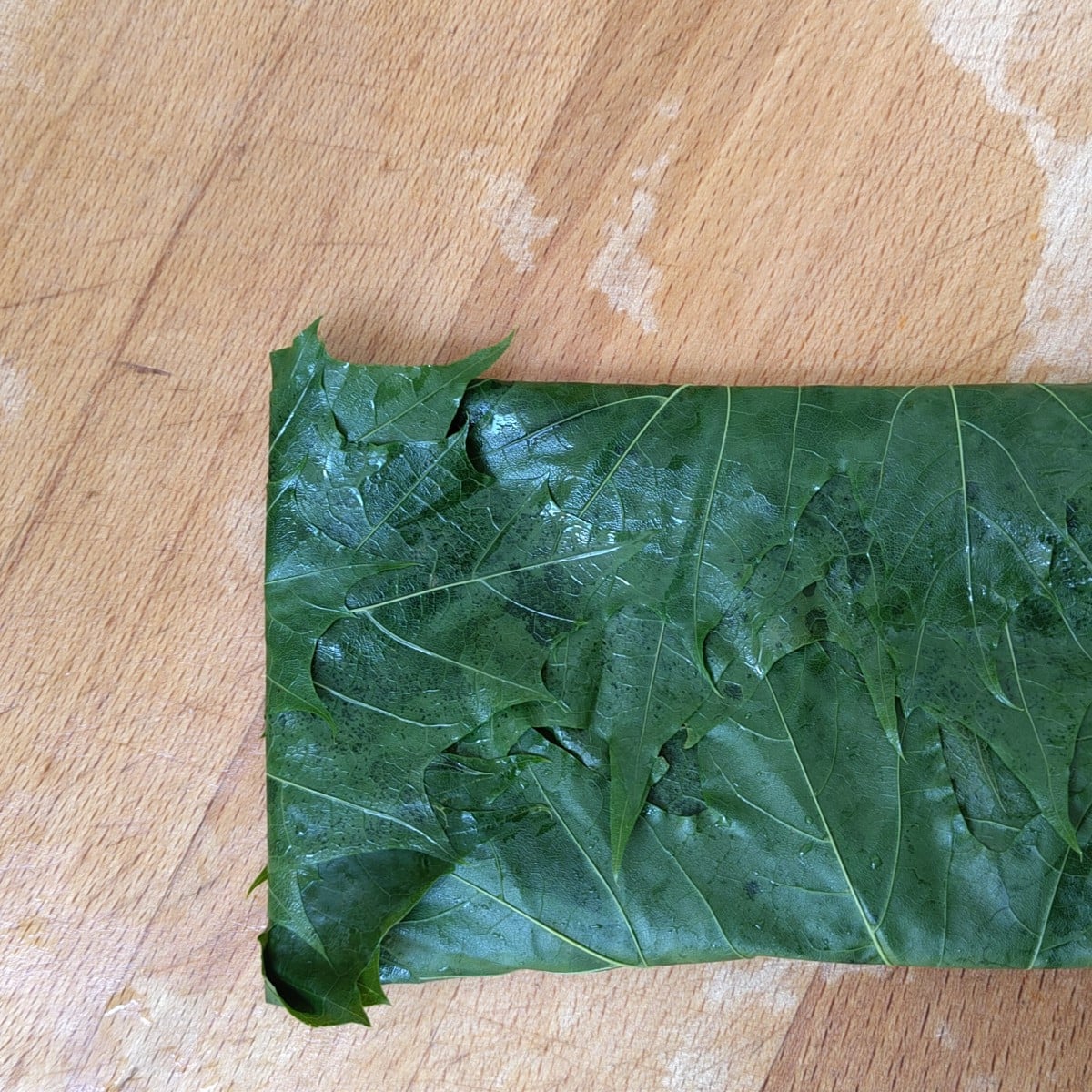
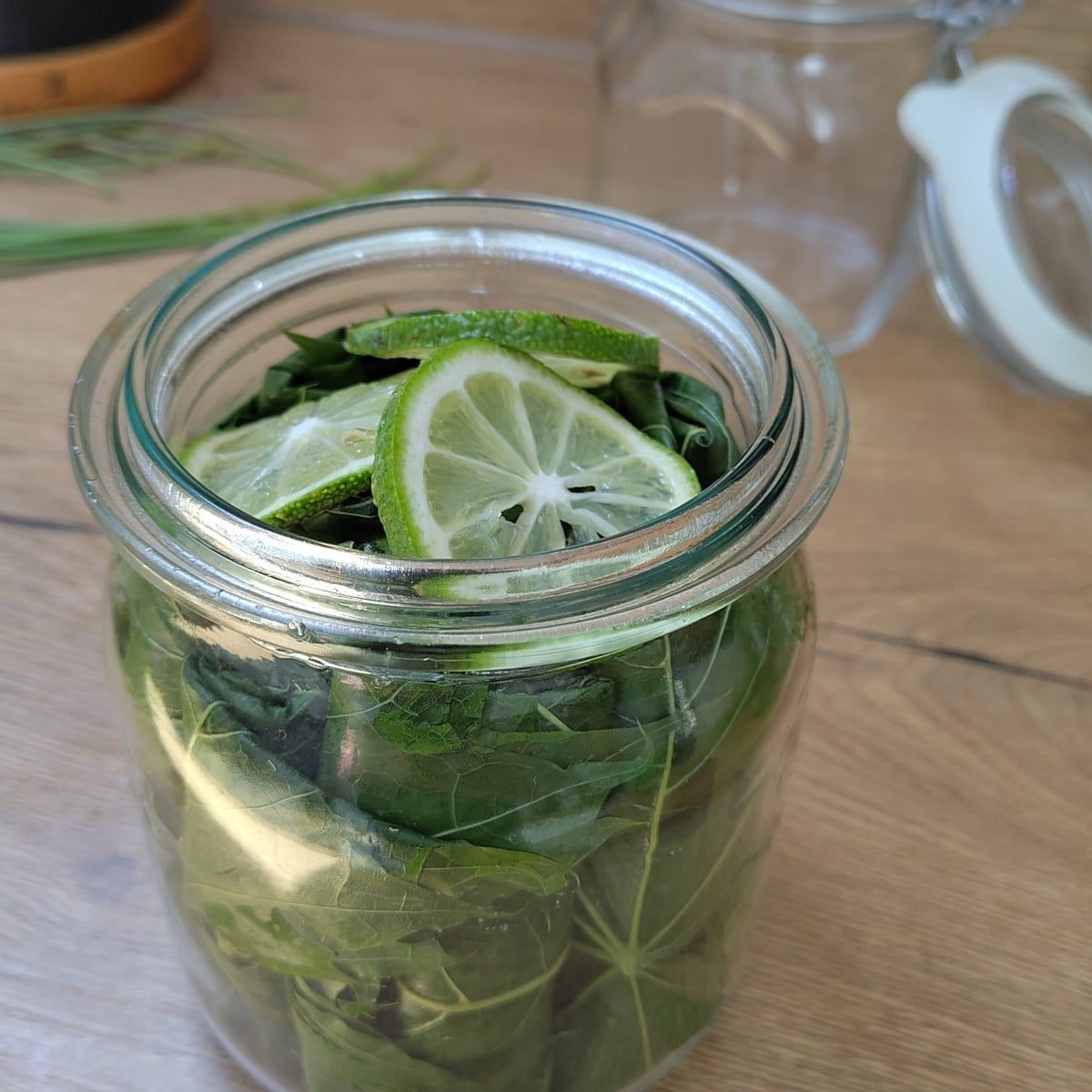
Now remove the leaves from the boiling water with a slotted spoon and let them cool. Once they’re cool enough not to burn your hands, start rolling them up in stacks of 4 or 5 leaves. To do this, first fold in the sides and then roll them up from the tip. Layer these tight little rolls into the sterilized jar. To keep them from unrolling, weigh them down with a weight. (There are special glass weights available for this purpose. Alternatively, a ceramic plate or similar item works, or you can simply use large, flat stones made of quartz or flint—chemically speaking, essentially natural glass.)
Once all the leaves have been rolled up, you can add two or three slices of lemon. Next,
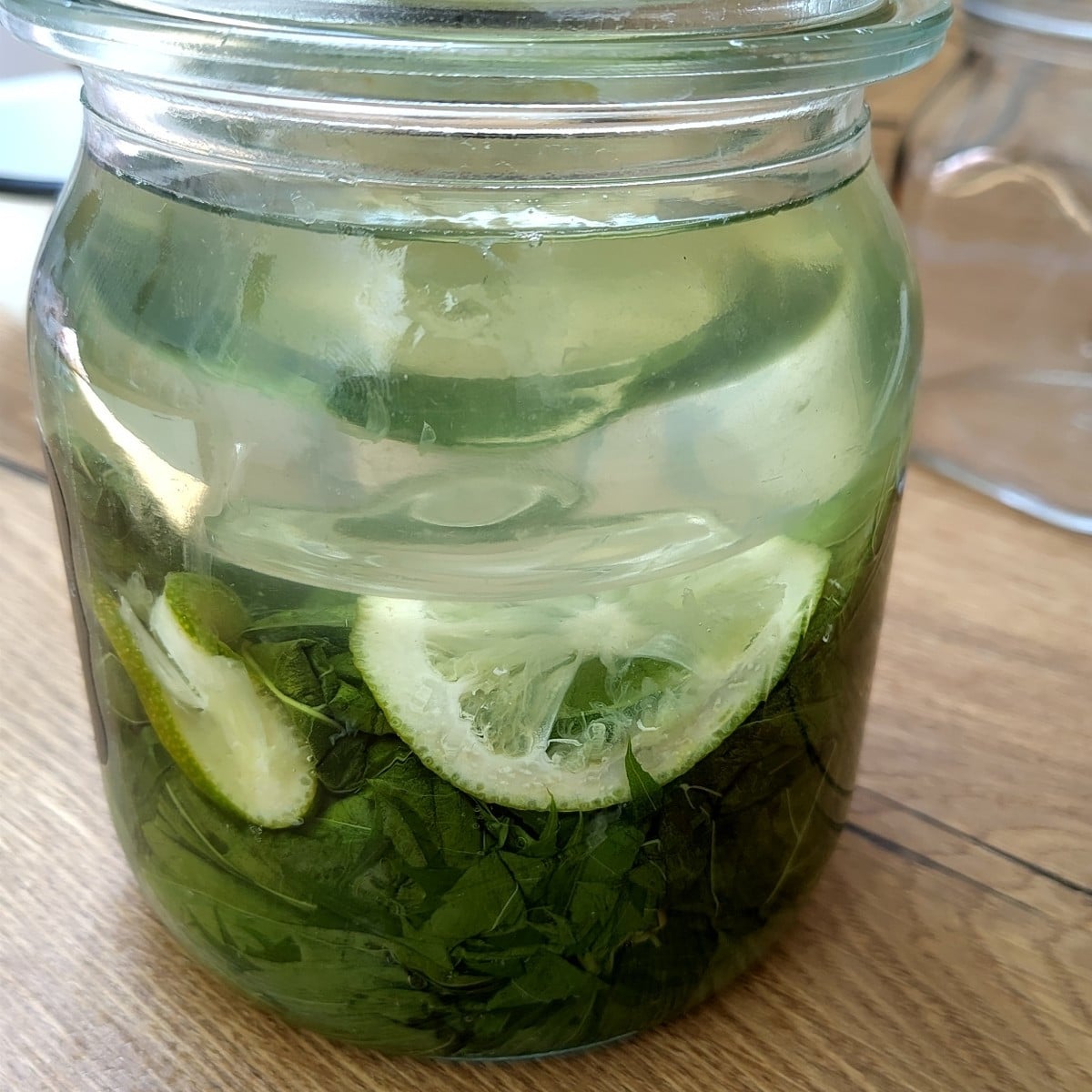
remove about 500 ml of the cooking water and add about 5 to 7 g of salt. Bring it to a brief boil again and pour it over the rolls so they are completely covered. Now use a wooden spoon to press out as much air as possible and place two or three more leaves on top so they seal everything well. Finally, place the weight and the lid loosely on top.
Once everything has cooled to below 35°C, you can add a little juice from a well-active fermentation to ensure the right bacteria and fungi are present and to help the fermentation process start a bit faster.
By the way, you can now find fermented salads in the refrigerated section of some organic grocery stores that are still active. That way, you’re on the safe side.
Now place the jar in a cool, dark room for two weeks. A thin layer of yeast, known as a "skin," will likely form on top. This is harmless, but it must not come into contact with the leaves. However, if spots form on the surface, that’s mold—something has gone wrong, and unfortunately, the whole batch must be discarded. But that happens quite rarely. Normally, the acid produced during fermentation, among other things, ensures that the whole batch stays clean and mold-free.
10 Likes
3 Comments
Comments
Toll!!
#Rezeptefürmich
... Also irgendwie sind mir da meine Weinblätter sympathischer... 🤷
Hat aber halt nicht jeder. Und die gekauften sind mir persönlich immer deutlich zu sauer.

