Scarlett Nantes

Variety
Scarlett Nantes
created by GardenOfEden at 19.02.2026
Cultivation Break
3 Years
Season Overview
Sowing
Harvest
J
F
M
A
M
J
J
A
S
O
N
D
Description
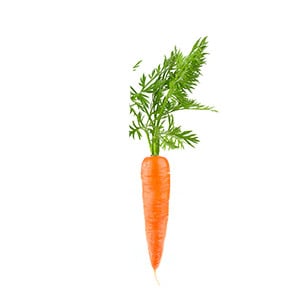
The carrot (Daucus carota) is a plant species in the umbellifer family (Apiaceae). There are several different subspecies. The carrot (Daucus carota subsp. sativus), also known as garden carrot, yellow beet, root, Swiss Rüebli, and Vorarlberg Rübli, is a cultivated form of the wild carrot (Daucus carota subsp. carota), which was probably crossed with the southern European giant carrot (Daucus carota subsp. maximus) and possibly the Oriental black carrot (Daucus carota subsp. afghanicus). The species is native to Europe, West to Central Asia, Pakistan, Macaronesia, and North Africa. It has also been introduced almost worldwide. It likes to grow in ruderal pioneer communities along paths, embankments, and quarries. In the Alps, wild carrot occurs at altitudes of up to 2500 meters. Carrots grow as biennial herbaceous plants and reach heights of 50 to 80 (rarely 150) centimeters. A thick taproot is formed. It roots up to 80 centimeters deep. The stems are simple or branched, furrowed and, like the leaves, bristly hairy and rarely bare. The elongated leaves are two to three times pinnate. The uppermost segments are linear to lanceolate. The lower leaves are stalked, while the upper ones are sessile on the leaf sheaths. The flowering period is from May to July. The inflorescence stems are 10 to 55 cm long. In the second year, a double umbel is formed. The numerous leaf-like bracts of the umbel are pinnate or, rarely, simple. The petals are white, sometimes yellow or pink. In the center of the double umbel there is often a radiantly symmetrical, black-purple flower, the "Moorish flower." The spiny, egg-shaped, dry, two-part schizocarp, a double achene, is 3-4 mm × 2 mm in size. The flowers are partly hermaphroditic and partly male. At night, the umbels hang over. Sometimes completely sexless flowers are also formed in autumn. The black color of the Moorish flower is caused by anthocyanin; it is so dark because not only the epidermis but also the inner tissues of the petal contain anthocyanin. It has also been observed that as the altitude increases, the number of umbels that develop a Moorish flower increases. Numerous butterfly caterpillars feed on the leaves, including the swallowtail, the death's-head hawk moth, and the flea beetle moth. Caution: Contact dermatitis may occur when handling the turnip. The skin irritations are a phytotoxic reaction caused by the main allergen falcarinol.
F1 Hybrid
Frostproof
Growing tips
🌾 Sowing - Timing: ◦ Early varieties: from March ◦ Late varieties / storage carrots: April-June - Row spacing: 25-30 cm - Sowing depth: approx. 1 cm - Tip: Seeds germinate slowly. A marker seed (e.g. radish) helps to recognize the rows. 🌱 Location & soil - Sunny to semi-shady - Light, loose, deep soil - preferably sandy and humusy - No fresh manure - leads to "legginess" (branched, crooked roots) - Poor in stones 💧 Care - Keep evenly moist, but not waterlogged - Remove weeds regularly, as carrots grow weakly at first - Separate after emergence: 3-5 cm distance between the plants - Mulch with fine material 🌾 Harvest - Early carrots: from June - Storage carrots: from September/October - For storage: twist off the leaves, store in a dry and cool place (e.g. in sandboxes) 🌿 Good neighbors - Onions, leeks, garlic, chives - Lettuce, spinach - Peas, beans - Tomatoes, peppers, chili, okra, eggplant - Kohlrabi, radishes, radishes, turnips/beets, chard - Rosemary, sage, thyme, borage, basil, oregano, hyssop, lavender - Marigold, nasturtium, phacelia, cosmeas, marigolds, cornflowers - Sunflower, zinnias, mallow, columbine 🚫 Bad neighbors - Dill, fennel, parsnip, parsley, celery, coriander, chervil, caraway, aniseed - Mint, tarragon, comfrey, goldenrod - Potatoes, Jerusalem artichoke - Cabbages, turnips, rapeseed - Pumpkin, zucchini, cucumber, melon 🔄 Crop rotation advice At least 3 years break between carrots and other umbellifers (dill, parsley, parsnip, celery, fennel). 🐛 Common pests - Carrot fly - Nematodes (root aphids) - Aphids - Carrot leaf flea - Slugs and snails - voles 🍂 Typical diseases - Powdery mildew - Alternaria leaf spot disease - Cercospora leaf spot disease - Bacterial soft rot - Root rot - Virus diseases (red leaf virus)
Details


Plant distance
5 cm

Row spacing
25 cm

Seeding depth
0.5 cm

Companion Plants
Arugula / Rocket
Aubergine / Eggplant
Basil
Bean ((Scarlet) runner bean)
Bean (Dwarf bean)
Bean (Hyacinth bean / Lablab-bean)
Bean (Lima Bean)
Bean (Runner bean)
Borage
Chard
Chickpea
Chili
Chives
Common columbine
Common marigold
Cornflower
Cress
Garden cosmos / Mexican aster
Garlic
Garlic chives
Hyssop
Kohlrabi / German turnip / Turnip cabbage
Lavender
Leeks
Lettuce (Common chicory)
Lettuce (Endive / Escarole / Erisée)
Lettuce (Lamb's lettuce)
Lettuce (Lettuce)
Lettuce (Radicchio / Italian chicory)
Lettuce (Sugar loaf)
Malva / Mallow
Okra
Onion
Onion (Spring onion)
Oregano
Pea
Pepper / Paprika
Phacelia / Scorpionweed / Heliotrope
Radish
Radishes
Rosemary
Sage
Spinach (Summer)
Spinach (Winter)
Sunflower
Sweet pea
Tagetes / Marigolds
Thyme
Tomato (Bush tomato)
Tomato (Cocktail bush tomato)
Tomato (Cocktail Stake Tomato)
Tomato (Stake tomato)
Yalta tomatoes
Zinnia

Antagonistic Plants
Abyssinian cabbage / Ethiopian mustard
Broccoli raab / Stem cabbage / Cima di rapa
Brussels sprouts
Cabbage (red cabbage)
Caraway / Meridian fennel / Persian cumin
Celery (Celeriac / Celery root)
Celery (Celery)
Celery (Leaf celery / Chinese celery)
Chervil
Comfrey
Common mugwort
Coriander / Cilantro
Cucumber (African horned cucumber / Kiwano)
Cucumber (Caigua)
Cucumber (Melothria)
Cucumber / Gherkin
Fennel
Florence fennel / Finocchio
Garden squash - Patisson / UFO squash
Horseradish
Jerusalem artichoke / Topinambur
Lovage
Melon (Sugar melon)
Melon (Watermelon)
Mint
Ornamental pumpkin
Parsley
Parsnip
Pimpinella
Potato
Pumpkin / Squash
Rapeseed
Rapeseed - Sheer cabbage / Siberian cabbage
Root parsley
Rutabaga / Swedish turnip
Sea coal
Sponge gourd / Egyptian cucumber / Vietnamese luffa
Turnip
Turnip-rooted chervil
Turnips - Oilseed turnips
Turnips - Wild turnips
Vegetable cabbage - Forage cabbage
Vegetable cabbage - Ribbed cabbage / Portuguese cabbage
Vegetable cabbage - wild cabbage / ancient cabbage
Diseases
Root Rot
Soft rot
Powdery mildews
Blight of carrot
Pests
Land snails
Aphids
Root knot nematodes
Carrot fly
Voles