Blanche à Collet Vert / White Belgian

Variety
Blanche à Collet Vert / White Belgian
Approved Data
created by Mammut at 13.05.2021
Features
Color
white
green
Taste
aromatic
tangy
Fruit shape
elongated
Resistances
cold tolerant
resistant
robust
Growth habit
harvest: profitable
Cultivation Break
3 Years
Season Overview
Sowing
Harvest
J
F
M
A
M
J
J
A
S
O
N
D
Description
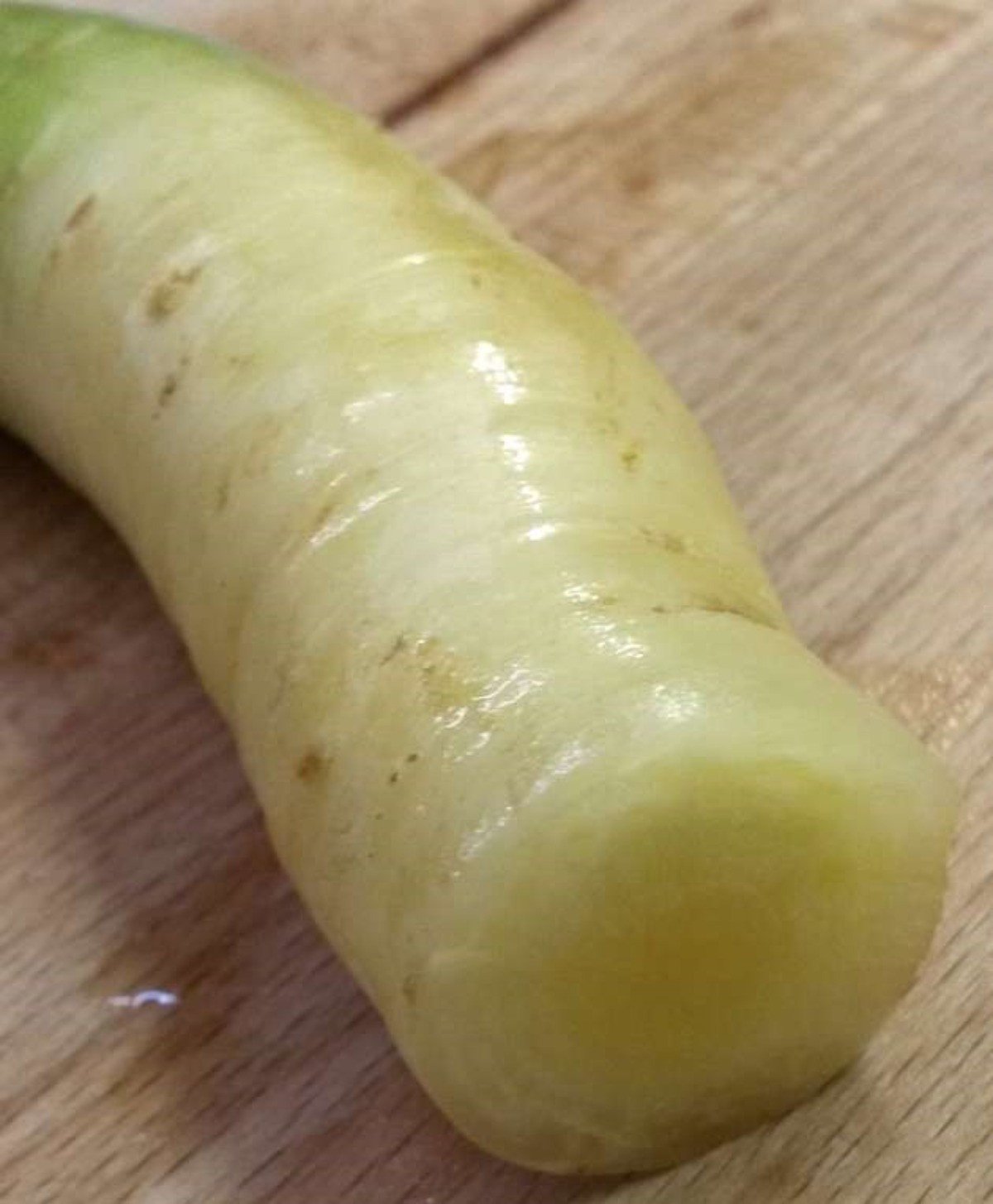
White carrot 'Blanche a Collet Vert' is an old fodder and edible carrot, which was already mentioned around 1870. It forms roots about 40 cm/15.7 in long and rather slender and tends to be green-headed. Thus, the white carrot is very similar in appearance to the wild carrot, which also has white roots. In taste, the 'Blanche a Collet Vert' is less sweet and very aromatic. A good storage carrot, hardy, can be wintered directly in the garden bed. Very robust and hardy. Also called 'White Belgian'.
Non hybrid
Frostproof
Growing tips
Germination in 14-27 days at 10-18°C/50-64°F. Sandy-loamy, deep, loose and stoneless soil. Care: Carrots are medium growers and do not tolerate fresh manure. Use only mature compost for fertilizing. Carrots want to be kept moist during the germination period and often need supplemental irrigation during the hot summer months on sandy soils. Weeding is essential when young, as the tender plantlets are quickly overgrown by weeds. For good results, the soil should be regularly loosened. Especially after heavy rain, when it tends to silt.
Details


Light requirement
Sunny

Water requirement
Moist

Soil
Light (sandy)

Nutrient requirement
Medium

Plant distance
10 cm

Row spacing
25 cm

Seeding depth
1 cm

Companion Plants
Arugula / Rocket
Aubergine / Eggplant
Basil
Bean ((Scarlet) runner bean)
Bean (Dwarf bean)
Bean (Hyacinth bean / Lablab-bean)
Bean (Lima Bean)
Bean (Runner bean)
Borage
Chard
Chickpea
Chili
Chives
Common columbine
Common marigold
Cornflower
Cress
Garden cosmos / Mexican aster
Garlic
Garlic chives
Hyssop
Kohlrabi / German turnip / Turnip cabbage
Lavender
Leeks
Lettuce (Common chicory)
Lettuce (Endive / Escarole / Erisée)
Lettuce (Lamb's lettuce)
Lettuce (Lettuce)
Lettuce (Radicchio / Italian chicory)
Lettuce (Sugar loaf)
Malva / Mallow
Okra
Onion
Onion (Spring onion)
Oregano
Pea
Pepper / Paprika
Phacelia / Scorpionweed / Heliotrope
Radish
Radishes
Rosemary
Sage
Spinach (Summer)
Spinach (Winter)
Sunflower
Sweet pea
Tagetes / Marigolds
Thyme
Tomato (Bush tomato)
Tomato (Cocktail bush tomato)
Tomato (Cocktail Stake Tomato)
Tomato (Stake tomato)
Yalta tomatoes
Zinnia

Antagonistic Plants
Abyssinian cabbage / Ethiopian mustard
Broccoli raab / Stem cabbage / Cima di rapa
Brussels sprouts
Cabbage (red cabbage)
Caraway / Meridian fennel / Persian cumin
Celery (Celeriac / Celery root)
Celery (Celery)
Celery (Leaf celery / Chinese celery)
Chervil
Comfrey
Common mugwort
Coriander / Cilantro
Cucumber (African horned cucumber / Kiwano)
Cucumber (Caigua)
Cucumber (Melothria)
Cucumber / Gherkin
Fennel
Florence fennel / Finocchio
Garden squash - Patisson / UFO squash
Horseradish
Jerusalem artichoke / Topinambur
Lovage
Melon (Sugar melon)
Melon (Watermelon)
Mint
Ornamental pumpkin
Parsley
Parsnip
Pimpinella
Potato
Pumpkin / Squash
Rapeseed
Rapeseed - Sheer cabbage / Siberian cabbage
Root parsley
Rutabaga / Swedish turnip
Sea coal
Sponge gourd / Egyptian cucumber / Vietnamese luffa
Turnip
Turnip-rooted chervil
Turnips - Oilseed turnips
Turnips - Wild turnips
Vegetable cabbage - Forage cabbage
Vegetable cabbage - Ribbed cabbage / Portuguese cabbage
Vegetable cabbage - wild cabbage / ancient cabbage

Diseases
Root Rot
Soft rot
Powdery mildews
Blight of carrot

Pests
Land snails
Aphids
Root knot nematodes
Carrot fly
Voles