Almaro, F1

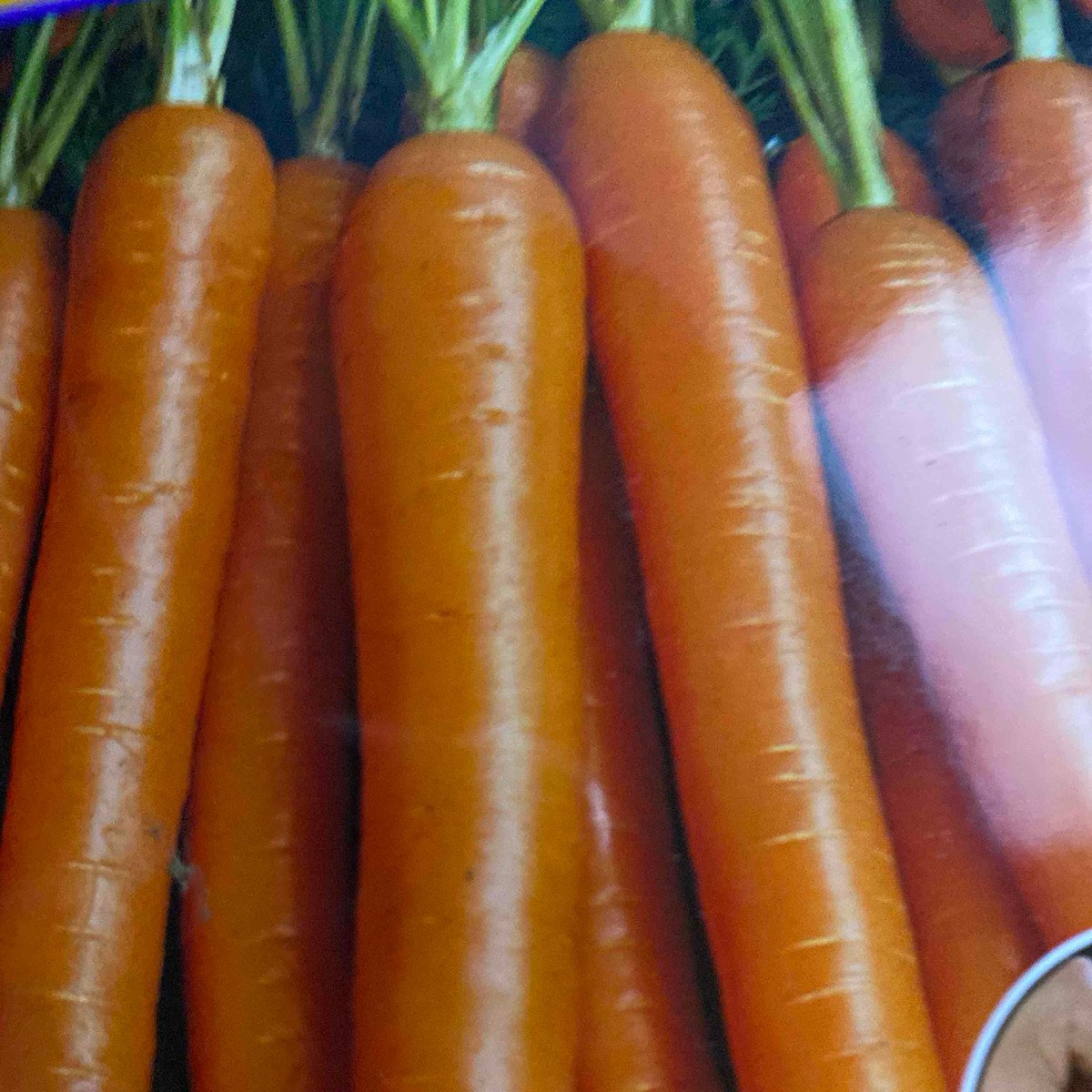
Variety
Almaro, F1
Approved Data
created by Stefanie B. at 07.04.2021
Features
Color
orange
red
Fruit shape
elongated
Growth habit
lifespan: annual
harvest: profitable
Location
planting: greenhouse
planting: bed
planting: outdoor
planting: raised bed
light: sunny to semi-shady
Cultivation Break
3 Years
Season Overview
Sowing
Harvest
J
F
M
A
M
J
J
A
S
O
N
D
Description
Breeding Almaro (F1) is a high performance variety of the nantaisetype, best suited for early cultivation under glass, film and in the cold frame. It develops very uniform, about 16-20 cm/6.3-7.9 in long, tender, smooth carrots of cylindrical shape with blunt end. The root is deep red in color with a small heart. Culture duration 20 weeks.
F1 Hybrid
Not frost resistant
Growing tips
Sowing: cover seeds flat with soil, press well and keep moist, if the carrots are too dense after emergence, separate, germination temperature: 10-22°C/50-72°F, germination period: 14-21 days. Tip: carrots like it windy, because then the carrot fly can not lay their eggs. Care: always keep moist, carrots burst with different water supply, keep rows weed-free. Harvest: highest nutrient content in carrots is in the morning, but the lowest nitrate content in the afternoon should be the deciding factor for harvesting, if possible harvest after a few dry, sunny days.
Details


Light requirement
Sunny

Water requirement
Moist

Soil
Light (sandy)

Nutrient requirement
Medium

Plant distance
8 cm

Row spacing
25 cm

Seeding depth
1 cm

Companion Plants
Arugula / Rocket
Aubergine / Eggplant
Basil
Bean ((Scarlet) runner bean)
Bean (Dwarf bean)
Bean (Hyacinth bean / Lablab-bean)
Bean (Lima Bean)
Bean (Runner bean)
Borage
Chard
Chickpea
Chili
Chives
Common columbine
Common marigold
Cornflower
Cress
Garden cosmos / Mexican aster
Garlic
Garlic chives
Hyssop
Kohlrabi / German turnip / Turnip cabbage
Lavender
Leeks
Lettuce (Common chicory)
Lettuce (Endive / Escarole / Erisée)
Lettuce (Lamb's lettuce)
Lettuce (Lettuce)
Lettuce (Radicchio / Italian chicory)
Lettuce (Sugar loaf)
Malva / Mallow
Okra
Onion
Onion (Spring onion)
Oregano
Pea
Pepper / Paprika
Phacelia / Scorpionweed / Heliotrope
Radish
Radishes
Rosemary
Sage
Spinach (Summer)
Spinach (Winter)
Sunflower
Sweet pea
Tagetes / Marigolds
Thyme
Tomato (Bush tomato)
Tomato (Cocktail bush tomato)
Tomato (Cocktail Stake Tomato)
Tomato (Stake tomato)
Yalta tomatoes
Zinnia

Antagonistic Plants
Abyssinian cabbage / Ethiopian mustard
Broccoli raab / Stem cabbage / Cima di rapa
Brussels sprouts
Cabbage (red cabbage)
Caraway / Meridian fennel / Persian cumin
Celery (Celeriac / Celery root)
Celery (Celery)
Celery (Leaf celery / Chinese celery)
Chervil
Comfrey
Common mugwort
Coriander / Cilantro
Cucumber (African horned cucumber / Kiwano)
Cucumber (Caigua)
Cucumber (Melothria)
Cucumber / Gherkin
Fennel
Florence fennel / Finocchio
Garden squash - Patisson / UFO squash
Horseradish
Jerusalem artichoke / Topinambur
Lovage
Melon (Sugar melon)
Melon (Watermelon)
Mint
Ornamental pumpkin
Parsley
Parsnip
Pimpinella
Potato
Pumpkin / Squash
Rapeseed
Rapeseed - Sheer cabbage / Siberian cabbage
Root parsley
Rutabaga / Swedish turnip
Sea coal
Sponge gourd / Egyptian cucumber / Vietnamese luffa
Turnip
Turnip-rooted chervil
Turnips - Oilseed turnips
Turnips - Wild turnips
Vegetable cabbage - Forage cabbage
Vegetable cabbage - Ribbed cabbage / Portuguese cabbage
Vegetable cabbage - wild cabbage / ancient cabbage

Diseases
Root Rot
Soft rot
Powdery mildews
Blight of carrot

Pests
Land snails
Aphids
Root knot nematodes
Carrot fly
Voles