Runde Lex

Variety
Runde Lex
created by Alexandro at 12.01.2026
Features
Location
light: Full sun
Taste
Geschmacksrichtung: Süße: stark
Color
Wurzel: gelb
Wurzel: braun
Wurzel: ocker
Resistances
heat tolerant
Growth habit
wind pollination
Fruit shape
Typ: Schließfrucht - Achäne
Cultivation Break
3 Years
Season Overview
Propagating
Planting
Harvest
Harvest
J
F
M
A
M
J
J
A
S
O
N
D
1ST YEAR
FOLLOWING YEARS
Description
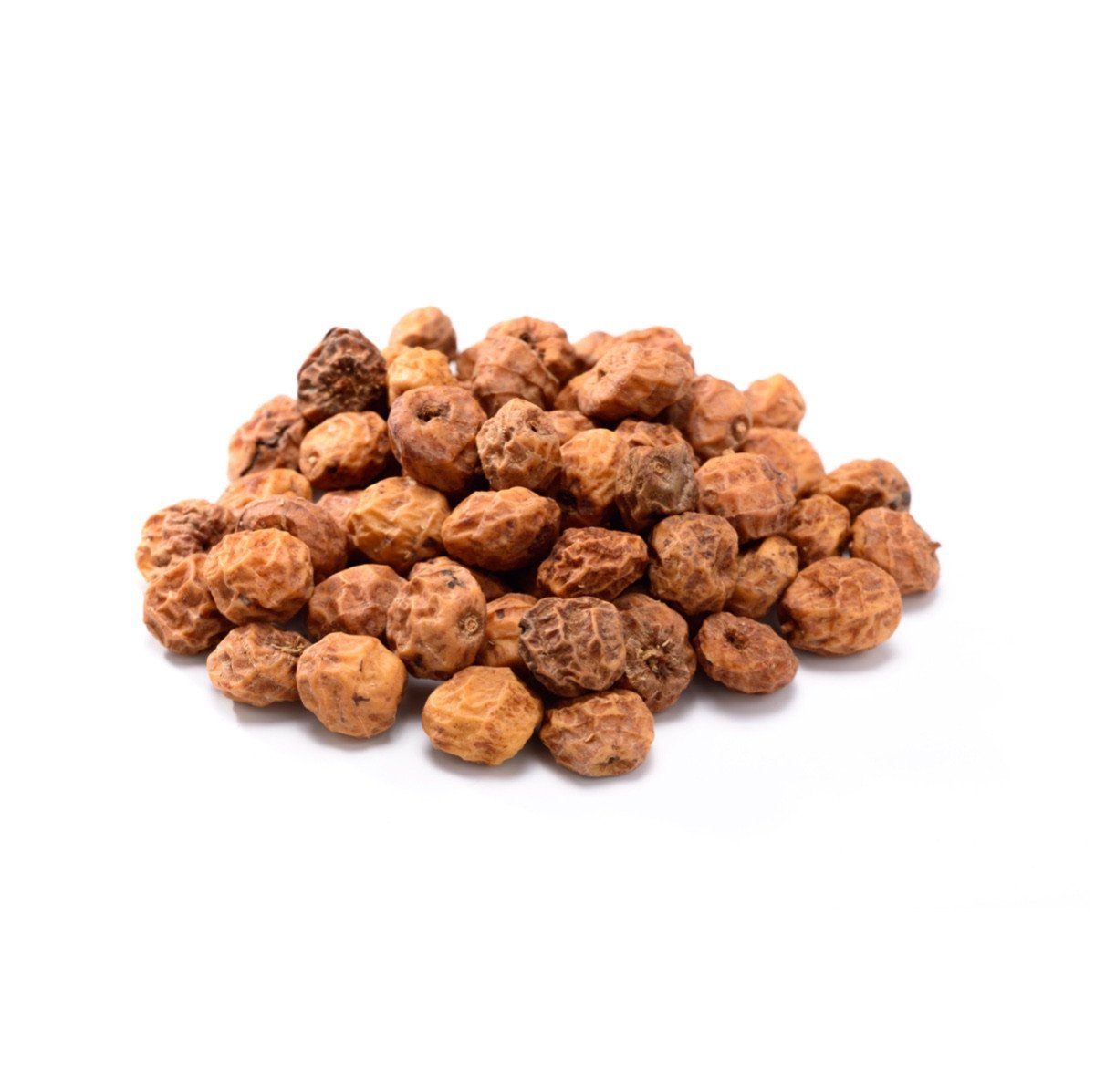
Extra sweet and fresh, perfectly round. Medium-sized. In Spain, tiger nuts are used to make a delicious tiger nut milk called horchata de chufas. Horchata is an energizing and healthy soft drink that reduces bad cholesterol and increases good cholesterol in the body.
Non hybrid
Not frost resistant
Growing tips
🪴 Pre-cultivation - Soak the nodules in lukewarm water for 12-24 hours - Substrate: loose, sandy soil or potting compost with a little sand. - Drainage is important. - Place the nodules approx. 3-7 cm deep. - Water lightly, do not soak. - Warm and bright - 20-24 °C is ideal. - Windowsill, greenhouse or propagator work well. - Keep the soil evenly moist, but never wet. - Germination period: 7-21 days, depending on the temperature. - As soon as the first stalks appear, place in a slightly cooler place (approx. 18-20 °C). - When the plants are 10-15 cm high, transfer to larger pots. - Continue to keep them bright and warm. - Plant out after the Ice Saints (mid-May). - Distance: 20-30 cm - Loosen the soil well and mulch. 🌱 Location & soil - Sunny and warm - the more sun, the better the nodules develop. - Loose, sandy soil - Good drainage - avoid waterlogging, otherwise the tubers will rot. - PH value: 6.0 - 7.5 💧 Care - Water regularly, especially in summer. Tigernuts like it evenly moist. - Mulching helps to retain moisture and reduce weeds. - Fertilization: Compost once when planting is usually enough. 🌿 Growth & control - Tigernuts form many runners. - In small gardens, it is worth growing in large containers (at least 20-30 liters) to control the spread - Root barrier recommended for large-scale cultivation 🧺 Harvesting & processing - Harvest time: October to November, when the leaves turn yellow and die back. - Carefully dig up the tubers, wash thoroughly and dry. - After drying, they can be kept for months and can be soaked, ground or roasted. ❄️ Overwintering - Tiger nuts are not completely hardy. - Store a few tubers in a dry place and plant them again next spring. 🌿 Good neighbors - Corn, beans, peas - Onions, garlic - Thyme, oregano, rosemary, sage, lavender ✔️ Good neighbors in a tub - Sweet potatoes, chili / peppers, tomatoes, eggplants 🚫 Bad neighbors - Potatoes, carrots, beet - Pumpkin / zucchini - Celery - Cabbages, turnips, rapeseed 🐛 Common pests - Wireworms - Voles - Aphids 🍂 Diseases - Root rot - Fungal infestation (e.g. Fusarium)
Details


Light requirement
Sunny

Water requirement
Moist

Soil
Light (sandy)

Nutrient requirement
Low

Dark germinator

Germination temperature
20 - 24 °C (Degrees Celsius)

Plant distance
20 cm

Row spacing
30 cm

Seeding depth
5 cm

Companion Plants

Antagonistic Plants
Abyssinian cabbage / Ethiopian mustard
Beetroot
Broccoli
Broccoli raab / Stem cabbage / Cima di rapa
Brussels sprouts
Brussels sprouts
Cabbage (Cabbage)
Cabbage (Pointed cabbage)
Cabbage (red cabbage)
Cabbage (Savoy cabbage)
Carrots
Cauliflower
Celery (Celeriac / Celery root)
Celery (Celery)
Celery (Leaf celery / Chinese celery)
Chinese kale - Kai-lan / Chinese broccoli
Collard greens
Collard greens (Kale)
Collard greens (Tuscan kale / Dinosaur kale / Palm tree kale)
Courgette / Zucchini
Cucumber (Caigua)
Garden squash - Patisson / UFO squash
Hair cucumbers / snake gourds
Kohlrabi / German turnip / Turnip cabbage
Mizuna / Japanese mustard greens
Napa cabbage / Chinese cabbage
Ornamental pumpkin
Pak Choi
Potato
Pumpkin / Squash
Rapeseed
Rapeseed - Sheer cabbage / Siberian cabbage
Rapini / Broccoli rabe
Rutabaga / Swedish turnip
Sea coal
Turnip
Turnip greens - Choy Sum / Chinese flowering cabbage
Turnip greens - Mizuna
Turnip greens - Tatsoi
Turnip-rooted chervil
Turnips - Oilseed turnips
Turnips - Wild turnips
Vegetable cabbage - Forage cabbage
Vegetable cabbage - Ribbed cabbage / Portuguese cabbage
Vegetable cabbage - wild cabbage / ancient cabbage

Diseases
Fusarium
Root Rot

Pests
Aphids
Wireworms
Voles