African Super

Variety
African Super
created by Alexandro at 04.01.2026
Features
Growth habit
lifespan: annual
lifespan: perennial
growth habit: compact
growth habit: half-high
root type: rhizome
wide: 30 - 40 cm
height: 40 - 50 cm
height: 30 - 40 cm
root type: bulb, tuber
grass-like leaves
propagation by division
leaves slim
Color
green
light green / pale green
Stamm, Stiel: grün
Wurzel: braun
Wurzel: orange
Wurzel: gelb
Taste
nutty
Resistances
robust
krankheitstolerant
heat tolerant
hardy with protection
Location
planting: outdoor
planting: house wall / wall
Heat requirement: high
light: Full sun
Cultivation Break
3 Years
Season Overview
Propagating
Planting
Harvest
Harvest
J
F
M
A
M
J
J
A
S
O
N
D
1ST YEAR
FOLLOWING YEARS
Description
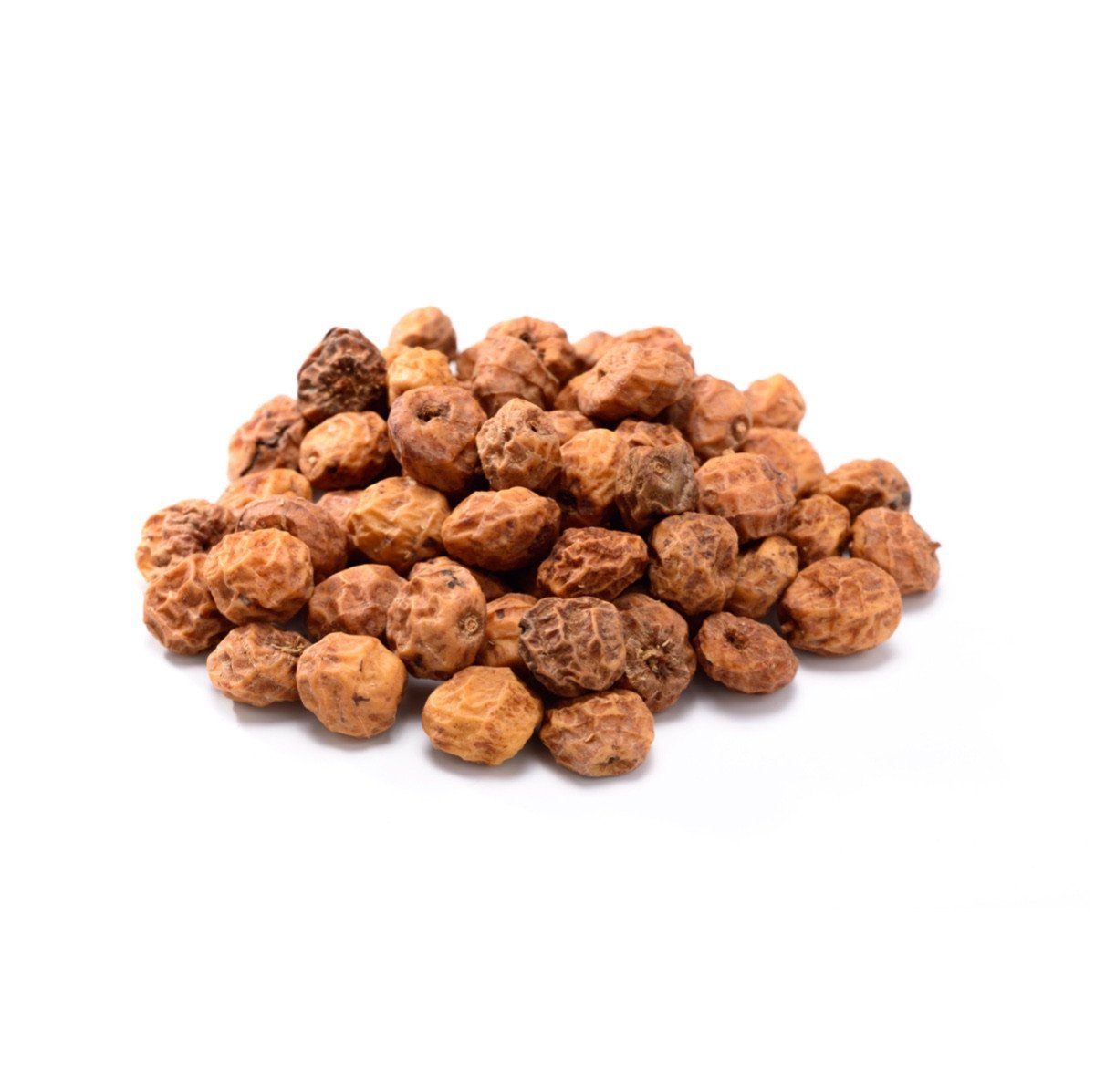
An extremely large variety, the tubers are mainly long and less spreading. Tigernuts grow here as an annual plant, in Africa also as a perennial. The plants are not hardy here. The tubers are harvested in the fall when the leaves have died back. Just wash and eat them. With its large size, African Super is an impressive tuber variety with a high nutritional value. This variety is a popular snack, especially in West Africa. The largest specimens reach a length of 4 cm.
Non hybrid
Not frost resistant
Growing tips
Tigernuts germinate between 20-25°C. The tubers can also be soaked in water overnight for this purpose. After germination, the plants are placed in a slightly cooler place and planted outdoors from mid-May after the last frosts. They can also be cultivated in containers. Cover with a fleece in cool temperatures. Place a root barrier outdoors to prevent proliferation and protect native plants. Tigernuts are generally very easy to care for, but need regular moisture and the soil should be fertilized or enriched with compost before planting out. In mild winters, the plants can even sprout again the following year. For harvesting, the roots of the yellowed leaves are dug up and the tubers removed. However, these should only be washed shortly before use, as otherwise the storage life will be shortened. Otherwise, the tigernut is robust and not very susceptible to disease.
Details


Light requirement
Sunny

Water requirement
Moist

Soil
Light (sandy)

Nutrient requirement
Low

Dark germinator

Germination temperature
20 - 24 °C (Degrees Celsius)

Plant distance
20 cm

Row spacing
30 cm

Seeding depth
5 cm

Companion Plants

Antagonistic Plants
Abyssinian cabbage / Ethiopian mustard
Beetroot
Broccoli
Broccoli raab / Stem cabbage / Cima di rapa
Brussels sprouts
Brussels sprouts
Cabbage (Cabbage)
Cabbage (Pointed cabbage)
Cabbage (red cabbage)
Cabbage (Savoy cabbage)
Carrots
Cauliflower
Celery (Celeriac / Celery root)
Celery (Celery)
Celery (Leaf celery / Chinese celery)
Chinese kale - Kai-lan / Chinese broccoli
Collard greens
Collard greens (Kale)
Collard greens (Tuscan kale / Dinosaur kale / Palm tree kale)
Courgette / Zucchini
Cucumber (Caigua)
Garden squash - Patisson / UFO squash
Hair cucumbers / snake gourds
Kohlrabi / German turnip / Turnip cabbage
Mizuna / Japanese mustard greens
Napa cabbage / Chinese cabbage
Ornamental pumpkin
Pak Choi
Potato
Pumpkin / Squash
Rapeseed
Rapeseed - Sheer cabbage / Siberian cabbage
Rapini / Broccoli rabe
Rutabaga / Swedish turnip
Sea coal
Turnip
Turnip greens - Choy Sum / Chinese flowering cabbage
Turnip greens - Mizuna
Turnip greens - Tatsoi
Turnip-rooted chervil
Turnips - Oilseed turnips
Turnips - Wild turnips
Vegetable cabbage - Forage cabbage
Vegetable cabbage - Ribbed cabbage / Portuguese cabbage
Vegetable cabbage - wild cabbage / ancient cabbage

Diseases
Fusarium
Root Rot

Pests
Aphids
Wireworms
Voles