Riesen aus Ghana

Variety
Riesen aus Ghana
created by Tom5 at 02.01.2023
Features
Location
planting: greenhouse
planting: bed
planting: outdoor
planting: raised bed
Heat requirement: high
Cultivation Break
3 Years
Season Overview
Propagating
Planting
Harvest
Harvest
J
F
M
A
M
J
J
A
S
O
N
D
1ST YEAR
FOLLOWING YEARS
Description
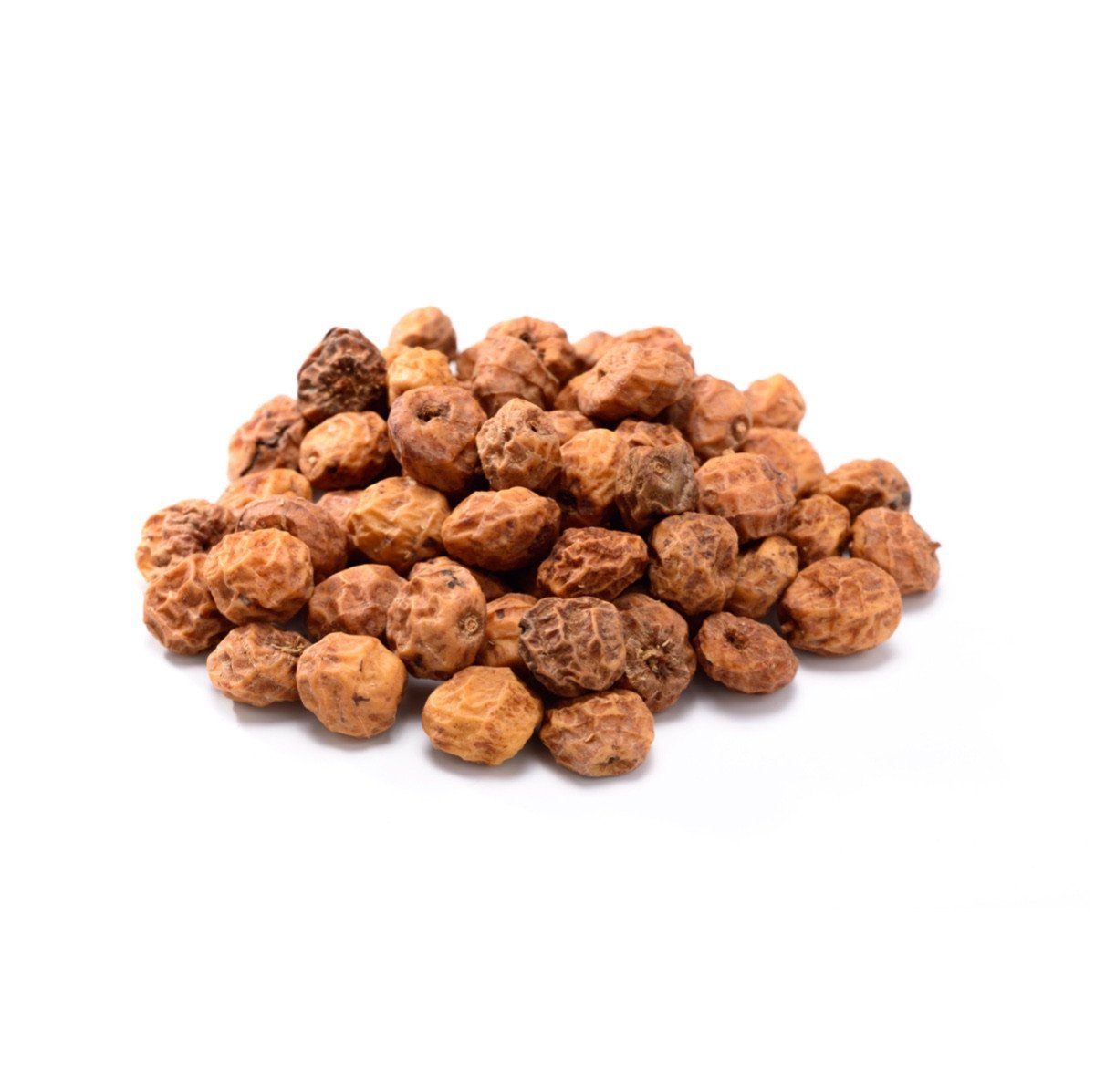
This variety produces fewer but much larger tubers, which are not elongated but bulbous and barrel-shaped. About twice the size of the common tigernut. The tubers are easier to harvest and also quicker and easier to wash.
Non hybrid
Not frost resistant
Growing tips
You can propagate the plants by placing the tigernuts, which have been soaked overnight, individually in small pots. Cover the tubers two centimetres high with soil and then place the pots at 20 to 25 degrees Celsius. After sprouting, the young tigernut plants should be cultivated in a bright and cool place and planted directly in the open bed after the last frosts. Choose a planting distance of 30 x 30 centimeters. Alternatively, medium-sized plant pots with a loose and sandy substrate in which you place two to three young plants are suitable. At low temperatures, it is important to cover the plants with fleece so that growth does not stagnate. Important: As tiger nuts can spread uncontrollably in the garden, especially in the warmer regions of Germany, you should enclose the bed with a root barrier if in doubt. Plenty of watering, plenty of sun and plenty of warmth, as well as frequent fertilizing (herb manure), will produce a high yield (50 to 100 tubers per plant) and larger tubers.
Details


Light requirement
Sunny

Water requirement
Moist

Soil
Light (sandy)

Nutrient requirement
Low

Dark germinator

Germination temperature
20 - 24 °C (Degrees Celsius)

Plant distance
20 cm

Row spacing
30 cm

Seeding depth
5 cm

Companion Plants

Antagonistic Plants
Abyssinian cabbage / Ethiopian mustard
Beetroot
Broccoli
Broccoli raab / Stem cabbage / Cima di rapa
Brussels sprouts
Brussels sprouts
Cabbage (Cabbage)
Cabbage (Pointed cabbage)
Cabbage (red cabbage)
Cabbage (Savoy cabbage)
Carrots
Cauliflower
Celery (Celeriac / Celery root)
Celery (Celery)
Celery (Leaf celery / Chinese celery)
Chinese kale - Kai-lan / Chinese broccoli
Collard greens
Collard greens (Kale)
Collard greens (Tuscan kale / Dinosaur kale / Palm tree kale)
Courgette / Zucchini
Cucumber (Caigua)
Garden squash - Patisson / UFO squash
Hair cucumbers / snake gourds
Kohlrabi / German turnip / Turnip cabbage
Mizuna / Japanese mustard greens
Napa cabbage / Chinese cabbage
Ornamental pumpkin
Pak Choi
Potato
Pumpkin / Squash
Rapeseed
Rapeseed - Sheer cabbage / Siberian cabbage
Rapini / Broccoli rabe
Rutabaga / Swedish turnip
Sea coal
Turnip
Turnip greens - Choy Sum / Chinese flowering cabbage
Turnip greens - Mizuna
Turnip greens - Tatsoi
Turnip-rooted chervil
Turnips - Oilseed turnips
Turnips - Wild turnips
Vegetable cabbage - Forage cabbage
Vegetable cabbage - Ribbed cabbage / Portuguese cabbage
Vegetable cabbage - wild cabbage / ancient cabbage

Diseases
Fusarium
Root Rot

Pests
Aphids
Wireworms
Voles