Orangen-Thymian / Duft-Thymian / Frucht-Thymian

Variety
Orangen-Thymian / Duft-Thymian / Frucht-Thymian
Approved Data
created by Alex&Sempi at 01.01.2026
Features
Taste
aromatic
mild
fruity
sweetish
intensive
savory
refreshing
raw edible
Edible
Orange aroma
balsamic
Thyme aroma
Essbarkeit: Blüten
Essbarkeit: Blätter
Toxizität: ungiftig
Konsistenz: weich
Geschmacksrichtung: mediterran
Aroma: Honig
Geschmacksrichtung: Würze: leicht
Konsistenz: fest
Resistances
robust
resistant
disease resistant
Snail resistant
drought tolerant
heat resistant
Pest-resistant
slugs resistant
hardy with protection
hardy down to -10°C
Location
light: Full sun
Light: Sun
planting: bed
planting: outdoor
planting: raised bed
Heat requirement: high
planting: house wall / wall
planting: rain-protected
Soil: permeable soil
soil moisture: no waterlogging
Planting: windowsill / indoor space
Planting: mounds / ridges
Fertilization: nutrient-poor
fertilization: minimal
planting: hanging basket / dish
soil moisture: well-drained
Soil: light
Soil: gravelly to sandy
fertilization: low-humus
Soil: sandy
planting: open balcony or terrace
Wind: windverträglich
fertilization: low-nitrogen
planting: covered balcony or terrace
Gartenstil: Kräutergarten
Soil: rocky, stony
Soil: loosened
Water: sparingly
pH value: neutral to alkaline (7-8)
Planting: rock garden / alpine garden
Planting: pots, tubs, or boxes
Planting: frost-free
Water: moderately
Soil moisture: dry
Fertilization: organic
planting: herb spiral
biotope: steppe / grassland
Boden: kalkhaltig
Düngung: kalktolerant
Pflanzung: Trockenmauer
Pflanzung: Bauerngarten
Düngung: flüssig
Düngung: Langzeitdünger
Düngemittel: Kalk
Nachbarn gute: trockenheitsliebende
Nachbarn schlecht: feuchtigkeitsliebend
Nachbarn schlechte: Schattenpflanzen
Good companions: calcium-loving
Good companions: sun-loving
Nachbarn schlechte: stark wuchernd
Nachbarn schlechte: hoher nährstoffbedarf
Nachbarn gute: mit niedrigen Nährstoffbedarf
Nachbarn schlechte: hochwachsend
Nachbarn gute: niedrigwachsend
Pflanzung: Dachbegrünung
Pflanzung: Mauerkrone
Biotop: Magerrasen, Trockenwiese
Gießen: Olla
Gartenstil: Präriegarten
Boden: flachgründig (0-30)
Boden: karg
Biotop: Felsen, Mauer
Düngemittel: Gesteinsmehl
Düngung: nicht erforderlich
Gartenstil: Duftgarten
Color
Flower: pink
grey-green
dark brown
medium green
Black seeded
Flower: white
Oberfläche: matt
Stamm, Stiel: braun
Stamm, Stiel: grün
Stamm, Stiel: silbrig
Oberfläche: wachsig
Wurzel: weiß
Wurzel: cremeweiß
Wurzel: braun
Samen: braun
Wurzel: beige
Behaarung: silbergrau
Stamm, Stiel: graubraun/braungrau
Behaarung: weiß
Herbstfärbung: keine
Oberfläche: samtig
Frucht: schwarz
Growth habit
insect pollination
lifespan: perennial
growth habit: compact
Spring variety
growth habit: semi-upright
harvest: continuously pickable
growth habit: ground cover
flower: flowering
root type: shallow-rooted
self-fruiting
strong leaves
normal growth
warm germination
cross-pollination
leaves: densely leafed
growth habit: upright-bushy
growth habit: broad-rounded crown
Fragrant flowers
leaves: evermoist
growth habit: cushion-like growth
wide: 30 - 40 cm
propagation by cuttings
leaves: leafy
growth habit: becoming woody
growth habit: cushion-shaped
growth habit: well-branched
hermaphroditic
growth habit: upright flower stems
entire leaves
small flowers
spicate flowers
small leaves
Spear shaped leaves
propagation by seeds
propagation by division
leaves slim
dwarf shrub
ground cover
herbs
growth habit: low
Summer variety
Geschlechtertyp: einhäusig
Keimung: Lichtkeimer
Blätter: weich/zart
Wuchsform: krautig
Blätter: einfach
Blätter: duftend
Schnitt: Verjüngung
Schnitt: Form
Schnitt: Erhaltung
Schnitt: zeitiges Frühjahr
Schnitt: Sommer
Blätter: oval
Blätter: länglich
Ernte: vor Blüte
Leaves: slightly hairy
Ernteertrag: mittel
Seitentriebbildung: mäßig
Wuchs: mittel
Blütenform: lippenförmig
Blütenstand: einzeln, kleine Gruppen
Schnitt: bei Ernte
Blütenform: zygomorph (spiegelbildlich)
Vermehrung: samenfest
Blütenstand: quirlförmig
Fruit shape
smooth, sleek
egg-shaped
inconspicuous
Typ: Zerfallsfrucht - Klausen
Size: very small
Oberfläche: trocken
Oberfläche: hart
Season Overview
Propagating
Planting
Harvest
Harvest
J
F
M
A
M
J
J
A
S
O
N
D
1ST YEAR
FOLLOWING YEARS
Description
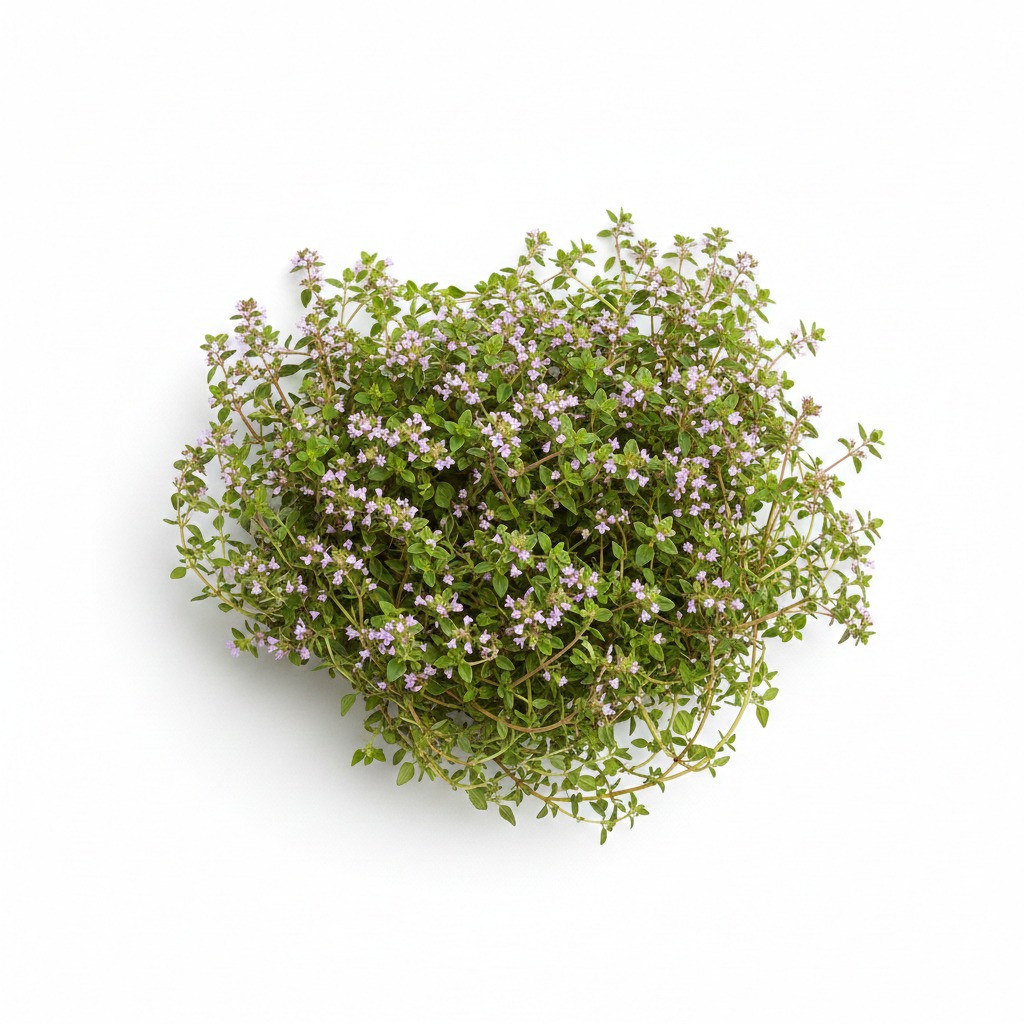
Orange thyme is a very aromatic culinary thyme that is also robust and long-lived. It has a particularly fruity and aromatic scent and is extremely decorative with its gray-green leaves and upright, cushion-shaped growth. The small, pale pink flowers appear in June, covering the plants abundantly. They reach a height and width of 40 cm and have an upright and compact habit. It is well adapted to our winters and prefers a full sun position. It is a real specialty in the fragrance and herb garden and a real treat for the palate. Its intense aroma is exuded on particularly warm and sunny days. It invites you to cook and experiment. The fruity, balsamic aroma is very intense. The fine leaves go well in the kitchen with candied carrots, roast potatoes or chicken and are best sprinkled over the finished dish.
Non hybrid
Not frost resistant
Growing tips
🌱 Growing from seed Sowing time - February-April on the windowsill / greenhouse. - Light germinator → Press seeds lightly, do not cover with soil. Germination conditions - Temperature: 18-22 °C - Germination time: 10-21 days - Substrate: Herb soil + 30-40 % sand. Care of the young plants - Water very sparingly - rather too dry than too wet. - Prick out after 4-6 weeks. - Transplant outdoors from mid-May if frost-free. 🌿 Planting outdoors - Planting time: spring (April-May). - Distance: 20-30 cm. - No fertilization necessary; compost only very sparingly. - Container plants can be planted all year round, except when the soil is frozen and in summer heat (over 30°C). ☀️ Location & soil - Full sun is essential - thyme loves warm, dry places. - Soil: nutrient-poor, sandy, well-drained. - In heavy soils, be sure to work in sand or fine gravel to prevent waterlogging. - pH value: neutral to alkaline 💧 Care - Drought-loving: only water in extreme heat. - Prune back by approx. 1/3 in spring to promote dense growth and aroma development. - Trim shoot tips after flowering to keep it compact. - Too much fertilizer damages the herb's aroma! Herbs are well cared for in planters if they are given herb fertilizer once in spring. When planted out in the garden, a dose of compost at the start of the season is sufficient. - In harsh locations, protection from the sun is highly recommended in case of frost. 🌸 Flowering & harvest - Flowering time: June-July. - Harvest: ◦ Before flowering → strongest aroma. ◦ During flowering → milder, but very bee-friendly. - Cut whole shoots and dry in an airy place. 🐛 Diseases & pests - Very robust when sunny and dry. - Susceptible to rust fungi and spider mites in the shade. - Slugs and aphids avoid thyme because of its aroma. - Powdery mildew (due to warm, humid air) - Root rot (due to waterlogging) ✅ Good neighbors Plants that like similar conditions are suitable. - Rosemary, sage, lavender, oregano, savory, hyssop - Tomatoes, peppers & chili, zucchini, strawberries, onions - Saxifrage, Sedum ❌ Bad neighbors - Basil - Parsley, coriander, dill - mint - Chives - Cabbages (broccoli, white cabbage, red cabbage) - Pumpkin - maize - Bush beans - Tall perennials
Details


Light requirement
Sunny

Water requirement
Dry

Soil
Light (sandy)
Nutrient requirement
Low

Light germinator

Germination temperature
18 - 22 °C (Degrees Celsius)

Plant distance
30 cm

Row spacing
40 cm

Seeding depth
0.2 cm

Companion Plants
Carrots
Chili
Courgette / Zucchini
Garden squash - Patisson / UFO squash
Garlic
Hyssop
Lavender
Melon (Sugar melon)
Melon (Watermelon)
Onion
Onion (Spring onion)
Oregano
Ornamental pumpkin
Pepper / Paprika
Rosemary
Sage
Savory
Stem herbs
Strawberry
Succulents
Succulents - Saxifragaceae
Tomato (Bush tomato)
Tomato (Cocktail bush tomato)
Tomato (Cocktail Stake Tomato)
Tomato (Stake tomato)

Antagonistic Plants
Abyssinian cabbage / Ethiopian mustard
Basil
Bean ((Scarlet) runner bean)
Bean (Broad bean / Faba bean / Field bean)
Bean (Dwarf bean)
Bean (Hyacinth bean / Lablab-bean)
Bean (Lima Bean)
Bean (Runner bean)
Beetroot
Broccoli raab / Stem cabbage / Cima di rapa
Brussels sprouts
Cabbage (Pointed cabbage)
Cabbage (red cabbage)
Chinese kale - Kai-lan / Chinese broccoli
Collard greens
Collard greens (Kale)
Coneflower (Echinacea)
Corn / Maize
Dill
Garlic chives
Jerusalem artichoke / Topinambur
Leeks
Lovage
Mint
Mizuna / Japanese mustard greens
Napa cabbage / Chinese cabbage
Pak Choi
Pumpkin / Squash
Rapeseed
Rapeseed - Sheer cabbage / Siberian cabbage
Rapini / Broccoli rabe
Root parsley
Rudbeckia (Coneflower / Black-eyed-susans)
Rutabaga / Swedish turnip
Sea coal
Soybean
Sunflower
Turnip
Turnip greens - Choy Sum / Chinese flowering cabbage
Turnip greens - Mizuna
Turnips - Oilseed turnips
Turnips - Wild turnips
Vegetable cabbage - Forage cabbage
Vegetable cabbage - Ribbed cabbage / Portuguese cabbage
Vegetable cabbage - wild cabbage / ancient cabbage
Wild garlic

Diseases
Root Rot
Powdery mildews

Pests
Land snails
Spider mites
Aphids