Nero di Toscana

Variety
Nero di Toscana
Approved Data
Features
Growth habit
growth habit: half-high
Winter variety
Autumn variety
lifespan: biennial
growth habit: compact
growth habit: palm-shaped
harvest: profitable
harvest: continuously pickable
leaves: rosulate
root type: taproot
strong leaves
fast growth
growth habit: sprawling
growth habit: rosette-shaped
Nutzungsart: Ur-/Alte Sorte
leaves: densely leafed
Ernte: nach Frosteinwirkung
medium to strong growth
heigth: 100 - 120 cm
height: 80 - 100 cm
leaves: leafy
wide: 60 - 70 cm
wide: 50 - 60 cm
height: 120 - 140 cm
height: 60 - 80 cm
hermaphroditic
growth habit: upright overhanging
wide: 40 - 50 cm
simple flower
large leaves
propagation by seeds
leaves slim
leaves: leathery, tough
harvest: late-ripening
Summer variety
Blütenstand: traubenförmig
Blüte: mittelgroß
Geschlechtertyp: einhäusig
Keimung: Dunkelkeimer
Wuchsform: krautig
Blätter: einfach
Blätter: länglich
Ernte: vor Blüte
Blütenform: kreuzförmig
Blätter: gewellt
Schnitt: bei Ernte
Blätter: blasig
Vermehrung: samenfest
Taste
aromatic
sweetish
Slightly bitter
fleshy
delicate
crunchy
fine
raw edible
Edible
tender
Essbarkeit: Blätter
Essbarkeit: Stiel
Toxizität: ungiftig
Geschmacksrichtung: Würze: leicht
Aroma: Brokkoli
Konsistenz: fest
Location
planting: bed
planting: outdoor
planting: raised bed
sheltered from the wind
light: sunny to semi-shady
Soil: permeable soil
soil moisture: no waterlogging
Planting: mounds / ridges
Fertilization: single dose of compost
fertilization: humus-enriched
Soil: Well fertilized
soil moisture: moist
Fertilization: moderately nutrient-rich
soil moisture: well-drained
Water: regularly
Soil: light to medium-heavy
planting: open balcony or terrace
Soil: sandy to loamy
planting: covered balcony or terrace
Soil: loosened
fertilization: potassium-rich
Water: Adequate
pH value: neutral to alkaline (7-8)
Planting: frost-protected
Planting: pots, tubs, or boxes
Light: Sun
Fertilization: moderate
fertilization: sufficient
Water: moderately
Fertilization: nitrogen-rich
Fertilization: low in phosphate
Fertilization: organic
Heat requirement: moderate
Düngemittel: Pflanzenjauche
Düngung: kalktolerant
Biotop: Feld
Pflanzung: Bauerngarten
Düngung: Langzeitdünger
Düngemittel: Hornspäne
Good companions: moisture-loving
Nachbarn schlecht: trockenheitsliebend
Nachbarn schlechte: Schattenpflanzen
Good companions: sun-loving
Nachbarn schlechte: stark wuchernd
Nachbarn schlechte: hoher nährstoffbedarf
Nachbarn gute: mit niedrigen Nährstoffbedarf
Nachbarn schlechte: hochwachsend
Nachbarn gute: niedrigwachsend
Pflanztechnik: Mulchen
Gießen: Olla
Pflanzung: Hügelbeet
Boden: mittelgründig (30-60)
Herkunft: Züchtung
Düngung: NPK 10/5/8
Düngemittel: Mist, Dung
Düngung: NPK 8/3/10
Fruit shape
elongated
slim
pod
medium-sized
Resistances
resistant
robust
hardy with protection
hardy down to -5°C
hardy down to -15°C
Color
light brown
Flower yellow
Blätter: dunkelgrün
Blattrippen: weiß
Oberfläche: matt
Frucht: beige
Frucht: blassgelb
Blätter: blaugrün
Stem, trunk: greenish-grey
Stamm, Stiel: grün
Oberfläche: wachsig
Wurzel: weiß
Wurzel: cremeweiß
Samen: braun
Wurzel: beige
Stamm, Stiel: blaugrün
Oberfläche: rau
Blätter: schwarzgrün
Blattrippen: hellgrün
Cultivation Break
3 Years
Season Overview
Sowing
Harvest
Harvest
J
F
M
A
M
J
J
A
S
O
N
D
1ST YEAR
2ND YEAR
Description
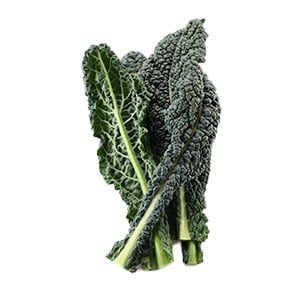
Very decorative palm cabbage, also called black cabbage, with dark, blue-green leaves and semi-high growth. Tolerates light frosts. Good taste, somewhat reminiscent of broccoli, does not need frost exposure before harvest.
Non hybrid
Frostproof
Growing tips
Germination at 5-16°C. Some producers recommend early sowing with pre-germination from March and a harvest from August. Others recommend direct seeding from June-August with a harvest from late September/early October into winter.
Details


Light requirement
Sunny

Water requirement
Moist

Soil
Medium (loamy)
Nutrient requirement
Medium

Dark germinator

Germination temperature
15 - 18 °C (Degrees Celsius)

Plant distance
50 cm

Row spacing
65 cm

Seeding depth
1.5 cm

Companion Plants
Artichoke
Aubergine / Eggplant
Bean (Broad bean / Faba bean / Field bean)
Bean (Dwarf bean)
Bean (Runner bean)
Beetroot
Black salsify
Borage
Caraway / Meridian fennel / Persian cumin
Carrots
Celery (Celeriac / Celery root)
Celery (Celery)
Chamomile
Chard
Common marigold
Coriander / Cilantro
Cucumber / Gherkin
Dill
Leeks
Lettuce (Endive / Escarole / Erisée)
Lettuce (Lamb's lettuce)
Lettuce (Lettuce)
Lettuce (Radicchio / Italian chicory)
Miner's lettuce / Indian lettuce / Winter purslane
Mint
Oregano
Parsley
Parsnip
Pea
Physalis
Potato
Radish
Radishes
Rhubarb
Sage
Soybean
Spinach (Summer)
Thyme

Antagonistic Plants
Arugula / Rocket
Broccoli
Brussels sprouts
Cabbage (Cabbage)
Cabbage (Savoy cabbage)
Cauliflower
Chives
Collard greens (Kale)
Fennel
Florence fennel / Finocchio
Garlic
Horseradish
Jerusalem artichoke / Topinambur
Kohlrabi / German turnip / Turnip cabbage
Lovage
Marjoram
Mizuna / Japanese mustard greens
Napa cabbage / Chinese cabbage
Okra
Onion
Onion (Spring onion)
Pak Choi
Rutabaga / Swedish turnip
Strawberry
Turnip

Diseases
Root Rot
Club root of cabbage
Early blight of potato
Pests
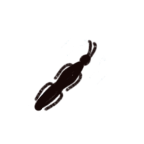
Flea beetles
Cabbage white
Cabbage fly
White fly