Arctic

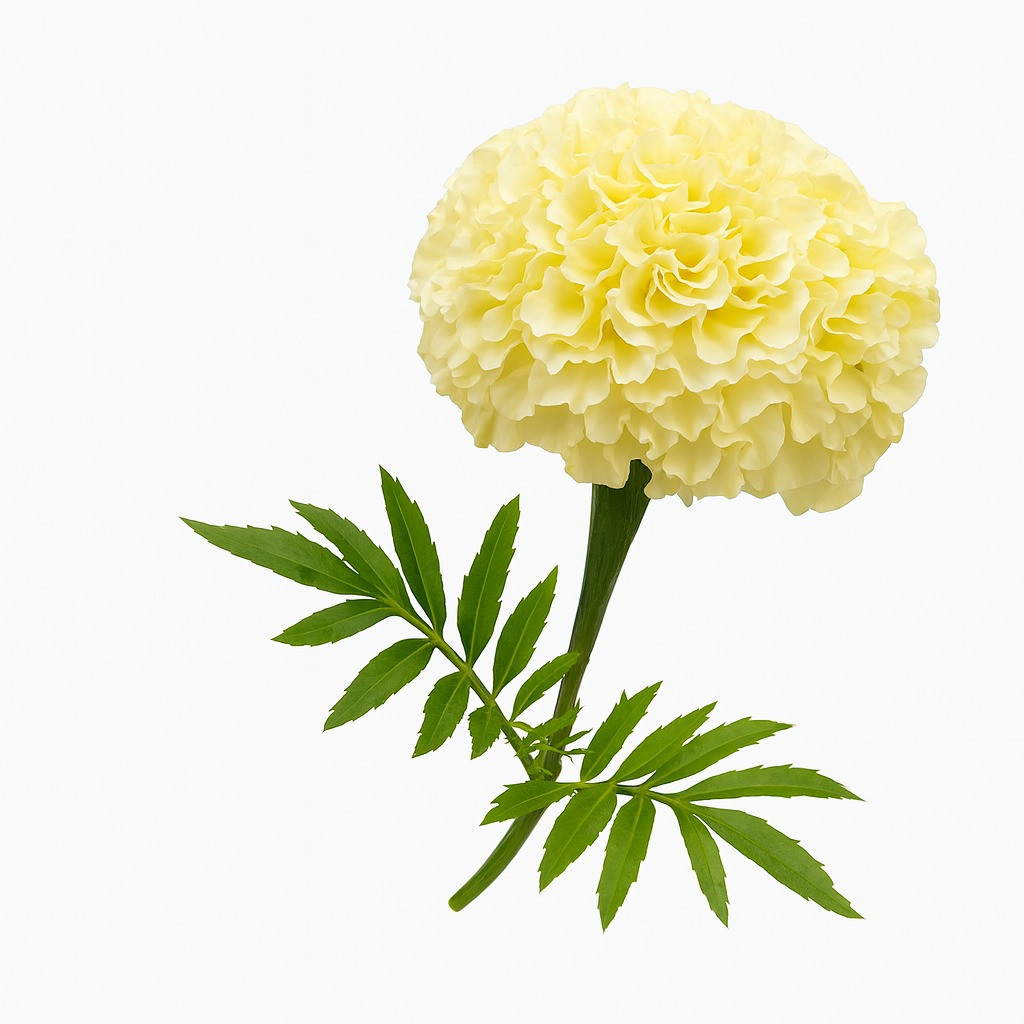
Variety
Arctic
Approved Data
created by Alex&Sempi at 02.02.2026
Seed packet
Features
Color
Flower: creamy-white
creamy-yellow
Blätter: dunkelgrün
Growth habit
height: 30 - 40 cm
filled flowers
large flowers
Blütenform: ballförmig
Location
Light: Sun
Fruit shape
Typ: Schließfrucht - Achäne
Season Overview
Propagating
Planting
Harvest
J
F
M
A
M
J
J
A
S
O
N
D
Description
Tagetes 'Arctic' blooms in an unusual creamy white shade and produces large, weather-resistant, double flowers. These plants are ideal for combining with other tagetes or bedding plants. With a height of 30-40 cm, it quickly becomes an eye-catching addition to any garden, where it adds vibrant accents. Tagetes are perennial bloomers and flower until the frost. Use these robust plants to create a colorful garden that brings joy and cheer to your outdoor space and can be enjoyed all year round! Bring a breath of fresh air with the 'Arctic' Tagetes!
F1 Hybrid
Not frost resistant
Growing tips
🌱 Pre-cultivation - Time: April - Planting after 3-5 weeks (after the ice saints) - Germination temperature: 18-22 °C - Germination time: usually 5-10 days - Light: bright, but no direct blazing sun during germination - Sowing container: seed tray or small pots with loose sowing soil - Sowing depth: 2-3 mm - Watering: carefully, keep the soil slightly moist, but never wet. - Covering: optional foil/cover until the seedlings appear - ventilate daily - Pricking out: as soon as the seedlings have 2-3 true leaves - Harden off: place outside during the day 7-10 days before planting out - Not too warm and not too dark - Fertilize sparingly - only after pricking out and only very mildly. 🌼 Direct sowing & planting - Direct sowing: from mid-May (after the ice saints) - Low varieties (20-30 cm high): 20-25 cm row spacing, 15-20 cm plant spacing - Medium varieties (30-50 cm high): 25-30 cm row spacing, 20-25 cm plant spacing - Tall varieties (over 50 cm): 30-40 cm row spacing, 25-30 cm plant spacing 🌱 Location & soil - Full sun is ideal. The more light, the more compact and flowering - Soil: loose, humus-rich, well-drained. No waterlogging - pH value: slightly acidic to neutral 💧 Care - Watering: regular, moderate. No waterlogging - Fertilize: sparingly - Remove faded plants 🌿 Use - Perfect for flower beds, balcony boxes, border planting. - Good companion plants in vegetable beds, e.g. with tomatoes, peppers or cabbage. - Attract pollinators and improve soil quality (nematode-reducing). 🌼 Harvest - Seeds: from August to October (seed heads brown and dry) - Carefully pull off or break apart the dried flower. - Inside you will find many narrow, black and white seeds. - Allow to dry well and store in a dry, dark, airtight place. - Flowers: are edible and are used for tea or decoration. - In the morning, when the dew has dried. - Only pick fresh, fully opened flowers. - As edible decoration for salads, cakes, drinks. - For tea (slightly lemony and spicy). - Dried as a colorant in herbal mixtures. 🌿 Good neighbors - Tomatoes, peppers & chilli, potatoes, eggplant, okra - Cucumber, celery, melon - Lettuce, spinach, chard, beet - Cabbages, turnips, rapeseed - Strawberries, roses, rhubarb - Beans, peas - Onions, leeks, garlic, chives - Carrots, parsnips, radishes, radishes, salsify - Basil, dill, parsley, thyme, oregano, marjoram, lemon balm, mint - Lavender, coneflower, sage, gaura, coreopsis, funkia, sedum - Berry bushes, summer lilac, weigelie, deutzia, spirea, fruit trees 🚫 Bad neighbors - Fennel - Wormwood / mugwort - Marigolds, ferns - Pumpkin, zucchini, corn - Rhododendrons - Jerusalem artichoke - Blackberries, hazelnut, elderberry, walnut - Spruce, fir, pine, maple, beech, willow, alder 🌿 Common diseases - Powdery and downy mildew - Root rot - Leaf spot diseases 🐛 Typical pests - Snails and slugs - Aphids - thrips - Spider mites
Details


Light requirement
Sunny

Water requirement
Dry

Soil
Light (sandy)
Nutrient requirement
Low

Light germinator

Germination temperature
16 - 20 °C (Degrees Celsius)

Plant distance
25 cm

Row spacing
25 cm

Seeding depth
0.2 cm

Companion Plants
Abyssinian cabbage / Ethiopian mustard
Apple
Aubergine / Eggplant
Basil
Bean ((Scarlet) runner bean)
Bean (Broad bean / Faba bean / Field bean)
Bean (Dwarf bean)
Bean (Hyacinth bean / Lablab-bean)
Bean (Lima Bean)
Bean (Runner bean)
Beetroot
Black salsify
Broccoli
Broccoli raab / Stem cabbage / Cima di rapa
Brussels sprouts
Brussels sprouts
Buddleja / Butterfly Bushes
Cabbage (Cabbage)
Cabbage (Pointed cabbage)
Cabbage (red cabbage)
Cabbage (Savoy cabbage)
Carrots
Cauliflower
Celery (Celeriac / Celery root)
Celery (Celery)
Celery (Leaf celery / Chinese celery)
Chard
Chickpea
Chili
Chinese kale - Kai-lan / Chinese broccoli
Chives
Chives
Collard greens
Collard greens (Kale)
Collard greens (Tuscan kale / Dinosaur kale / Palm tree kale)
Coneflower (Echinacea)
Cucumber / Gherkin
Currant
Dill
Fig
Funk
Garlic
Garlic chives
Gooseberry
Kohlrabi / German turnip / Turnip cabbage
Lavender
Leeks
Lettuce (Common chicory)
Lettuce (Endive / Escarole / Erisée)
Lettuce (Lamb's lettuce)
Lettuce (Lettuce)
Lettuce (Oriental greens / Brown mustard)
Lettuce (Puntarelle / Cicoria di catalogna / Cicoria asparago)
Lettuce (Radicchio / Italian chicory)
Lettuce (Sugar loaf)
Melissa
Melon (Sugar melon)
Melon (Watermelon)
Mint
Mizuna / Japanese mustard greens
Napa cabbage / Chinese cabbage
Nightshades (Other)
Okra
Onion
Onion (Spring onion)
Oregano
Ornamental alliums
Pak Choi
Parsley
Parsnip
Pea
Pear
Pepper / Paprika
Physalis
Plum
Plum (tree)
Potato
Radish
Radishes
Rapeseed - Sheer cabbage / Siberian cabbage
Rapini / Broccoli rabe
Raspberry
Rhubarb
Root parsley
Rose
Rudbeckia (Coneflower / Black-eyed-susans)
Rutabaga / Swedish turnip
Sage
Snapdragon
Sour cherry / Tart cherry
Soybean
Spinach (Summer)
Spinach (Winter)
Spirea
Strawberry
Succulents
Sweet pea
Thyme
Tomato (Bush tomato)
Tomato (Cocktail bush tomato)
Tomato (Cocktail Stake Tomato)
Tomato (Stake tomato)
Turnip
Turnip greens - Choy Sum / Chinese flowering cabbage
Turnip greens - Mizuna
Turnip greens - Tatsoi
Turnip-rooted chervil
Turnips - Oilseed turnips
Turnips - Wild turnips
Vegetable cabbage - Forage cabbage
Vegetable cabbage - Ribbed cabbage / Portuguese cabbage
Vegetable cabbage - wild cabbage / ancient cabbage
Weigela
Wild Cherry / Bird Cherry / Sweet Cherry
Yalta tomatoes

Antagonistic Plants
Alder trees
Blackberry / Brambles
Common marigold
Common mugwort
Courgette / Zucchini
Cucumber (Caigua)
Fennel
Florence fennel / Finocchio
Garden squash - Patisson / UFO squash
Grasses - Bamboos
Grasses - reeds, cattails, bulrushes
Hair cucumbers / snake gourds
Hazelnut
Ivy
Jerusalem artichoke / Topinambur
Make
Maples
Ornamental pumpkin
Pines
Pumpkin / Squash
Rhododendron
Spruce trees
Sweet woodruff / Sweetscented bedstraw
Walnut family
Willows

Diseases
Septoria
Root Rot
Downy mildew
Powdery mildews

Pests
Spider mites
Thrips
Aphids
Land snails