Yalta tomatoes

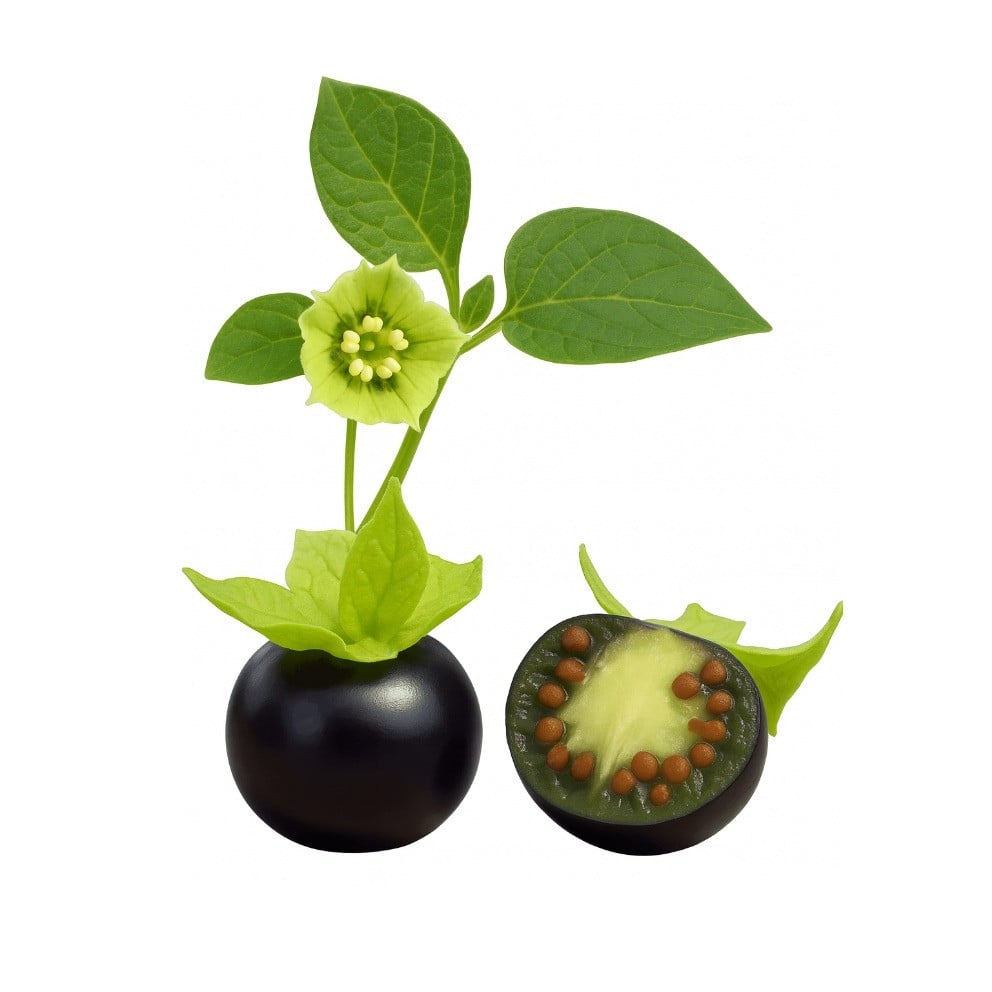
Yalta tomatoes
Jaltomata
Plant family
Solanums (Solanaceae)
Cultivation Break
4 Years
Season Overview
Propagating
Planting
Harvest
Harvest
J
F
M
A
M
J
J
A
S
O
N
D
1ST YEAR
FOLLOWING YEARS
Details


Light requirement
Sunny

Water requirement
Moist

Soil
Medium (loamy)

Nutrient requirement
Medium

Light germinator

Germination temperature
20 - 26 °C (Degrees Celsius)

Plant distance
80 cm

Row spacing
80 cm

Seeding depth
0.2 cm
Instructions
Description
Jaltomata is a plant genus in the nightshade family (Solanaceae). The approximately 60 known species are distributed in the Neotropics. The fruits of some species are eaten as fruit. Jaltomata species are perennial, herbaceous or shrub-like plants, sometimes also climbing, with a growth height of usually 1 to 2 m, in exceptional cases up to 5 m. The stem axis is usually hollow, flattened round or quadrangular to pentagonal. The leaves, which are sometimes arranged in pairs or whorls, are divided into petiole and leaf blade. The 5 to 25 mm long petioles are often located asymmetrically on the leaf blade. The leaf blades are ovate and occasionally elliptical or ovate-elliptical. The leaves are small to medium-sized. They have entire margins, are slightly wavy or toothed, the leaf tip is pointed, the base of the blade is truncated and blunt or wedge-shaped. Inflorescences and flowers The inflorescences sit singly in the leaf axils or consist of two to three or up to 12 to 18 flowers arranged in umbels. The hermaphrodite flowers are five-petaled with a double perianth. The calyx is five-lobed or five-parted, obovate-conical and wheel-shaped. There are species within the genus with whitish, green, pale yellow, purple or blue corollas, some of which are also bicolored with purple or pink; the shape of the corollas varies between wheel-shaped, bell-shaped, funnel-shaped, tubular and, in one species, urn-shaped. The flowers of some species close at night. All species of the genus studied are self-fertile. Many species of the genus have protogynous (pre-female) flowers. The anthers remain closed on the first day of flowering and only open on the second day. In some species, the stamens elongate between these two phases so that they are raised to the stigma. Fruits and seeds The fruits of Jaltomata are round or flattened round, juicy berries with small fruits up to 9 mm in size or larger fruits up to 25 mm in size. The ripe fruits can be purple, black, green, orange, red or yellow and are almost enclosed by the greatly enlarged calyx. There are 70 to 180 seeds in a berry. The kidney-shaped to almost round seeds are 0.8 to 2 mm in size. Use The fruits of various species of the genus are eaten as fruit and can be found in Mexican markets. Some species are also used medicinally.
Origin:
Southeast USA, Central America, Northern South America, Andes, Galapagos Islands, Greater Antilles, Loma Formations
Growing tips
🌡️ Sowing - Possible all year round, ideal February-May - No pre-treatment necessary - Germination temperature: 20-26 °C - Germination period: 7-30 days (depending on species) - Light: germination independent of light, but brighter conditions promote strong seedlings - Substrate: fine, loose, slightly moist - Depth: cover only 0.2-0.5 cm (very fine seeds) - Always slightly moist, never wet 💧 Young plant phase - Light requirement: high, similar to tomato or physalis - Temperature: 18-24 °C - Growth: fast, soft stems → support early - Pricking out: as soon as 2-3 true leaves are present - Fertilization: very sparingly, only after 3-4 weeks 🪴 Planting - Planting out: after the ice saints - 20-200 cm high, broadly spreading - often semi-recumbent growth - Planting distance: ◦ creeping species: 40-60 cm ◦ Upright species: 60-80 cm ◦ shrubby species: 80-120 cm - Pot culture: very well possible ◦ Pot size: 5-20 L depending on species ◦ Drainage important ☀️ Location - Sun to partial shade - Warm, sheltered from wind - Can be grown outdoors, in containers or greenhouses (similar to tomatoes) - Soil: humusy, loose, slightly moist - pH: slightly acidic to neutral 🌼 Care - Watering: evenly moist, but not wet - Fertilizing: moderate, every 2-3 weeks with organic liquid fertilizer - Support: useful for upright species - Pinching out: not necessary (unlike tomatoes) - Mulching: retains moisture and promotes fruit set 🍇 Flowering & fruit - Flowering time: from June-July, depending on the species - Pollination: self-fertile, insects improve yield - Fruit set: abundant, often in clusters - Ripening time: 60-90 days after flowering - Signs of ripeness: Color (green → yellow/orange/red/black/purple), soft consistency - Taste: mildly sweet - neutral, very juicy, low acidity, aromatic, fruity ⚠️ Important - Unripe fruits and plant parts are poisonous - Risk of confusion with belladonna (Atropa belladonna) ❄️ Overwintering - Jaltomata is not frost hardy. - Possibilities: Cultivate as an annual (easiest) ◦ Overwinter frost-free as a container plant (10-15 °C, light) ◦ Take cuttings in the fall (very easy!) 🦠 Diseases - Powdery mildew - Downy mildew - Gray mold - Root rot - Virus diseases (rare) 🐛 3. pests - Aphids - Whiteflies - Spider mites - Thrips - snails - Miner flies - Caterpillars 🟢 Good neighbors - Basil, parsley, dill, coriander, mint (pot) - Marigold, marigold, nasturtium, phacelia - Lettuce, spinach, chard, bush beans - Carrots, beet, radishes 🔴 Bad neighbors - Tomato, pepper/chilli, eggplant, potato, other nightshades - Cabbage plants (broccoli, kohlrabi, white cabbage) - Zucchini / pumpkin / melon - maize - Jerusalem artichoke, sunflower - Mint (in the ground!) - Horseradish, radishes - celery - cucumbers - okra - Rice or marsh plants

Companion Plants
Basil
Bean (Dwarf bean)
Beetroot
Carrots
Chard
Common marigold
Coriander / Cilantro
Dill
Lettuce (Common chicory)
Lettuce (Endive / Escarole / Erisée)
Lettuce (Lamb's lettuce)
Lettuce (Lettuce)
Lettuce (Radicchio / Italian chicory)
Lettuce (Sugar loaf)
Nasturtium
Parsley
Phacelia / Scorpionweed / Heliotrope
Radishes
Root parsley
Spinach (Summer)
Spinach (Winter)
Tagetes / Marigolds

Antagonistic Plants
Abyssinian cabbage / Ethiopian mustard
Aubergine / Eggplant
Broccoli
Broccoli raab / Stem cabbage / Cima di rapa
Brussels sprouts
Brussels sprouts
Cabbage (Cabbage)
Cabbage (Pointed cabbage)
Cabbage (red cabbage)
Cabbage (Savoy cabbage)
Cauliflower
Celery (Celeriac / Celery root)
Celery (Celery)
Celery (Leaf celery / Chinese celery)
Chili
Chinese kale - Kai-lan / Chinese broccoli
Collard greens
Collard greens (Kale)
Collard greens (Tuscan kale / Dinosaur kale / Palm tree kale)
Corn / Maize
Courgette / Zucchini
Cucumber (Caigua)
Cucumber / Gherkin
Garden squash - Patisson / UFO squash
Grasses - reeds, cattails, bulrushes
Grasses - Sedges, Rushes
Hair cucumbers / snake gourds
Horseradish
Jerusalem artichoke / Topinambur
Kohlrabi / German turnip / Turnip cabbage
Melon (Sugar melon)
Melon (Watermelon)
Mint
Mizuna / Japanese mustard greens
Napa cabbage / Chinese cabbage
Nightshades (Other)
Oil radish / Fodder radish
Okra
Ornamental pumpkin
Pak Choi
Pepper / Paprika
Potato
Pumpkin / Squash
Radish
Rapeseed
Rapeseed - Sheer cabbage / Siberian cabbage
Rapini / Broccoli rabe
Rutabaga / Swedish turnip
Sea coal
Sunflower
Tomato (Bush tomato)
Tomato (Cocktail bush tomato)
Tomato (Cocktail Stake Tomato)
Tomato (Stake tomato)
Turnip
Turnip greens - Choy Sum / Chinese flowering cabbage
Turnip greens - Mizuna
Turnip greens - Tatsoi
Turnips - Oilseed turnips
Turnips - Wild turnips
Vegetable cabbage - Forage cabbage
Vegetable cabbage - Ribbed cabbage / Portuguese cabbage
Vegetable cabbage - wild cabbage / ancient cabbage

Diseases
Root Rot
Grey mold
Downy mildew
Powdery mildews

Pests
Thrips
Spider mites
Land snails
Caterpillars
Leaf-miner flies
Aphids
White fly