Vegetable cabbage - Forage cabbage

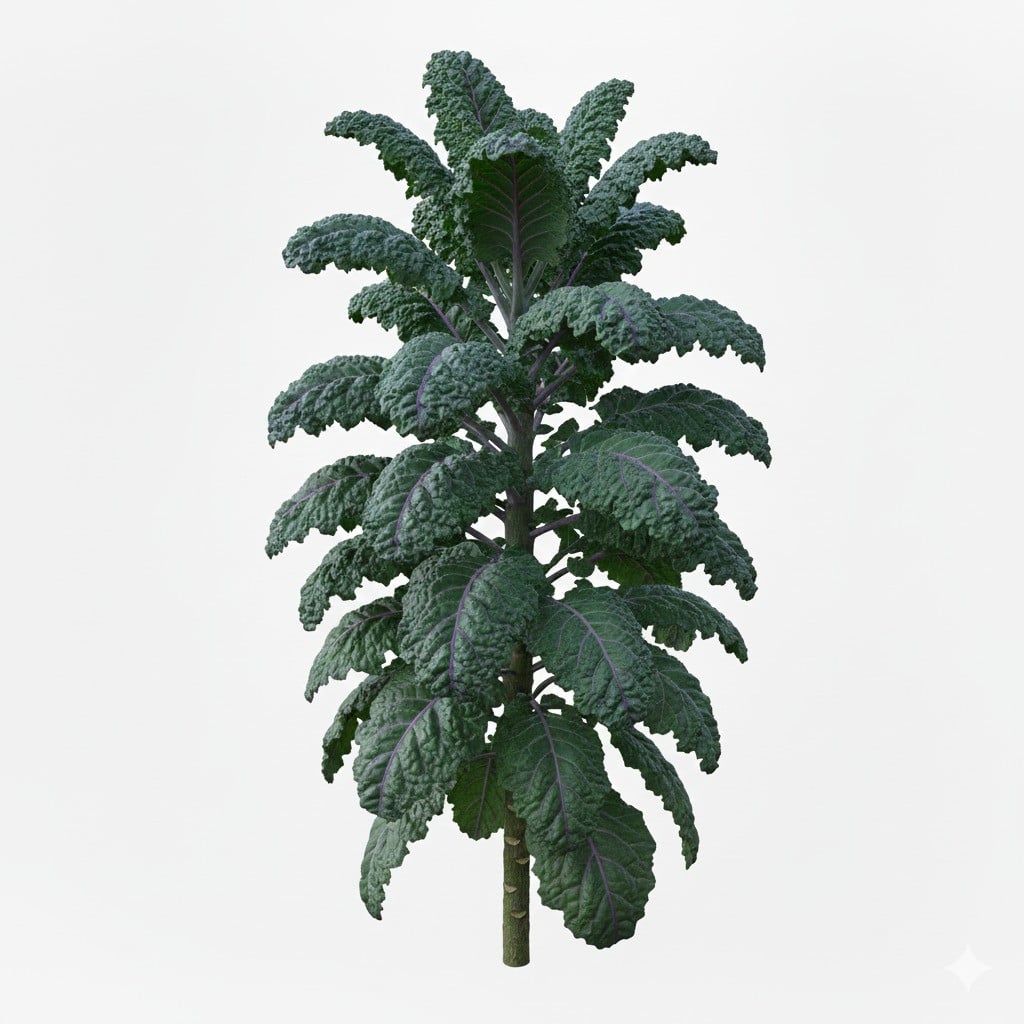
Vegetable cabbage - Forage cabbage
Brassica oleracea var. medullosa / viridis
Plant family
Crucifers (Brassicaceae)
Cultivation Break
4 Years
Season Overview
Propagating
Planting
Harvest
Harvest
J
F
M
A
M
J
J
A
S
O
N
D
1ST YEAR
2ND YEAR
Details


Light requirement
Sunny

Water requirement
Moist

Soil
Medium (loamy)
Nutrient requirement
High

Light germinator

Germination temperature
15 - 20 °C (Degrees Celsius)

Plant distance
50 cm

Row spacing
70 cm

Seeding depth
1.5 cm
Instructions
Description
Forage cabbage, botanically known as Brassica oleracea var. medullosa or Brassica oleracea var. viridis, is a special type of cabbage that has been bred for animal feed. It belongs to the cruciferous family and is closely related to other cabbage varieties such as kale and Brussels sprouts. Its impressive properties make forage cabbage a real enrichment for animal nutrition. The versatility and nutritional richness of this plant are truly remarkable - no wonder it is so popular with farmers! Forage kale plays an important role in agriculture, especially in regions with cooler climates. Its ability to produce large amounts of biomass while being nutrient-rich makes it incredibly valuable. For many farmers, forage kale is a cost-effective and efficient way to provide their animals with fresh green fodder even in the winter months. This is not only practical, but also good for animal welfare. Forage kale offers numerous benefits for livestock nutrition: - High nutritional content: rich in proteins, vitamins and minerals. - Good digestibility: Easily digestible for many animal species. - High yield: Produces large amounts of biomass per area. - Winter hardiness: Can also be harvested in frosty conditions. - Versatility: Suitable for various livestock such as cattle, sheep and goats. Culinary exception: In Prignitz (northwest Brandenburg), fodder cabbage is also traditionally eaten by humans. It is part of Knieperkohl, a regional specialty made from sauerkraut, dried cabbage leaves (usually marrowstem cabbage) and turnip leaves. This dish is typically eaten in winter and is considered a "poor people's food" with a long tradition. Edibility in general: The leaves and stem are edible and can be prepared in a similar way to kale or white cabbage. However, the taste of fodder cabbage is stronger and less delicate than typical edible cabbage varieties. It contains carotene, protein and minerals, which makes it suitable for human consumption.
Origin:
Mediterranean region, Prignitz
Growing tips
Location Forage kale thrives best on nutrient-rich, deep soils. It prefers loamy to loamy-sandy soils with good water retention capacity. Before sowing, the soil should be thoroughly loosened and enriched with organic material. A pH value between 6.0 and 7.0 is optimal for growth. Sowing Sowing usually takes place from April to June, depending on the region and climatic conditions. There are two main methods: - Direct sowing: seeds are sown directly into the open ground, with a row spacing of around 50-70 cm. - Pre-cultivation and planting out: Young plants are grown in seed trays and planted out after 4-6 weeks. The sowing depth is about 1-2 cm. With direct sowing, you should expect about 2-3 kg of seed per hectare. The pre-cultivation method often results in stronger young plants, but direct sowing is less labor-intensive and can be just as successful in good conditions. Care Fertilization Forage kale has a high nutrient requirement. Basic fertilization with manure or compost is recommended before sowing. During the growth phase, a balanced supply of nitrogen, phosphorus and potassium should be ensured. A nitrogen application of around 150-200 kg N/ha, divided into several doses, is usual. Irrigation Although fodder kale is relatively drought-tolerant, it requires an even supply of water for optimum growth. Regular watering is particularly important in the first few weeks after sowing and during longer periods of drought. Waterlogging should be avoided as this can lead to root rot. Mulch the soil around the plants. This helps to retain moisture in the soil and also reduces weed growth. Weed control Effective weed control is crucial, especially in the first few weeks after sowing. Mechanical methods such as hoeing or harrowing are often sufficient. With the right care and attention, forage kale can become a high-yielding and nutritious source of feed for various farm animals. Harvest Forage kale reaches its full splendor around 12 to 16 weeks after sowing. The best time for harvesting is between September and November, just before the first frost strikes. During this phase, forage kale is bursting with nutrients and produces an impressive yield. An unmistakable sign that it is ready to harvest is when the lower leaves start to turn yellow - this is the plant's signal that it is ready, so to speak. Storage When it comes to storage, forage kale is quite uncomplicated if you keep a few things in mind: - Fresh is best: It is best to feed forage kale fresh. This way it retains its full nutrient content and the animals enjoy the juicy greens. - Short-term storage: If there's a bit more, you can store forage kale in a cool, damp place for a short time. Rentals or cool cellars are ideal for this. - Ensiling for the long term: For longer-term storage, ensiling is a good option. The chopped kale is stored in an airtight container and will keep for several months. A great way to have fresh feed to hand even in winter. - Drying as an option: Sometimes forage kale is also dried to use it as winter feed. However, some nutrients are lost in the process. Care must be taken during storage: Rotting and mold are absolute no-gos. This would not only affect the quality of the feed, but could also endanger the health of the animals. So always keep a watchful eye on it!

Companion Plants
Bean ((Scarlet) runner bean)
Bean (Broad bean / Faba bean / Field bean)
Bean (Dwarf bean)
Bean (Hyacinth bean / Lablab-bean)
Bean (Lima Bean)
Bean (Runner bean)
Celery (Celeriac / Celery root)
Celery (Celery)
Chamomile
Dill
Lettuce (Common chicory)
Lettuce (Lamb's lettuce)
Lettuce (Lettuce)
Lettuce (Oriental greens / Brown mustard)
Lettuce (Radicchio / Italian chicory)
Lettuce (Sugar loaf)
Potato
Spinach (Summer)
Spinach (Winter)

Antagonistic Plants
Broccoli
Broccoli raab / Stem cabbage / Cima di rapa
Brussels sprouts
Brussels sprouts
Cabbage (Cabbage)
Cabbage (Pointed cabbage)
Cabbage (red cabbage)
Cabbage (Savoy cabbage)
Cauliflower
Chinese kale - Kai-lan / Chinese broccoli
Collard greens
Collard greens (Kale)
Collard greens (Tuscan kale / Dinosaur kale / Palm tree kale)
Garlic
Kohlrabi / German turnip / Turnip cabbage
Mustard
Napa cabbage / Chinese cabbage
Onion
Onion (Spring onion)
Radish
Strawberry
Vegetable cabbage - wild cabbage / ancient cabbage
Diseases
Black spot of roses
Club root of cabbage
Grey mold
Powdery mildews
Pests
Land snails
Cabbage white
Cabbage fly
Flea beetles
Aphids