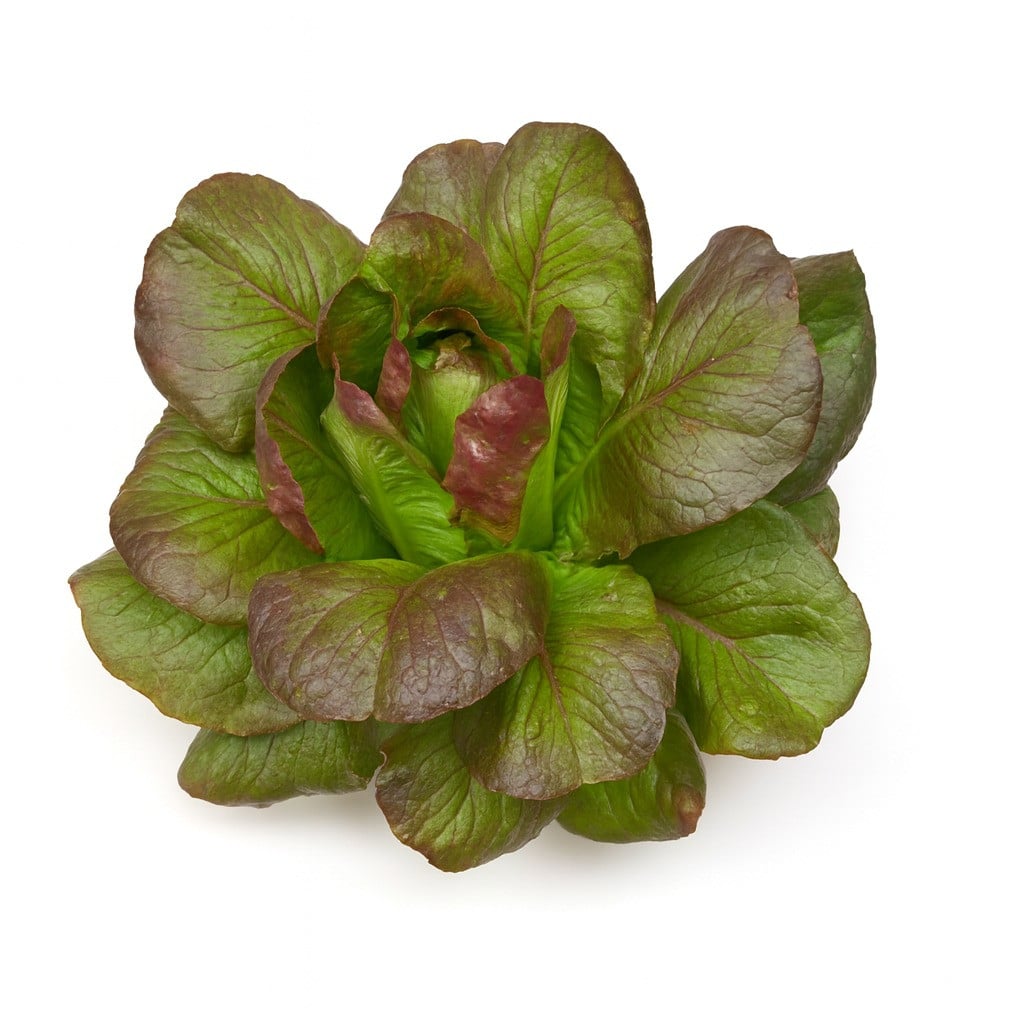
Bindesalat - Romaine Red Cos

Variety
Bindesalat - Romaine Red Cos
Approved Data
created by Simmi at 08.07.2023
Seed packet
Features
Growth habit
growth habit: compact
Nutzungsart: Ur-/Alte Sorte
Color
green
Blätter: weinrot
Blattrippen: gelb
Taste
aromatic
Slightly bitter
crunchy
Fruit shape
elongated
ribbed
Cultivation Break
3 Years
Season Overview
Propagating
Planting
Harvest
J
F
M
A
M
J
J
A
S
O
N
D
Description
Attractive, strong, dark red, compact romaine lettuce with elongated, crisp, tender leaves. Aromatic taste. Grown from spring to summer. Old variety.
Non hybrid
Not frost resistant
Growing tips
Sowing: From March to June, 0.5 cm deep. Germination at 5-15°C. Eat what is too close together! This easy-care and fast-growing variety is not suitable for growing in the warmer months of the year, as the lettuce quickly withers in the heat. The heads can be tied together with string a few weeks before harvesting to keep the leaves nice and tender. Harvesting: Cut off the outer leaves or the whole plant as you go. Lettuces are very suitable as 'gap fillers'. They require sufficient moisture and have a comparatively low nutrient requirement. With a clever selection, lettuce can be grown all year round: in spring and early summer, lettuce and cut/picked lettuce; in summer and fall, chicory lettuce and iceberg lettuce as well as lamb's lettuce (especially in fall and winter). For a continuous harvest, it is best to sow or plant at intervals. Species and varieties must be adapted to the respective season, e.g. spring varieties start to shoot when it is too hot. This causes a long stalk to form and the leaves become bitter. After a few weeks, small flowers appear at the top, from which many crescent-shaped seeds are formed. These can be collected for the following year or disperse themselves in the bed if you leave them standing.
Details


Light requirement
Semi-shaded

Water requirement
Moist

Soil
Medium (loamy)

Nutrient requirement
Medium

Light germinator

Germination temperature
5 - 12 °C (Degrees Celsius)

Plant distance
25 cm

Row spacing
30 cm

Seeding depth
0.5 cm

Companion Plants
Artichoke
Arugula / Rocket
Bean ((Scarlet) runner bean)
Bean (Broad bean / Faba bean / Field bean)
Bean (Dwarf bean)
Bean (Hyacinth bean / Lablab-bean)
Bean (Lima Bean)
Bean (Runner bean)
Beetroot
Black salsify
Borage
Broccoli
Brussels sprouts
Brussels sprouts
Cabbage (Cabbage)
Cabbage (Pointed cabbage)
Cabbage (red cabbage)
Cabbage (Savoy cabbage)
Carrots
Cauliflower
Celery (Leaf celery / Chinese celery)
Chamomile
Chervil
Chickpea
Chinese kale - Kai-lan / Chinese broccoli
Chives
Collard greens
Collard greens (Kale)
Collard greens (Tuscan kale / Dinosaur kale / Palm tree kale)
Common marigold
Coriander / Cilantro
Corn / Maize
Courgette / Zucchini
Cucumber (Caigua)
Cucumber / Gherkin
Dill
Fennel
Florence fennel / Finocchio
Garden squash - Patisson / UFO squash
Garlic
Garlic chives
Hair cucumbers / snake gourds
Kohlrabi / German turnip / Turnip cabbage
Lavender
Leeks
Melon (Sugar melon)
Melon (Watermelon)
Miner's lettuce / Indian lettuce / Winter purslane
Okra
Onion
Onion (Spring onion)
Oregano
Ornamental pumpkin
Parsnip
Pea
Pumpkin / Squash
Radishes
Rutabaga / Swedish turnip
Savory
Soybean
Spinach (Summer)
Spinach (Winter)
Thyme
Turnip-rooted chervil
Vegetable cabbage - Forage cabbage
Vegetable cabbage - Ribbed cabbage / Portuguese cabbage
Vegetable cabbage - wild cabbage / ancient cabbage
Women's coats

Antagonistic Plants

Diseases
Bacterial canker
Grey mold
Downy mildew
Pests
Leaf-miner flies
Larvae
Leaf bugs
Aphids
Flea beetles
Land snails
Wireworms