Summer asters

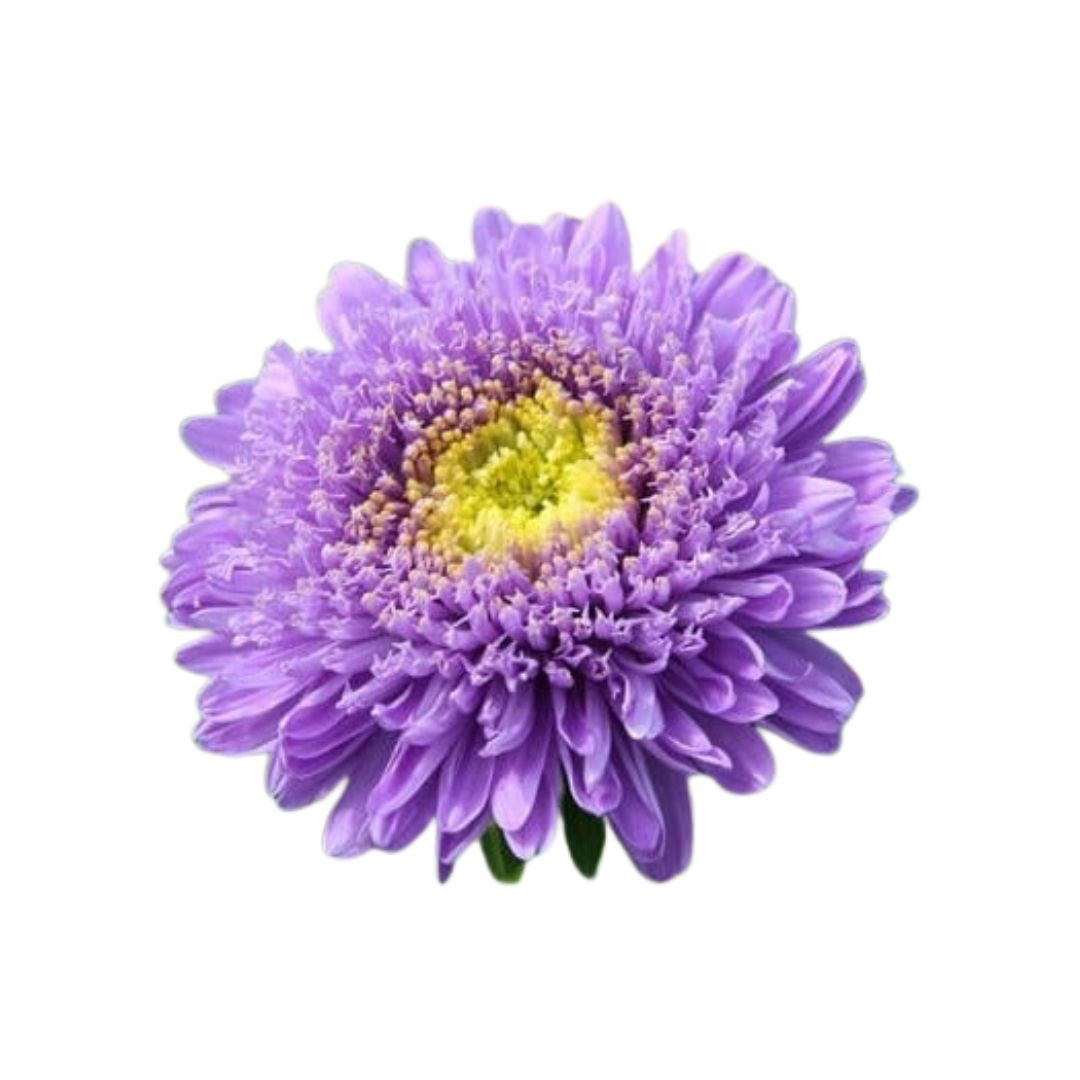
Summer asters
Callistephus chinensis
Plant family
Daisy family (Asteraceae)
Cultivation Break
4 Years
Season Overview
Propagating
Planting
Harvest
J
F
M
A
M
J
J
A
S
O
N
D
Details


Light requirement
Sunny

Water requirement
Moist

Soil
Light (sandy)

Nutrient requirement
High

Dark germinator

Germination temperature
11 - 14 °C (Degrees Celsius)

Plant distance
30 cm

Row spacing
40 cm

Seeding depth
0.5 cm
Instructions
Description
Origin The colorful flowers of the summer aster (Callistephus chinensis) embody everything that makes summer flowers so popular: lush, bright and varied, the annual aster is also ideal as a cut flower. Its ornamental value has been recognized by flower lovers since early on. In China, the home of the summer aster, wild populations were cultivated over 2,000 years ago. Today, there is a huge range of summer flowers from the summer aster genus (Callistephus) and the composite family (Asteraceae). Pretty mixes are available straight from the seed bag. Growth of summer asters Upright in growth, the height depends on the area of use. The group of broadly bushy bedding and potted plants remains low at 20 to 30 centimeters. Cut varieties for summer beds grow 30 to 60 centimeters high. Particularly long-stemmed specimens, such as the 'Giant Princess' series, which are mainly grown professionally, grow up to 80 centimeters high. Leaves The toothed leaves are elongated. The dark green foliage highlights the bright flower colors. Flowers The color palette ranges from white to pink, salmon, purple, mauve and blue-violet. Even bright yellow is mixed in. Depending on the variety, summer asters are single, semi-double or fully double and have developed an attractive range of flower shapes. Some resemble chrysanthemums and can reach a flower diameter of 10 to 15 centimeters. Button types form small pompoms, while summer asters are surprisingly fringed with needle-like, radiating petals. Still others resemble daisies, which has earned summer asters the name "Queen Marguerite" (Reine Marguerite) in France. The early garden forms of Callistephus chinensis all had simple capitula. In some cultivars, the yellow flower centers can still be seen today. Such forms are interesting for bees and other insects as a food source. Flowering of early flowering varieties starts in July and can last well into October for late flowering varieties.
Origin:
China
Growing tips
Location and soil Summer asters show their most beautiful blooms in sunny spots. Any good garden soil that is sufficiently moist will suit them. In tubs or containers, the substrate should be both nutrient-rich and well-drained. Sowing and planting From mid-May, as soon as frosts are no longer expected, you can sow summer asters directly into the open ground or plant them out as pre-grown plants. Seedlings have the advantage of flowering more quickly. Sowing under glass begins in March/April at germination temperatures of 11 to 14 degrees Celsius. Until May, sow the fine seeds according to the instructions on the seed packets in pots with sterile potting compost and separate the seedlings as soon as the first leaves appear (germination period 7 to 14 days). If you sow in portions, you can replant sets every two weeks - this extends the flowering period. If you don't have a greenhouse or cold frame to grow them in, you can find young plants at markets or nurseries. They are planted 20 to 30 centimetres apart in the bed. Caring for summer asters Like most summer flowers, summer asters need to be watered regularly in dry conditions, but must not be overwatered. Once the first flowers appear in mid to late July, you can add a liquid fertilizer to the water to give them a boost. This is particularly important for summer asters in containers. You can also promote abundant flowering by constantly pruning. Consistently cut off faded flowers. This stimulates the formation of new buds and extends the flowering season of Callistephus chinensis. If you have paid attention to rain-resistant and stable varieties, supports should be superfluous. With older and very tall pruning varieties, however, it may be necessary to tie them up. Use The basically timeless composite flowers have retained the charm of rural garden flowers. They are therefore just as suitable for elegant summer borders as they are for cottage gardens, where the cut flowers sometimes grow among dill and lettuce. They can be grown in ribbons through the border, used to fill in gaps with flowering perennials such as sage, mallow and daisies, or planted in a bed with cut varieties alone. Summer asters last particularly long in the vase. Mixtures fill planters just as colorfully. Use lower varieties for window boxes. Propagation Callistephus chinensis is propagated by seed. Diseases and pests One problem that occasionally occurs on summer asters is aster wilt. This fungal disease manifests itself in wilting plants, even though they have been sufficiently watered. The base of the stem and root collar are discolored brown. Remove infected plants immediately and do not dispose of the diseased material in the compost, but in the residual waste. The place where the infested plants were standing is then taboo for asters in future. You should never grow summer asters in the same place year after year anyway. You can also reduce the risk of plant disease by looking out for resistant varieties and buying treated seed.

Companion Plants

Antagonistic Plants
Aster
Broccoli
Broccoli raab / Stem cabbage / Cima di rapa
Brussels sprouts
Cabbage (Cabbage)
Cabbage (Pointed cabbage)
Cabbage (red cabbage)
Cabbage (Savoy cabbage)
Cauliflower
Collard greens
Collard greens (Kale)
Collard greens (Tuscan kale / Dinosaur kale / Palm tree kale)
Fennel
Funk
Garlic
Kohlrabi / German turnip / Turnip cabbage
Make
Napa cabbage / Chinese cabbage
Okra
Onion
Onion (Spring onion)
Potato
Sweet potato
Tomato (Bush tomato)
Tomato (Cocktail bush tomato)
Tomato (Cocktail Stake Tomato)
Tomato (Stake tomato)

Diseases
Root Rot
Grey mold
Powdery mildews

Pests
Land snails
Aphids