Babosa

Variety
Babosa
Approved Data
created by Alex&Sempi at 20.01.2026
Features
Color
green
glossy
Black seeded
Flower: white
Oberfläche: matt
Blätter: blaugrün
Oberfläche: wachsig
Wurzel: weiß
Wurzel: cremeweiß
Wurzel: gelb
Wurzel: ocker
Wurzelfleisch: weiß
Taste
mild
nutty
sweetish
Slightly spicy
crunchy
raw edible
Edible
juicy
tender
Onion aroma
Essbarkeit: Blüten
Essbarkeit: Blätter
Essbarkeit: Wurzel
Toxizität: ungiftig
Konsistenz: weich
Geschmacksrichtung: mediterran
Essbarkeit: roh nicht essbar
Flavor: Bitterness: strong
Resistances
robust
cold tolerant
Winter hardy
heat tolerant
hardy down to -15°C
Location
light: Full sun
planting: bed
planting: outdoor
planting: raised bed
planting: house wall / wall
Soil: permeable soil
soil moisture: no waterlogging
Planting: mounds / ridges
Fertilization: single dose of compost
fertilization: humus-enriched
Soil: Well fertilized
Soil: regular garden soil
soil moisture: moist
Fertilization: moderately nutrient-rich
soil moisture: well-drained
Water: regularly
wind: airy
Soil: light to medium-heavy
Soil: sandy to loamy
fertilization: low-nitrogen
pH value: acidic to neutral (5,5-7)
Soil: loosened
fertilization: potassium-rich
Water: Adequate
Light: Sun
Fertilization: moderate
pH value: neutral (7)
Water: moderately
Fertilization: organic
Heat requirement: moderate
Düngemittel: Pflanzenjauche
Biotop: Feld
Pflanzung: Bauerngarten
Düngemittel: Hornspäne
Good companions: moisture-loving
Nachbarn schlecht: trockenheitsliebend
Nachbarn schlechte: Schattenpflanzen
Nachbarn schlechte: kalkliebend
Good companions: sun-loving
Nachbarn schlechte: stark wuchernd
Nachbarn schlechte: hoher nährstoffbedarf
Nachbarn gute: mit niedrigen Nährstoffbedarf
Nachbarn schlechte: hochwachsend
Nachbarn gute: niedrigwachsend
Gießen: Olla
Herkunft: Neophyt
Pflanzung: Hügelbeet
Boden: flachgründig (0-30)
Düngemittel: Holzasche
Düngemittel: Gesteinsmehl
Fruit shape
capsule
small
smooth, sleek
Growth habit
Blätter: röhrenförmig
lifespan: biennial
growth habit: compact
Spring variety
harvest: profitable
growth habit: upright
growth habit: upright leaf position
leaves: rosulate
root type: shallow-rooted
strong leaves
fast growth
harvest: early-ripening
Nutzungsart: Ur-/Alte Sorte
Fragrant flowers
leaves: leafy
wide: 20 - 30 cm
hermaphroditic
growth habit: upright flower stems
root type: bulb, tuber
small flowers
umbellate flowers
star-shaped flowers
large leaves
strong growth
propagation by seeds
Blüte: kugelförmig
leaves slim
perennial
Summer variety
Blätter: zugespitzt
Geschlechtertyp: einhäusig
Ernte: mittelreifend
Keimung: Dunkelkeimer
Blätter: einfach
Blätter: länglich
Ernte: vor Blüte
Lebenszyklus: zieht im Herbst ein
Life cycle: sprouts in spring
Vermehrung: samenfest
Blüte: zweites Standjahr
Cultivation Break
4 Years
Season Overview
Propagating
Planting
Harvest
Harvest
J
F
M
A
M
J
J
A
S
O
N
D
1ST YEAR
2ND YEAR
Description
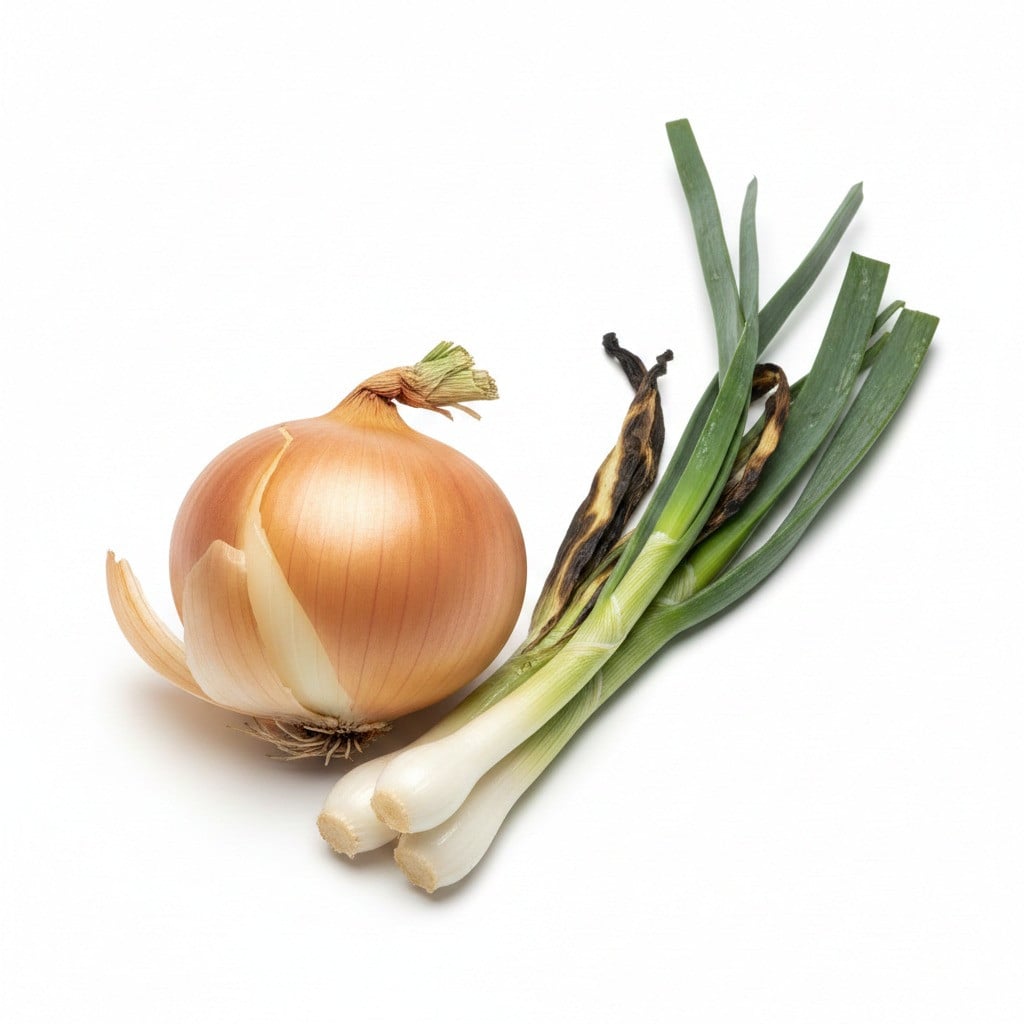
Babosa is a special onion that is grown and eaten in Aragon, Spain, in a very different way than here. In Catalonia, they are called calcots. In the first year, normal onions are formed; these are large vegetable onions with a mildly pungent taste. These onions are harvested until October. Some are left behind. These are buried 10 cm deep in the ground, i.e., deeper than they were harvested. The onions are now completely covered with soil. In the spring, many long stems sprout from this onion. The lower part is long and white. Each onion produces about 8 shoots. The harvest time is in April. Unlike conventional onions, they contain fewer sulfur compounds, which gives them their characteristic mild aroma. This difference is particularly noticeable when grilled, where calçots taste nutty and sweet rather than pungent. Traditionally, they are placed near the embers of an open kitchen fire until the outer layer is black. This is then peeled off. The inner part is dipped in salt or sauce (usually romesco sauce) and eaten whole, including the green parts, as finger food. It is a festive meal that brings the whole family together. They can be stored open in the vegetable compartment for up to 10 days. ✅ Use • Traditional calçotada: Grilled over charcoal and served with romesco sauce • Mild vegetable stir-fries: Combined with asparagus or artichokes • Vegetarian main courses: As an alternative to leeks in quiches ❌ Not suitable in • Salads: The moist texture becomes mushy and bitter when raw • Soups: Loses its flavor completely • Quick everyday meals: Requires longer cooking time (at least 20 minutes) • Canned foods: Loses its flavor completely 🧅 What is the difference between babosa and calçot? Babosa is the variety—calçot is the product. If you grow babosa and plant it deep in the second year, you will get real calçots. Also, calçots should not be confused with spring onions, even though they look similar! Calçots belong to the kitchen onion species (lat. Allium cepa var. aggregatum). Spring onions are Allium fistulosum.
Non hybrid
Frostproof
Growing tips
🌞 Location & soil - Full sun and warm - Loose, humus-rich, slightly moist soil - Loosen deeply approx. 1 week before sowing, Work in 3 liters of compost per m² shallowly. 🌱 Sowing & planting - Pre-cultivation: possible in mid-January - Direct sowing: March/April - Sowing depth: 1-2 cm - Row spacing: 20-30 cm - Spread out later to 8-10 cm spacing 🧹 Care - Keep free of weeds - Water moderately (in the morning) - Stop watering 2 weeks before harvest so that they mature well - Do not overfertilize - onions are weak growers 🧅 Harvesting & storage - Harvest when leaves bend over and turn yellow, approx. 2/3 of the bulbs bent - Harvest: from mid-July - October (save some for calcots) - Leave to dry on the bed for a few days after harvesting - Storage: bright, dry attic or cool cellar, approx. 15 °C - Do not store next to potatoes, otherwise they will rot more quickly 🌱 Planting for calcots - Replant some of the harvested bulbs - Planting: October/November - Planting depth: 10 cm (completely covered with soil) - Row spacing: 20-30 cm - Planting distance: 8-10 cm 🧅 Harvesting & storing the calcots - Harvest: from April/May - Storage: vegetable drawer open for up to 10 days 🌿 Mixed cultivation & crop rotation - Good neighbors: carrots, beet, parsnips, cucumbers, lettuce - Bad neighbors: cabbage, beans, potatoes - Take a 4-year break after onions or leeks in the same location 🐛 Common pests Onion fly, leek moth, leek leaf miner, thrips, root nematodes, stem borers, wireworms 🍄 Important diseases Downy mildew, gray mold, fusarium rot, bacterial soft rot, viral diseases (e.g. onion yellow dwarf virus)
Details


Light requirement
Sunny

Water requirement
Moist

Soil
Medium (loamy)

Nutrient requirement
Medium

Dark germinator

Germination temperature
15 - 20 °C (Degrees Celsius)

Plant distance
10 cm

Row spacing
25 cm

Seeding depth
1.5 cm

Companion Plants
Aubergine / Eggplant
Beetroot
Black salsify
Carrots
Celery (Celeriac / Celery root)
Celery (Celery)
Celery (Leaf celery / Chinese celery)
Chayote
Chili
Coriander / Cilantro
Courgette / Zucchini
Cucumber (African horned cucumber / Kiwano)
Cucumber (Caigua)
Cucumber / Gherkin
Dill
Garden squash - Patisson / UFO squash
Knolliger Sauerklee / Oca
Lettuce (Common chicory)
Lettuce (Endive / Escarole / Erisée)
Lettuce (Lamb's lettuce)
Lettuce (Lettuce)
Lettuce (Puntarelle / Cicoria di catalogna / Cicoria asparago)
Lettuce (Radicchio / Italian chicory)
Lettuce (Sugar loaf)
Melon (Sugar melon)
Melon (Watermelon)
Okra
Parsnip
Pepper / Paprika
Savory
Spinach (Summer)
Spinach (Winter)
Strawberry
Tomato (Bush tomato)
Tomato (Cocktail bush tomato)
Tomato (Cocktail Stake Tomato)
Tomato (Stake tomato)

Antagonistic Plants
Bean ((Scarlet) runner bean)
Bean (Broad bean / Faba bean / Field bean)
Bean (Dwarf bean)
Bean (Hyacinth bean / Lablab-bean)
Bean (Lima Bean)
Bean (Runner bean)
Broccoli
Broccoli raab / Stem cabbage / Cima di rapa
Brussels sprouts
Cabbage (Cabbage)
Cabbage (Pointed cabbage)
Cabbage (Savoy cabbage)
Cauliflower
Chives
Chives
Collard greens (Kale)
Collard greens (Tuscan kale / Dinosaur kale / Palm tree kale)
Garlic chives
Horseradish
Kohlrabi / German turnip / Turnip cabbage
Leeks
Mizuna / Japanese mustard greens
Napa cabbage / Chinese cabbage
Oil radish / Fodder radish
Ornamental alliums
Pak Choi
Pea
Potato
Radish
Radishes
Rapeseed
Rutabaga / Swedish turnip
Sea coal
Soybean
Sweet potato
Turnip
Turnip greens - Choy Sum / Chinese flowering cabbage
Turnip greens - Mizuna
Vegetable cabbage - Forage cabbage
Wild garlic

Diseases
Dry rot of crucifers
Root Rot
Soft rot
Fusarium
Downy mildew
Yellow stripe virus
Pests
Thrips
Stem borers
Leaf-miner flies
Onion fly
Wireworms