Red Gourmet

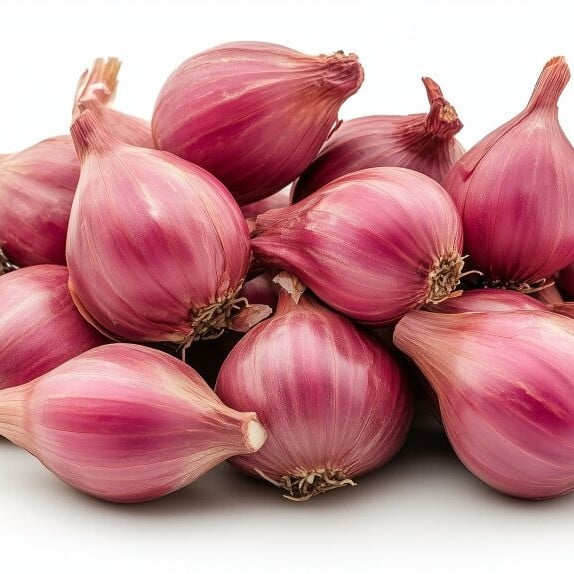
Variety
Red Gourmet
created by Yvonne at 07.05.2023
Cultivation Break
4 Years
Season Overview
Propagating
Planting
Harvest
Harvest
J
F
M
A
M
J
J
A
S
O
N
D
1ST YEAR
2ND YEAR
Description
The Gourmet Red Shallot is a classic variety within the allium family, prized for its vibrant red bulbs and distinctive flavor. Ready for harvest approximately 110 days after planting, these shallots are not only a culinary favorite but also a nutritional powerhouse. Gourmet Red Shallots are rich in antioxidants, making them an excellent choice for supporting overall health. They may help regulate blood sugar levels, improve circulation, and alleviate seasonal allergies. Additionally, they are known to promote heart and bone health, making them a valuable addition to a balanced diet. Perfect for enhancing savory dishes, their mildly sweet yet complex flavor makes them a versatile ingredient in a variety of cuisines. Whether roasted, caramelized, or enjoyed raw in salads, Gourmet Red Shallots add both depth of flavor and health benefits to any meal.
Non hybrid
Growing tips
Es wird zwischen Saat- oder Steckzwiebeln unterschieden. Sommer-, Küchen- und Gemüsezwiebeln werden meist als Steckzwiebeln im Frühjahr gepflanzt. Die Steckzwiebeln werden nur so tief eingepflanzt, dass sie gerade so mit Erde bedeckt sind. Eine Aussaat im Frühjahr ist ebenfalls möglich, die Zwiebeln sind bei der Ernte meist etwas kleiner und können im Folgejahr als Steckzwiebeln gepflanzt werden. Auch die Aufzucht von Setzlingen in Pflanzschalen ist möglich. Dann werden die Setzlinge ins Beet gepflanzt, sobald das 3.-4. Laubblatt sichtbar ist und sobald kein stärkerer Frost mehr zu erwarten ist. Geerntet wird, sobald die Blätter von selbst einknicken und sich gelb färben und der Blattansatz eintrocknet. Dafür solltest du einen trockenen, sonnigen Tag abwarten und die Zwiebeln vor dem Einlagern abtrocknen lassen.
Details


Light requirement
Sunny

Water requirement
Moist

Soil
Medium (loamy)

Nutrient requirement
Medium

Plant distance
15 cm

Row spacing
20 cm

Seeding depth
1 cm

Companion Plants
Aubergine / Eggplant
Beetroot
Black salsify
Carrots
Celery (Celeriac / Celery root)
Celery (Celery)
Celery (Leaf celery / Chinese celery)
Chayote
Chili
Coriander / Cilantro
Courgette / Zucchini
Cucumber (African horned cucumber / Kiwano)
Cucumber (Caigua)
Cucumber / Gherkin
Dill
Garden squash - Patisson / UFO squash
Knolliger Sauerklee / Oca
Lettuce (Common chicory)
Lettuce (Endive / Escarole / Erisée)
Lettuce (Lamb's lettuce)
Lettuce (Lettuce)
Lettuce (Puntarelle / Cicoria di catalogna / Cicoria asparago)
Lettuce (Radicchio / Italian chicory)
Lettuce (Sugar loaf)
Melon (Sugar melon)
Melon (Watermelon)
Okra
Parsnip
Pepper / Paprika
Savory
Spinach (Summer)
Spinach (Winter)
Strawberry
Tomato (Bush tomato)
Tomato (Cocktail bush tomato)
Tomato (Cocktail Stake Tomato)
Tomato (Stake tomato)

Antagonistic Plants
Bean ((Scarlet) runner bean)
Bean (Broad bean / Faba bean / Field bean)
Bean (Dwarf bean)
Bean (Hyacinth bean / Lablab-bean)
Bean (Lima Bean)
Bean (Runner bean)
Broccoli
Broccoli raab / Stem cabbage / Cima di rapa
Brussels sprouts
Cabbage (Cabbage)
Cabbage (Pointed cabbage)
Cabbage (Savoy cabbage)
Cauliflower
Chives
Chives
Collard greens (Kale)
Collard greens (Tuscan kale / Dinosaur kale / Palm tree kale)
Garlic chives
Horseradish
Kohlrabi / German turnip / Turnip cabbage
Leeks
Mizuna / Japanese mustard greens
Napa cabbage / Chinese cabbage
Oil radish / Fodder radish
Ornamental alliums
Pak Choi
Pea
Potato
Radish
Radishes
Rapeseed
Rutabaga / Swedish turnip
Sea coal
Soybean
Sweet potato
Turnip
Turnip greens - Choy Sum / Chinese flowering cabbage
Turnip greens - Mizuna
Vegetable cabbage - Forage cabbage
Wild garlic

Diseases
Dry rot of crucifers
Root Rot
Soft rot
Fusarium
Downy mildew
Yellow stripe virus

Pests
Thrips
Stem borers
Leaf-miner flies
Onion fly
Wireworms