Marbles

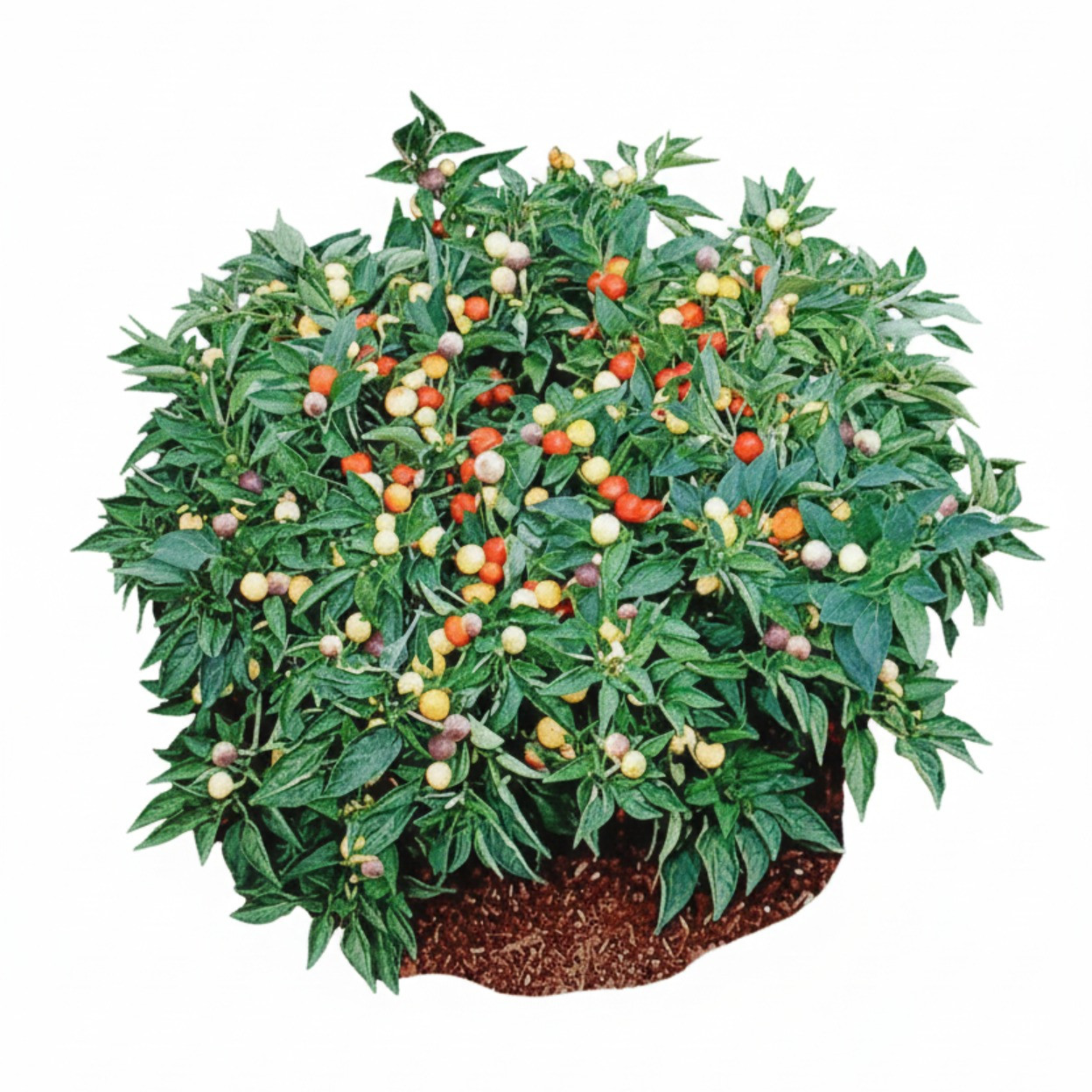
Variety
Marbles
Approved Data
created by Alex&Sempi at 04.01.2026
Features
Taste
aromatic
spicy
raw edible
Edible
edible skin
Essbarkeit: Frucht
Essbarkeit: Samen
mild
Sharpness 6
Slightly bitter
Slightly spicy
crunchy
neutral
Toxizität: ungiftig
Geschmacksrichtung: Würze: leicht
Konsistenz: fest
Flavor: Chili
Resistances
robust
resistant
Little susceptible
frost-sensitive
heat tolerant
Growth habit
height: 20 - 30 cm
growth habit: bushy
harvest: continuously pickable
ornamental plant
wide: 20 - 30 cm
lifespan: perennial
growth habit: compact
harvest: profitable
growth habit: shrubby
flower: flowering
root type: taproot
self-fruiting
strong leaves
strong lateral shoot development
normal growth
warm germination
cross-pollination
root type: deep-rooted
propagation by cuttings
leaves: leafy
growth habit: becoming woody
growth habit: well-branched
hermaphroditic
growth habit: upright flower stems
entire leaves
simple flower
small flowers
star-shaped flowers
propagation by seeds
limited growth
dwarf shrub
insect pollination
Summer variety
Blätter: eiförmig
Blätter: zugespitzt
Blätter: mittelgroß
Geschlechtertyp: einhäusig
Ernte: mittelreifend
Keimung: Lichtkeimer
Blätter: einfach
Blätter: elliptisch
Schnitt: Verjüngung
Schnitt: nach Ernte
Schnitt: Herbst
Wuchs: mittel
Blätter: gewellt
Blütenstand: einzeln, kleine Gruppen
Vermehrung: samenfest
Stamm, Stiel: kantig
Location
Light: Sun
Planting: pots, tubs, or boxes
planting: greenhouse
planting: bed
planting: outdoor
planting: raised bed
Heat requirement: high
sheltered from the wind
planting: house wall / wall
Soil: permeable soil
soil moisture: no waterlogging
Fertilization: single dose of compost
Fertilization: nutrient-rich
Soil: Well fertilized
soil moisture: fresh to moist
planting: polytunnel / under protective covers
light: Full sun
soil moisture: well-drained
Soil: gravelly to sandy
Water: regularly
wind: airy
Soil: light to medium-heavy
planting: open balcony or terrace
Planting: winter garden
Soil: sandy to loamy
fertilization: low-nitrogen
planting: covered balcony or terrace
Soil: loosened
fertilization: potassium-rich
Planting: frost-free
Fertilization: moderate
fertilization: sufficient
Soil: mineral
pH value: neutral (7)
Water: moderately
Fertilization: organic
Düngemittel: Pflanzenjauche
Pflanzung: Bauerngarten
Düngung: flüssig
Düngung: Langzeitdünger
Düngemittel: Hornspäne
Good companions: moisture-loving
Nachbarn schlecht: trockenheitsliebend
Nachbarn schlechte: Schattenpflanzen
Nachbarn schlechte: kalkliebend
Good companions: sun-loving
Nachbarn schlechte: stark wuchernd
Nachbarn schlechte: hoher nährstoffbedarf
Nachbarn gute: mit niedrigen Nährstoffbedarf
Nachbarn schlechte: hochwachsend
Nachbarn gute: niedrigwachsend
Düngung: NPK 6/8/12
Pflanzung: Mauerkrone
Pflanztechnik: Mulchen
Gießen: Olla
Pflanzung: Hügelbeet
Pflanzung: Gewächshaus
Herkunft: Züchtung
Düngung: NPK 3/5/7
Garden style: Mediterranean garden
Planting: windowsill / indoor space
Fruit shape
globular
smooth, sleek
small
Typ: Schließfrucht - Beere
Color
white
orange
red
Frucht: gelb
multicolor
marbled
glossy
medium green
Flower: white
Flower: light-violet
Blätter: dunkelgrün
Frucht: creme
Musterung: verlaufend
Stamm, Stiel: grün
Wurzel: weiß
Wurzel: cremeweiß
Seeds: white/cream
Samen: gelb
Wurzel: beige
Samen: beige
Cultivation Break
4 Years
Season Overview
Propagating
Planting
Harvest
Harvest
J
F
M
A
M
J
J
A
S
O
N
D
1ST YEAR
FOLLOWING YEARS
Description
Marbles is one of the most beautiful, edible ornamental chillies there is. It is a must to grow this Annuum variety for its appearance alone. The small plant is very easy to grow and therefore ideal as a pot culture for beginners. The fruits grow upright, reach a diameter of approx. 1 cm and, unlike many other ornamental chillies, they have a very nice aromatic taste and medium heat. They are first bright purple, then white, later yellow to orange and then fully ripe red. As they do not ripen uniformly, all colors are always on one plant at the same time. The berries are suitable for eating fresh, for drying or simply for decoration.
Non hybrid
Not frost resistant
Growing tips
🌡️ Germination & propagation - Sowing: End of February to beginning of March - chilies have a long cultivation period. - Hotter varieties (e.g. Habanero, Bhut Jolokia) need a particularly long → early start (as early as January). - Sowing depth: 0.2-0.5 cm, light germinator - Germination temperature: 24-28 °C for fast and reliable germination. - Mini greenhouse or propagator on the windowsill recommended. - Place in a very bright position, otherwise the seedlings will quickly go to seed. - Only one seed per pot to avoid root disturbance. - Only prick out if there are several plants in one pot - chilies like quiet roots. - Repot as soon as the roots emerge from the bottom of the pot. - When repotting, do not plant deeper than before (unlike with tomatoes). 🌱 Soil - Loose & well-drained - Good drainage - Humus & airy - Cultivation: low in nutrients - From 4th-6th pair of leaves: nutrient-rich, initially more nitrogen, later more potassium for fruit formation. - pH: 6.0-7.0 So slightly acidic to neutral 🌶️ Planting distances ✅ Standard hot chillies (e.g. cayenne, Thai, jalapeño) - 30-40 cm distance between the plants - 40-50 cm row spacing 🌶️🔥 Large varieties (e.g. Habanero, Scotch Bonnet, large Capsicum chinense) - 40-45 cm spacing - 50-60 cm row spacing 🌱 Small/compact varieties (ornamental chillies, mini chillies) - 20-30 cm spacing - 30-40 cm row spacing 🌞 Location in summer - Full sun, warm, sheltered from the wind - chillies love warmth and need light. - Balcony, terrace or greenhouse ideal. - Sheltered south-facing balcony or a plastic greenhouse. - From mid-May (after the Ice Saints) slowly acclimatize to sun and wind. - Only put outside when night temperatures are stable above 10 °C. 💧 Watering & fertilizing - Keep evenly moist, but avoid waterlogging. - From the second month onwards, feed regularly with tomato or vegetable fertilizer. - Slight dry spells before harvesting often enhance the flavor 🌾 Harvest & use - Harvest from July to October. - Green chillies are unripe but edible; they are more aromatic when fully colored. - Ideal for drying, pickling, fermenting or for chili oil. 🌱 Overwintering (optional) - Many varieties are perennial. - Bright, 10-15 °C, little watering. - Cut back in spring and allow to sprout again. 🌿 Good neighbors for chilli - basil - Garlic - Onions - Marigolds - marigolds - Carrots - Spinach & lettuce - Bush beans, peas - Oregano, thyme, marjoram - Beet, chard 🚫 Bad neighbors for chilli - Fennel - Potatoes - Eggplants - Tomatoes - peppers - Cabbages (broccoli, kohlrabi, white cabbage) - Corn - Cucumbers & zucchinis - Celery 🌞 Tip for optimal chili neighborhood - Chilies love sun, warmth and well-drained soil - Keep a distance so that the air circulates well - Mixed cultivation with herbs is almost always beneficial 🦠 Common diseases - Leaf spot disease - Powdery mildew - Downy mildew - Root rot - Viral diseases (e.g. mosaic virus) 🐛 Common pests - Aphids - Spider mites - Thrips - Whitefly - fungus gnats
Details


Light requirement
Sunny

Water requirement
Moist

Soil
Light (sandy)
Nutrient requirement
High

Light germinator

Germination temperature
24 - 28 °C (Degrees Celsius)

Plant distance
30 cm

Row spacing
40 cm

Seeding depth
0.2 cm

Companion Plants
Basil
Bean (Dwarf bean)
Borage
Carrots
Chard
Common marigold
Garlic
Lavender
Lettuce (Common chicory)
Lettuce (Endive / Escarole / Erisée)
Lettuce (Lamb's lettuce)
Lettuce (Lettuce)
Lettuce (Radicchio / Italian chicory)
Lettuce (Sugar loaf)
Onion
Onion (Spring onion)
Oregano
Parsley
Savory
Spinach (Summer)
Spinach (Winter)
Tagetes / Marigolds
Thyme

Antagonistic Plants
Abyssinian cabbage / Ethiopian mustard
Aubergine / Eggplant
Broccoli raab / Stem cabbage / Cima di rapa
Brussels sprouts
Cabbage (Pointed cabbage)
Cabbage (red cabbage)
Celery (Celeriac / Celery root)
Celery (Celery)
Chinese kale - Kai-lan / Chinese broccoli
Collard greens
Collard greens (Kale)
Collard greens (Tuscan kale / Dinosaur kale / Palm tree kale)
Corn / Maize
Courgette / Zucchini
Cucumber (Caigua)
Fennel
Florence fennel / Finocchio
Garden squash - Patisson / UFO squash
Hair cucumbers / snake gourds
Melon (Sugar melon)
Melon (Watermelon)
Napa cabbage / Chinese cabbage
Nightshades (Other)
Ornamental pumpkin
Pepper / Paprika
Potato
Pumpkin / Squash
Rapeseed
Rapeseed - Sheer cabbage / Siberian cabbage
Rapini / Broccoli rabe
Rutabaga / Swedish turnip
Turnip
Turnip greens - Tatsoi
Turnips - Oilseed turnips
Turnips - Wild turnips
Vegetable cabbage - Forage cabbage
Vegetable cabbage - Ribbed cabbage / Portuguese cabbage
Vegetable cabbage - wild cabbage / ancient cabbage
Yalta tomatoes

Diseases
Root Rot
Downy mildew
Powdery mildews
Blossomrot
Early blight of potato
Black spot of roses
Red spot disease
Grey mold
Pests
Thrips
Spider mites
Aphids
White fly