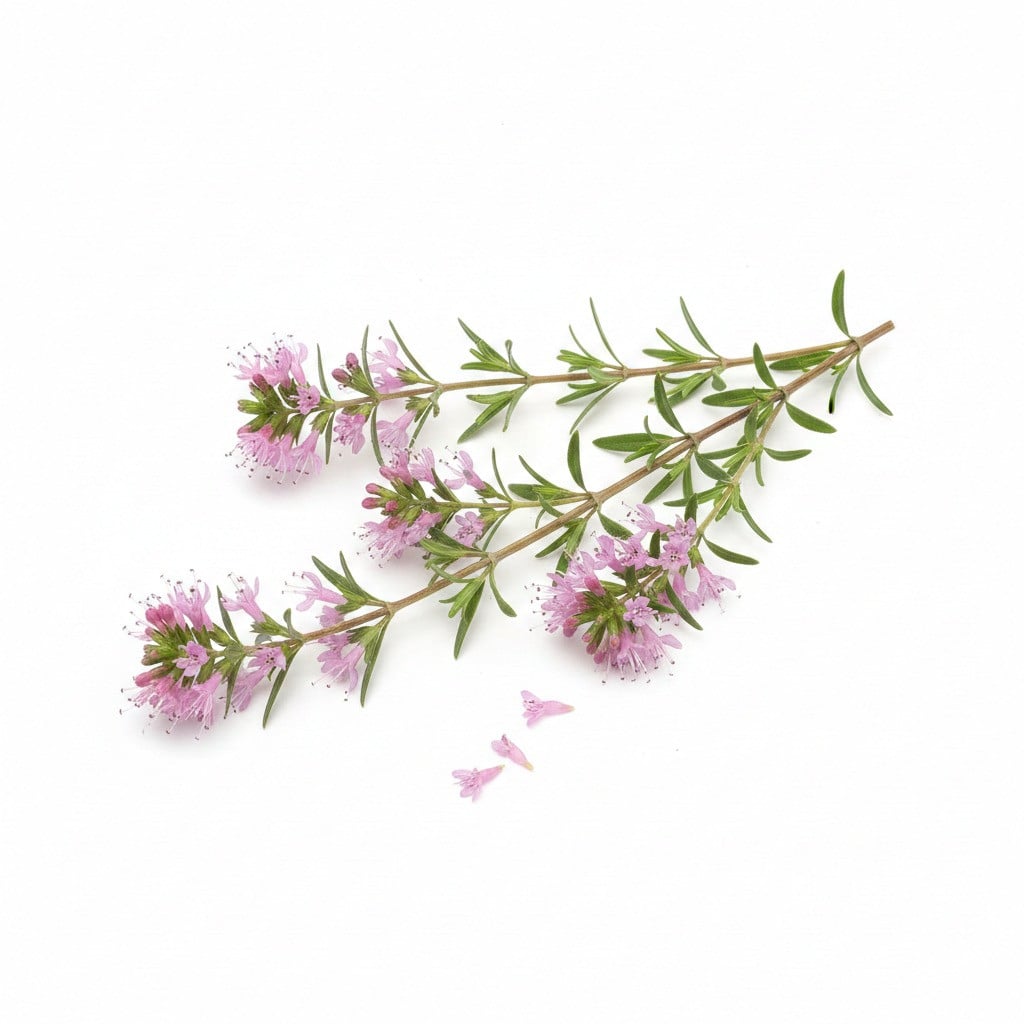
Rosablühender Ysop 'Roseus'

Variety
Rosablühender Ysop 'Roseus'
Approved Data
created by Alex&Sempi at 30.12.2025
Features
Resistances
robust
resistant
drought tolerant
Pest-resistant
Little susceptible
hardy down to -20°C
krankheitstolerant
Growth habit
cross-pollination
insect pollination
lifespan: perennial
growth habit: compact
harvest: continuously pickable
growth habit: stable
root type: taproot
strong leaves
strong lateral shoot development
normal growth
subshrub
leaves: densely leafed
root type: deep-rooted
flower: continuous bloomer
Fragrant flowers
panicle-shaped flower
leaves: evermoist
wide: 30 - 40 cm
propagation by cuttings
growth habit: becoming woody
growth habit: well-branched
hermaphroditic
growth habit: upright flower stems
small flowers
spicate flowers
small leaves
acicular leaves
propagation by seeds
propagation by division
leaves slim
leaves: leathery, tough
Blätter: zugespitzt
Geschlechtertyp: einhäusig
Keimung: Lichtkeimer
Wuchs: nicht invasiv
Blätter: einfach
Blätter: duftend
Schnitt: Verjüngung
Schnitt: Form
Schnitt: nach Blüte
Schnitt: zeitiges Frühjahr
Schnitt: Herbst
Schnitt: Sommer
Blätter: länglich
Ernte: vor Blüte
Leaves: slightly hairy
Ernteertrag: mittel
Wuchs: mittel
Blütenform: lippenförmig
Blütenstand: einzeln, kleine Gruppen
Schnitt: bei Ernte
Blütenform: zygomorph (spiegelbildlich)
Vermehrung: samenfest
Stamm, Stiel: behaart
Blütenstand: quirlförmig
Taste
Thyme aroma
aromatic
tangy
Slightly bitter
intensive
raw edible
Edible
balsamic
characteristic
Essbarkeit: Blüten
Essbarkeit: Blätter
Toxizität: ungiftig
Geschmacksrichtung: mediterran
Konsistenz: ölhaltig
Konsistenz: fest
Aroma: Minze
Aroma: Salbei
Location
Light: Sun
planting: outdoor
Heat requirement: high
planting: house wall / wall
Soil: permeable soil
soil moisture: no waterlogging
Planting: mounds / ridges
Fertilization: nutrient-poor
fertilization: minimal
light: Full sun
soil moisture: well-drained
Soil: gravelly to sandy
fertilization: low-humus
Soil: light to medium-heavy
planting: open balcony or terrace
Wind: windverträglich
fertilization: low-nitrogen
planting: covered balcony or terrace
Gartenstil: Kräutergarten
Soil: rocky, stony
Soil: loosened
Water: Adequate
Water: sparingly
pH value: neutral to alkaline (7-8)
Soil moisture: moderately dry to fresh
Planting: rock garden / alpine garden
Planting: pots, tubs, or boxes
Soil: mineral
Fertilization: organic
planting: herb spiral
Boden: kalkhaltig
Düngung: kalktolerant
Pflanzung: Trockenmauer
Nachbarn gute: trockenheitsliebende
Nachbarn schlecht: feuchtigkeitsliebend
Nachbarn schlechte: Schattenpflanzen
Good companions: calcium-loving
Good companions: sun-loving
Nachbarn schlechte: stark wuchernd
Nachbarn schlechte: hoher nährstoffbedarf
Nachbarn gute: mit niedrigen Nährstoffbedarf
Nachbarn schlechte: hochwachsend
Nachbarn gute: niedrigwachsend
Gartenstil: Naturgarten
Pflanzung: Mauerkrone
Pflanztechnik: Permakultur
Gartenstil: Präriegarten
Boden: mittelgründig (30-60)
Boden: karg
Herkunft: Züchtung
Düngung: nicht erforderlich
Color
Behaarung: weiß
brown
dark brown
Black seeded
Flower: pink
Blätter: dunkelgrün
Oberfläche: matt
Stamm, Stiel: braun
Wurzel: cremeweiß
Wurzel: braun
Samen: braun
Wurzel: beige
Herbstfärbung: keine
Fruit shape
Typ: Zerfallsfrucht - Klausen
smooth, sleek
egg-shaped
small
Season Overview
Propagating
Planting
Harvest
Harvest
J
F
M
A
M
J
J
A
S
O
N
D
1ST YEAR
FOLLOWING YEARS
Description
Hyssop (Hyssopus) is a semi-shrub in the labiate family (Lamiaceae). It has been known as fragrant hyssop, bee herb, verbena, true hyssop, St. Joseph's wort and numerous other names since time immemorial. Hyssop has been cultivated as a spice and medicinal plant since the 16th century, especially in southern Europe. Today, hyssop is grown commercially in France, Hungary and Holland. Hyssop comes from the Hebrew and means "holy herb". The aromatic plant is similar to lavender in its growth and use. It is one of the typical representatives of Mediterranean shrub plants. The hyssop genus consists of five subspecies that are native to different regions. Distribution Hyssop is a plant of the Mediterranean climate region. It is found in many areas in southern Europe, in western Asia as far as Iran and in North Africa. As a neophyte, there are also occurrences of hyssop bushes on Lake Geneva, in the Hegau region and in southern, lower Alpine areas. Leaf The almost needle-like leaves of hyssop are opposite on short shoots. They are up to five centimetres long and around one centimetre wide. They are stalkless or semi-stalkless. The leaf shapes range from short pointed to blunt, with a smooth leaf edge. The surface is bare or hairy. There are oil glands on both sides of the leaf. They secrete a strongly fragrant, aromatic odor. Flowering Hyssop plants flower from July to October. They have spike-shaped inflorescences with five-petaled flowers. Their bright blue or purple color is characteristic. In rare cases, there are white or pink flowers. The flowers are arranged in groups of four to 16 at the end of the stem. The flowers have linear bracts. They are pointed at the front and have awns in some species. The corollas are sometimes over a centimeter long, they are two-lipped and funnel-shaped. The lower lip sticks out, the upper lip is upright. The center of the flower consists of four stamens that protrude from the flower. There are also white or purple stamens, an upper ovary and pistils. Fruit After flowering, hyssop plants form four triangular and egg-shaped sub-fruits. They are around two millimeters long. Growth Hyssop grows up to 70 centimeters tall. The plants grow as perennials or bushy dwarf shrubs. They have upright, strongly branched stems with exfoliating bark. Some species have creeping branches. The stems are thin, square and slightly hairy. Its deep roots are typical of hyssop. The plant is not reliably hardy. Use Hyssop has been cultivated as a medicinal, aromatic and ornamental plant since the Middle Ages. As with lavender, the young leaves can be finely chopped and added to vegetables or salads. In Mediterranean cuisine, they are used in marinades, fillings or meat and fish dishes. In France, the leaves are used in herbal liqueurs. The leaves are used in perfume and oil production due to their strong fragrance. Hyssop has long been used medicinally, both dried and fresh, for its anti-inflammatory and antispasmodic properties.
Non hybrid
Frostproof
Growing tips
🌿 Sowing & planting Sowing - Can be sown directly outdoors from May. - Alternatively: Pre-cultivation from March/April. Planting - Spacing: approx. 25-30 cm (note semi-shrub form). - Combines well with roses, Mediterranean herbs and drought-loving perennials. 🌞 Location & soil Hyssop loves sun, warmth and dryness. - Full sun, warm, sheltered from the wind - Well-drained, rather dry soil, no waterlogging - Calcareous / slightly alkaline preferred - Ideal for: Herb spiral (Mediterranean zone), rock garden, dry bed. 💧 Care - Very easy to care for, needs little water. - Only water during long periods of drought. - No heavy, wet soil → root rot possible. - Light pruning after flowering keeps the plant compact. - Hardy, but light protection is advisable in the first year. 🦠 Diseases - Flower wilt (environmental) - Root rot (waterlogging) - Fungal diseases (leaf spot, gray mold) 🐞 Pests - Snails (rare) - Caterpillars, leaf beetles (rare) - Aphids (occasionally) ✅ Good neighbors Hyssop loves dry, sunny, calcareous conditions - so plants that like the same conditions and do not proliferate are suitable. - Thyme, rosemary, sage, lavender, oregano / dost, savory, marjoram - Bush beans - Onions, garlic, shallots - Parsnips, carrots - Beet, radishes ⚠️ Bad neighbors - Mint (proliferating, moisture-loving) - Lemon balm (spreads rapidly, other moisture requirements) - Basil (likes nutrient-rich & moist → opposite of hyssop) - Parsley, dill, fennel, chervil, caraway (umbelliferous plants, sensitive to aromatic herbs) - Lovage (strong-growing, shades hyssop) - Chives, leeks (moisture-loving, other soil requirements) - Tomatoes, cucumbers, zucchinis, pumpkin, celery, potatoes (moisture-loving, heavy feeders) - Lettuce, chard, spinach (moisture-loving) 🐝 Benefits & special features - Strongly aromatic, spicy-bitter → use sparingly. - Repels slugs and snails thanks to its intense fragrance. - Very bee-friendly (hence the name bee herb). - Perennial and long-lasting. 🌼 Harvest - Leaves and shoot tips are most aromatic before flowering. - Flowers can also be used (decoration, tea). - Pruning promotes new shoots.
Details


Light requirement
Sunny

Water requirement
Dry

Soil
Light (sandy)

Nutrient requirement
Low

Light germinator

Germination temperature
18 - 22 °C (Degrees Celsius)

Plant distance
30 cm

Row spacing
30 cm

Seeding depth
0.5 cm

Companion Plants

Antagonistic Plants
Aubergine / Eggplant
Basil
Caraway / Meridian fennel / Persian cumin
Celery (Celeriac / Celery root)
Celery (Celery)
Celery (Leaf celery / Chinese celery)
Chard
Chervil
Chives
Courgette / Zucchini
Cucumber (Caigua)
Dill
Fennel
Florence fennel / Finocchio
Garden squash - Patisson / UFO squash
Garlic chives
Leeks
Lettuce (Common chicory)
Lettuce (Endive / Escarole / Erisée)
Lettuce (Lamb's lettuce)
Lettuce (Lettuce)
Lettuce (Oriental greens / Brown mustard)
Lettuce (Puntarelle / Cicoria di catalogna / Cicoria asparago)
Lettuce (Radicchio / Italian chicory)
Lettuce (Sugar loaf)
Lovage
Melissa
Mint
Onion (Spring onion)
Ornamental pumpkin
Parsley
Pimpinella
Potato
Pumpkin / Squash
Root parsley
Spinach (Summer)
Spinach (Winter)
Tomato (Bush tomato)
Tomato (Cocktail bush tomato)
Tomato (Cocktail Stake Tomato)
Tomato (Stake tomato)
Wild garlic

Diseases
Angular leaf spot of cucumber
Root Rot
Septoria
Grey mold
Pests
Aphids
Land snails
Caterpillars