Big Buds

Variety
Big Buds
created by Reesii at 25.01.2024
Cultivation Break
4 Years
Season Overview
Sowing
Harvest
Harvest
J
F
M
A
M
J
J
A
S
O
N
D
1ST YEAR
2ND YEAR
Description
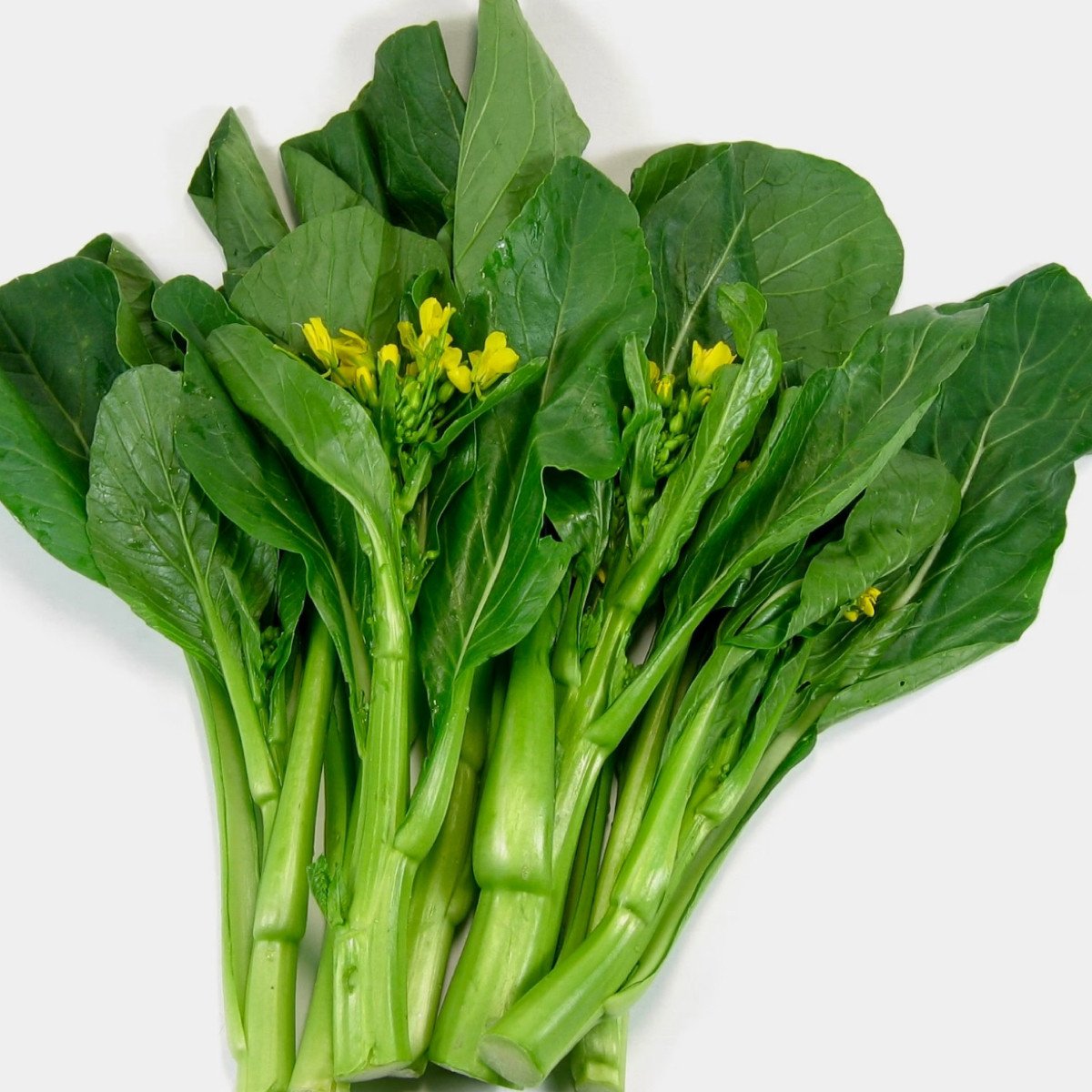
Choi sum is a leafy vegetable, similar to pak choi, but with longer, thinner stems. Choi sum is used in Asian cuisine for stir-fries or wok dishes, or for noodle soups. Short preparation in a wok is most recommended here, as it retains its beautiful green color. Choi sum should not be steamed, as this usually makes it bitter. Only the flowering stems and young leaves are used in the preparation. The taste of choi sum is a mixture of spinach and pointed cabbage, but it is much crunchier
Non hybrid
Growing tips
Pak Choi is particularly suitable for medium-heavy and nutrient-rich soils in areas protected from the wind. It particularly likes evenly high humidity. Its heat requirement is not particularly high. It can be grown in partial shade as well as in the sun. Like all types of cabbage, it is a heavy eater. Pak choi has a very short development period of only 8-10 weeks. It can be pre-grown under glass in spring and planted out in the open from April. If the spring is too warm, it tends to sprout. It is safer to grow it in midsummer (sowing in July). Pak choi is also suitable for growing in a pot. Its bed should be hoed regularly and good watering is important for it. On dry days, it is advisable to sprinkle it with water or otherwise ensure a high level of humidity.
Details


Light requirement
Semi-shaded

Water requirement
Moist

Soil
Light (sandy)

Nutrient requirement
High

Plant distance
20 cm

Row spacing
40 cm

Seeding depth
2 cm

Companion Plants
Artichoke
Aubergine / Eggplant
Bean ((Scarlet) runner bean)
Bean (Broad bean / Faba bean / Field bean)
Bean (Dwarf bean)
Bean (Hyacinth bean / Lablab-bean)
Bean (Lima Bean)
Bean (Runner bean)
Black salsify
Carrots
Celery (Celeriac / Celery root)
Celery (Celery)
Celery (Leaf celery / Chinese celery)
Chamomile
Chili
Coriander / Cilantro
Cucumber / Gherkin
Dill
Leeks
Lettuce (Common chicory)
Lettuce (Endive / Escarole / Erisée)
Lettuce (Lamb's lettuce)
Lettuce (Lettuce)
Lettuce (Puntarelle / Cicoria di catalogna / Cicoria asparago)
Lettuce (Radicchio / Italian chicory)
Lettuce (Sugar loaf)
Parsnip
Pea
Pepper / Paprika
Soybean
Spinach (Summer)
Spinach (Winter)
Tomato (Bush tomato)
Tomato (Cocktail bush tomato)
Tomato (Cocktail Stake Tomato)
Tomato (Stake tomato)

Antagonistic Plants
Abyssinian cabbage / Ethiopian mustard
Broccoli
Broccoli raab / Stem cabbage / Cima di rapa
Brussels sprouts
Brussels sprouts
Cabbage (Cabbage)
Cabbage (Pointed cabbage)
Cabbage (red cabbage)
Cabbage (Savoy cabbage)
Cauliflower
Chinese kale - Kai-lan / Chinese broccoli
Collard greens
Collard greens (Kale)
Collard greens (Tuscan kale / Dinosaur kale / Palm tree kale)
Horseradish
Kohlrabi / German turnip / Turnip cabbage
Lovage
Mizuna / Japanese mustard greens
Napa cabbage / Chinese cabbage
Pak Choi
Rapeseed
Rapeseed - Sheer cabbage / Siberian cabbage
Rapini / Broccoli rabe
Rutabaga / Swedish turnip
Sea coal
Turnip
Turnip greens - Tatsoi
Turnips - Oilseed turnips
Turnips - Wild turnips
Vegetable cabbage - Forage cabbage
Vegetable cabbage - Ribbed cabbage / Portuguese cabbage
Vegetable cabbage - wild cabbage / ancient cabbage

Diseases
Root Rot
Club root of cabbage
Grey mold
Downy mildew
Powdery mildews

Pests
Land snails
Cabbage white
Cabbage fly
Cabbage heart midge
Cutworms
Flea beetles
Aphids
Voles