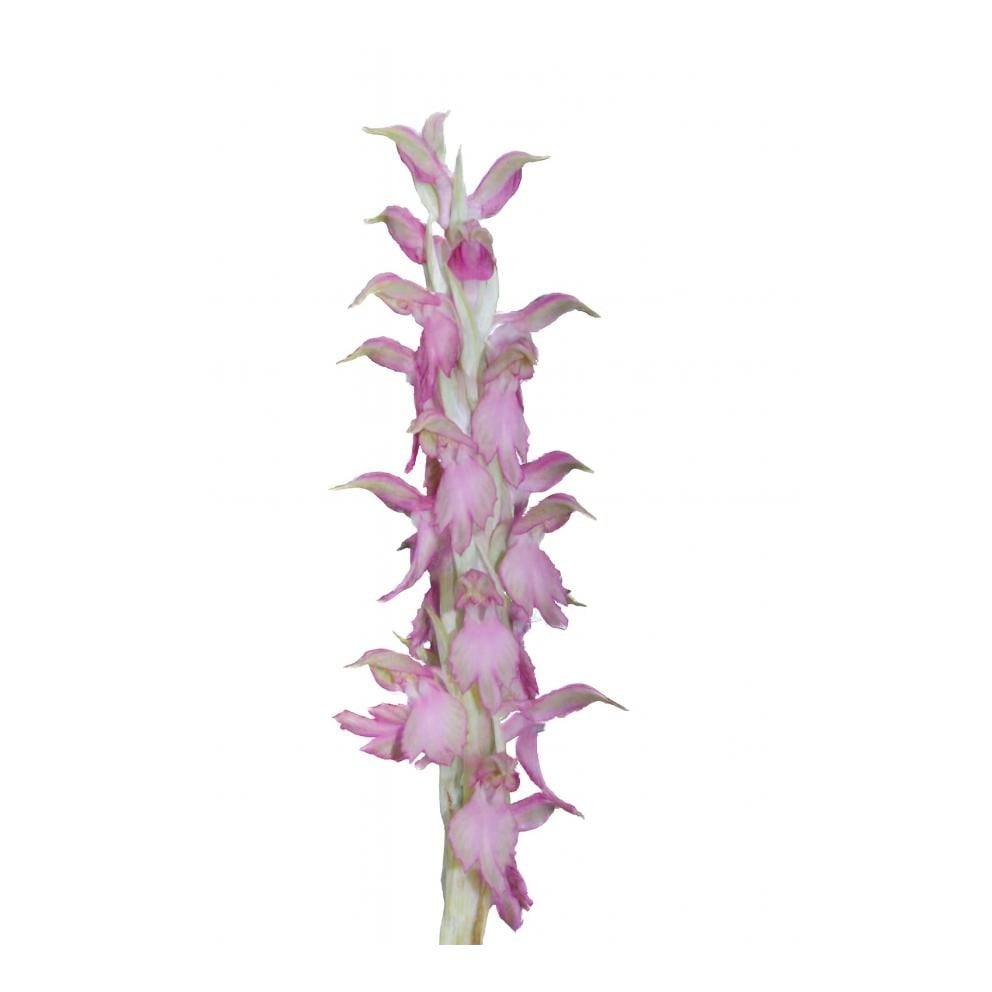
Heilige Orchidee / Heiliges Knabenkraut (Wildform)

Variety
Heilige Orchidee / Heiliges Knabenkraut (Wildform)
Approved Data
created by Alex&Sempi at 20.02.2026
Features
Growth habit
lifespan: perennial
Spring variety
Game Variety
cross-pollination
early flowering
height: 50 - 60 cm
height: 20 - 30 cm
wide: 20 - 30 cm
height: 40 - 50 cm
height: 30 - 40 cm
root type: bulb, tuber
entire leaves
small flowers
spicate flowers
Spear shaped leaves
propagation by offsets
insect pollination
Blätter: zugespitzt
Leaves: linear
Blätter: einfach
Blüte: gespornt
Blütenform: zygomorph (spiegelbildlich)
Wuchsform: terrestrisch
Lifespan: moves in early summer
Life cycle: sprouts in late fall
Blätter: wintergrün
leaves: rosulate
leaves: loosely leafed
flower: flowering
leaves: Deciduous
normal growth
warm germination
growth habit: rosette-shaped
growth habit: upright slender
ornamental plant
hermaphroditic
growth habit: upright flower stems
Scentless flowers
non-woody
no lateral shoot development
leaves slim
perennial
Blätter: mittelgroß
Geschlechtertyp: einhäusig
Keimung: Lichtkeimer
Blätter: weich/zart
Wuchsform: krautig
Wuchs: nicht invasiv
Schnitt: nicht erforderlich
Blätter: länglich
Wuchs: mittel
Vermehrung: samenfest
Stamm, Stiel: rund
Stamm, Stiel: fleischig
Blüte: Täuschblüte
Stamm, Stiel: kahl
Color
light green / pale green
Flower: light pink
dark purple
Flower: white
Flower: pink
Blüte: grün
light brown
glossy
medium green
Frucht: blassgelb
Frucht: goldgelb
Frucht: grün
Wurzel: weiß
Seeds: white/cream
Wurzel: beige
Samen: beige
Blattrippen: hellgrün
Stamm, Stiel: gelbgrün
Stamm, Stiel: hellgrün
Location
planting: rain-protected
soil moisture: no waterlogging
Fertilization: nutrient-poor
light: Full sun
soil moisture: well-drained
Soil: gravelly to sandy
fertilization: low-humus
Water: regularly
Soil: rocky, stony
Water: sparingly
Planting: rock garden / alpine garden
Planting: pots, tubs, or boxes
Light: Sun
Soil moisture: dry
biotope: steppe / grassland
biotope: beach / coastline
Boden: kalkhaltig
Pflanzung: Trockenmauer
Nachbarn gute: trockenheitsliebende
Good companions: sun-loving
Biotop: Magerrasen, Trockenwiese
Boden: karg
Biotop: Felsen, Mauer
Garden style: Mediterranean garden
planting: outdoor
Heat requirement: high
sheltered from the wind
Soil: permeable soil
Planting: windowsill / indoor space
Soil: slightly sandy
Soil: light
planting: covered balcony or terrace
Soil: loosened
pH value: neutral to alkaline (7-8)
Soil moisture: moderately dry to fresh
Planting: frost-protected
Soil: mineral
fertilization: no peat
Heat requirement: moderate
Nachbarn schlecht: feuchtigkeitsliebend
Nachbarn schlechte: Schattenpflanzen
Good companions: calcium-loving
Nachbarn schlechte: stark wuchernd
Nachbarn schlechte: hoher nährstoffbedarf
Nachbarn gute: mit niedrigen Nährstoffbedarf
Nachbarn schlechte: hochwachsend
Nachbarn gute: niedrigwachsend
Gartenstil: Naturgarten
Herkunft: Neophyt
Boden: flachgründig (0-30)
Pflanzung: überdacht
Düngung: nicht erforderlich
Soil moisture: not too moist
Resistances
hardy with protection
hardy down to -10°C
drought tolerant
heat resistant
frost-sensitive
Fruit shape
elongated
triangular
smooth, sleek
egg-shaped
capsule
medium-sized
Oberfläche: trocken
Taste
not edible
Toxizität: ungiftig
Season Overview
Sowing
Harvest
Harvest
J
F
M
A
M
J
J
A
S
O
N
D
1ST YEAR
FOLLOWING YEARS
Description
The dog's-tooth violets (Anacamptis) form a genus of plants in the orchid family (Orchidaceae). The genus Anacamptis was established in 1817 by Louis Claude Marie Richard in De Orchideis Europaeis Annotationes on page 25. Probably due to the backward-curving bracts of the type species Anacamptis pyramidalis, the botanical genus name Anacamptis comes from the Greek word ἅνακάμπτω anakampto, meaning "to bend backward." The genus Anacamptis is divided into seven sections: Anacamptis, Boryae, Coriophorae, Laxiflorae, Moriones, Papilionaceae, Saccatae. The dog's tooth violet species are perennial herbaceous plants. These geophytes form egg-shaped tubers as survival organs. The leaves, which are clustered at the base of the stem, are not shiny, green, and always unspotted. Several to many flowers are grouped together in an inflorescence. The bracts are at least half as long as the ovary, but usually significantly longer. The hermaphroditic flowers are zygomorphic and trifoliate. The size and shape of the flowers vary depending on the species. There is a spur, but its length is also variable. The three-part lip has an undivided middle lobe. In front of the spur entrance, there are two raised longitudinal ridges (plates) at the base. As with all orchids, the seeds are very numerous and very fine, often only 1/4 millimeter in size, and the thousand-seed weight is only slightly over one milligram.
Non hybrid
Frostproof
Growing tips
Location Light: Sunny to semi-shady, warm spots are ideal. Soil: Lime-rich, well-drained, rather dry to moderately fresh. Suitable for: Natural gardens, dry grassland, rock gardens, lean meadows. Planting Time: Spring or fall. Tubers: Plant flat, soil not too rich in nutrients. Spacing: 15-20 cm, as they form small clumps. Care Watering: Only water lightly during longer dry periods. Avoid waterlogging at all costs. Fertilization: No fertilization - they prefer lean soils. Hardiness: Fully hardy down to -20 °C. Propagation: By seed (slow, needs mycorrhizal fungi). Vegetatively by tuber formation. Special features Flowering time: May to July, depending on species. Flower colors: Pink to purple, pyramidal inflorescences in A. pyramidalis. Height: 20-50 cm. Ecological importance: Important wild orchids, often an indicator of near-natural, calcareous habitats.
Details


Light requirement
Sunny

Water requirement
Dry

Soil
Light (sandy)

Nutrient requirement
Low

Light germinator

Plant distance
20 cm

Row spacing
20 cm

Seeding depth
2.5 cm

Companion Plants

Antagonistic Plants

Diseases
Root Rot
Grey mold
Fusarium
Pests
Spider mites
Land snails
Larvae
Aphids
Voles