Orchids - Dog's-tooth violets

Orchids - Dog's-tooth violets
Anacamptis
Plant family
Orchid family (Orchidaceae)
Cultivation Break
0 Years
Season Overview
Sowing
Harvest
Harvest
J
F
M
A
M
J
J
A
S
O
N
D
1ST YEAR
FOLLOWING YEARS
Details


Light requirement
Sunny

Water requirement
Dry

Soil
Light (sandy)

Nutrient requirement
Low

Light germinator

Plant distance
20 cm

Row spacing
20 cm

Seeding depth
2.5 cm
Instructions
Description
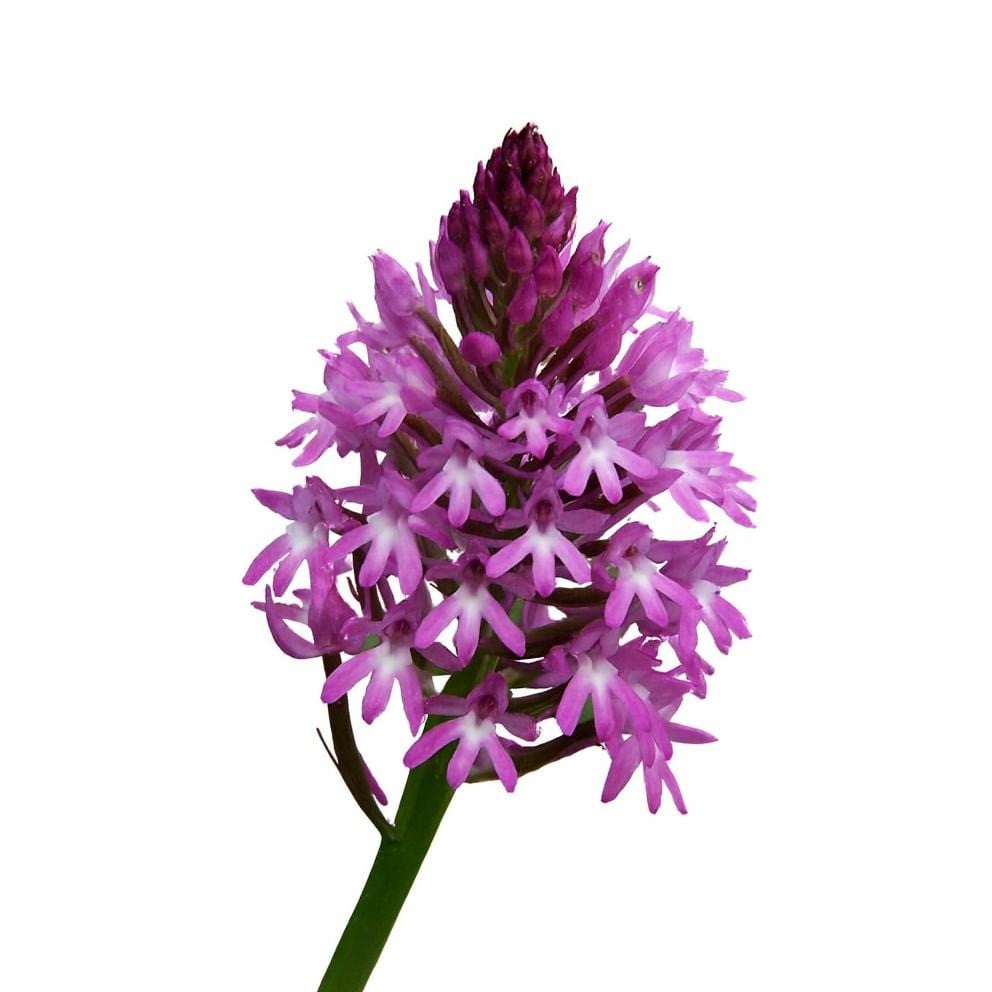
Anacamptis is a genus of plants in the orchid family (Orchidaceae). The genus Anacamptis was established in 1817 by Louis Claude Marie Richard in De Orchideis Europaeis Annotationes page 25. The botanical genus name Anacamptis probably comes from the Greek word ἅνακάμπτω anakampto, meaning "to bend back", due to the bent back bracts of the type species Anacamptis pyramidalis. The genus Anacamptis is divided into seven sections: Anacamptis, Boryae, Coriophorae, Laxiflorae, Moriones, Papilionaceae, Saccatae. These terrestrial orchids are found on grassland, limestone or chalk deposits or on dunes in Eurasia, from the Mediterranean to Central Asia. The dogbane species are perennial herbaceous plants. These geophytes form ovoid tubers as survival organs. The leaves, which are clustered at the base of the stem, are not glossy, green and always unspotted. A few to many flowers stand together in an inflorescence. The bracts are at least half as long as the ovary, but usually considerably longer. The hermaphrodite flowers are zygomorphic and tripinnate. The size and shape of the flower varies from species to species. There is a spur, but its length is just as variable. The three-part lip has an undivided central lobe. There are two raised longitudinal ridges (plates) at the base in front of the spur entrance. As with all orchids, the seeds are very numerous and very fine, often only 1/4 millimeter in size and the thousand-grain mass is only a little over a milligram in weight. A useful feature for distinguishing between Anacamptis and Orchis - to which the green-veined orchid clade used to belong - is the basal fusion of the three sepals in Anacamptis .
Origin:
Mediterranean region, Central Asia
Growing tips
Location Light: Sunny to semi-shady, warm spots are ideal. Soil: Lime-rich, well-drained, rather dry to moderately fresh. Suitable for: Natural gardens, dry grassland, rock gardens, lean meadows. Planting Time: Spring or fall. Tubers: Plant flat, soil not too rich in nutrients. Spacing: 15-20 cm, as they form small clumps. Care Watering: Only water lightly during longer dry periods. Avoid waterlogging at all costs. Fertilization: No fertilization - they prefer lean soils. Hardiness: Fully hardy down to -20 °C. Propagation: By seed (slow, needs mycorrhizal fungi). Vegetatively by tuber formation. Special features Flowering time: May to July, depending on species. Flower colors: Pink to purple, pyramidal inflorescences in A. pyramidalis. Height: 20-50 cm. Ecological importance: Important wild orchids, often an indicator of near-natural, calcareous habitats.

Companion Plants

Antagonistic Plants
Diseases
Root Rot
Grey mold
Fusarium
Pests
Spider mites
Land snails
Larvae
Aphids
Voles