Coffee

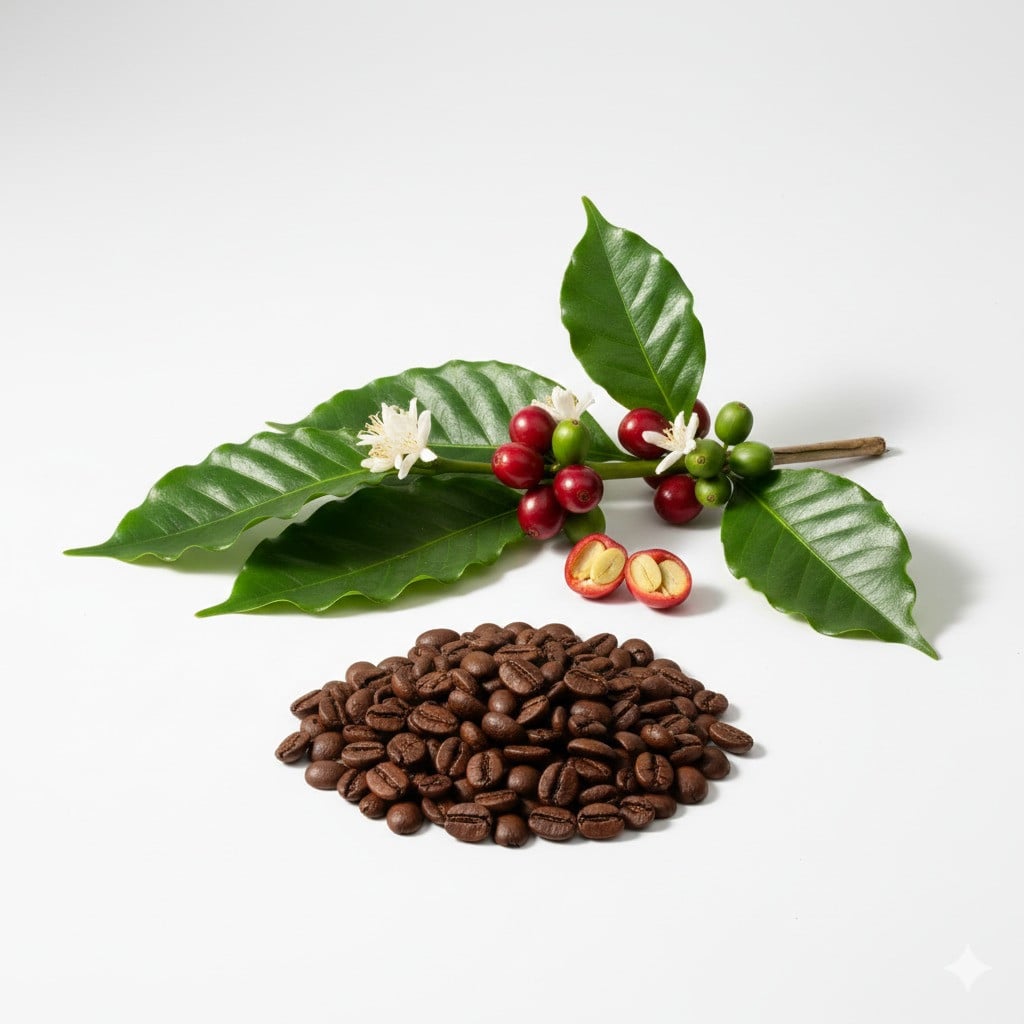
Coffee
Coffea
Plant family
Madder or Coffee family (Rubiaceae)
Season Overview
Planting
Harvest
J
F
M
A
M
J
J
A
S
O
N
D
1ST YEAR
FROM YEAR 6
Details


Plant distance
80 cm

Row spacing
150 cm

Seeding depth
20 cm
Instructions
Description
Originally native to Ethiopia, it grows as an evergreen shrub or small tree and reaches heights of up to 4 m (usually kept smaller in cultivation). Its glossy, dark green leaves and delicate white flowers also make it an attractive houseplant. The red coffee cherries each contain two seeds - the familiar coffee beans. In Central Europe, cultivation is only possible in greenhouses or as a houseplant.
Growing tips
Coffee loves constant conditions: Temperatures between 18 and 25 °C, no draughts, no temperature fluctuations. A warm, bright location all year round is ideal, e.g. a heated conservatory. The plant prefers high humidity (over 60 %) - regular spraying with lime-free water prevents brown leaf edges. Avoid direct midday sun, as this can burn the leaves. Morning sun and bright, indirect light are ideal. Patience is crucial: Coffea arabica usually only begins to flower after 3 to 5 years - and only under ideal conditions. The white, fragrant flowers typically appear in spring or early summer. After flowering, it takes 8-12 months for the ripe coffee cherries to develop. These contain two beans each and are bright red at harvest. To stimulate flowering, a slight dry phase in winter (less watering, cool but not below 15 °C) and then a moist, warm start to spring will help to simulate the dry and rainy periods in the region of origin. Repotting is necessary about every 2 years - proceed with caution, as coffee is sensitive to root disturbance. Regular pruning promotes branching and keeps the plant compact.

Companion Plants

Antagonistic Plants
Bean ((Scarlet) runner bean)
Bean (Broad bean / Faba bean / Field bean)
Bean (Dwarf bean)
Bean (Hyacinth bean / Lablab-bean)
Bean (Lima Bean)
Bean (Runner bean)
Broccoli
Broccoli raab / Stem cabbage / Cima di rapa
Brussels sprouts
Brussels sprouts
Cabbage (red cabbage)
Cabbage (Savoy cabbage)
Cauliflower
Chinese kale - Kai-lan / Chinese broccoli
Collard greens
Collard greens (Kale)
Collard greens (Tuscan kale / Dinosaur kale / Palm tree kale)
Kohlrabi / German turnip / Turnip cabbage
Napa cabbage / Chinese cabbage
Pepper / Paprika
Soybean
Tomato (Bush tomato)
Tomato (Cocktail bush tomato)
Tomato (Cocktail Stake Tomato)
Tomato (Stake tomato)

Diseases
Angular leaf spot of cucumber
Root Rot

Pests
Aphids
Schildläuse
Spider mites