Magnificent battlements

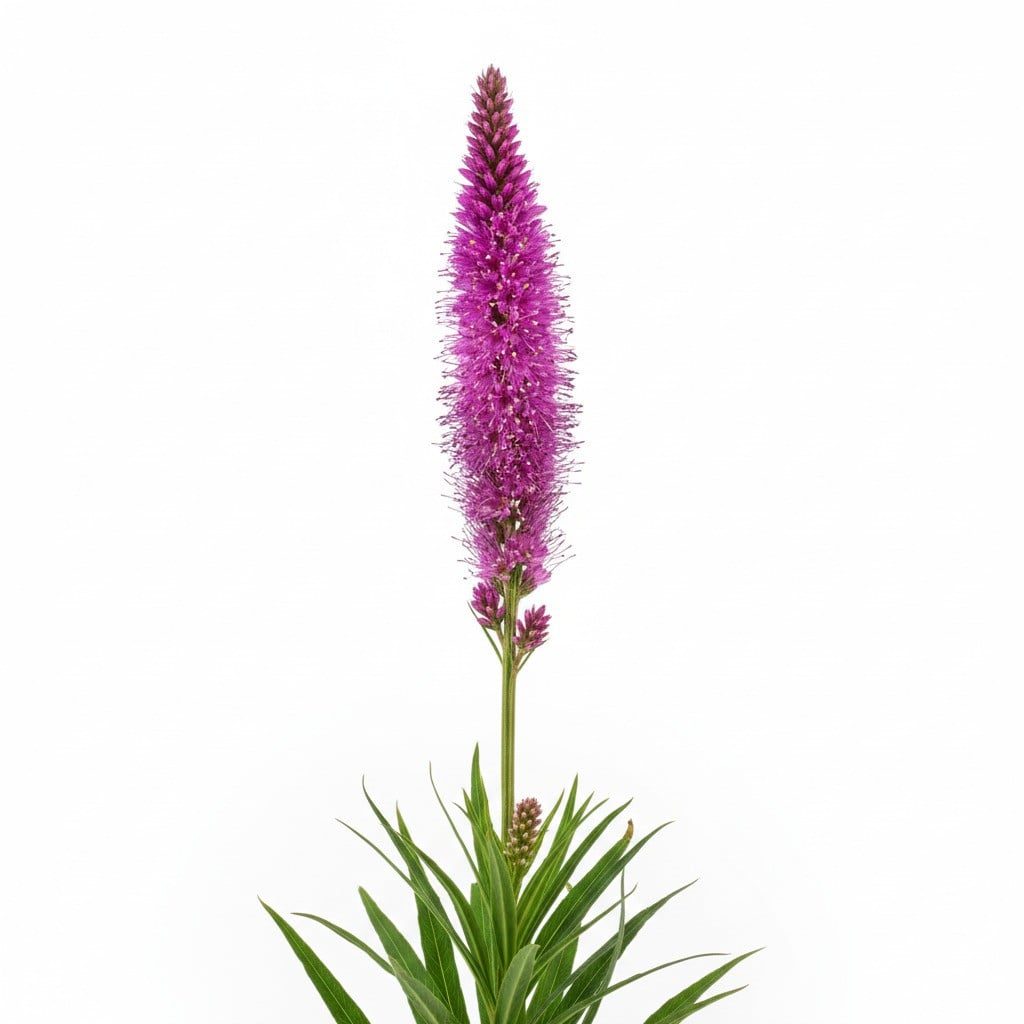
Magnificent battlements
Liatris
Plant family
Daisy family (Asteraceae)
Season Overview
Propagating
Planting
Harvest
Harvest
J
F
M
A
M
J
J
A
S
O
N
D
1ST YEAR
FOLLOWING YEARS
Details


Light requirement
Sunny

Water requirement
Moist

Soil
Medium (loamy)

Nutrient requirement
High

Light germinator

Germination temperature
18 - 22 °C (Degrees Celsius)

Plant distance
50 cm

Row spacing
50 cm

Seeding depth
0.5 cm
Instructions
Description
The plant genus Liatris (bot. Liatris) belongs to the Asteraceae family (composite plants). The botanical genus name is made up of the words leios (smooth) and iatros (doctor). According to current knowledge, the plants have no medicinal use. The plant genus comprises 16 to 50 species. The magnificent species are mainly found in warm regions. They grow in Mexico and the Bahamas, for example. The eye-catching plants attract numerous insects and butterflies. This is due to the abundant nectar they produce. Some species were cultivated by humans centuries ago as garden plants. Magnificent species grow upright. They reach a height of between 60 and 100 centimeters. If the plants find ideal living conditions, they exceed the average height. The representatives of the genus Liatris do not grow near conifers. In their function as ornamental plants, they are suitable as decoration in herbaceous borders. Leaves The plant genus forms alternate, grass-like leaves with smooth leaf edges. They are stalked or sessile. Flower The magnificent species form terminal whole inflorescences that occur in spikes or racemes. These are arranged together in numerous basket-shaped partial inflorescences. They bloom from top to bottom. The individual flowers have 18 to 40 unequal bracts. They grow in three to seven, more rarely in two rows. Their edges have cilia or uneven toothing. The plants have a flat inflorescence base. There are no chaff leaves on this. The flower heads are between three and 25 millimeters in diameter. They contain three to 85 tubular flowers. The corolla petals are red, pink or purple. White specimens are rare. The diameter of the corolla tubes is four to six times smaller than the length. Fruit The magnificent varieties develop eight to eleven-ribbed achenes. These nut-like nuts have long-lasting feather crowns (pappus). This is a crown of hairs on the fruit. It consists of twelve to 40 feather-like, rarely beard-like bristles. These are arranged in one or two rows. Growth The various species of the genus Liatris are perennial, herbaceous plants. On average, they reach heights of between 20 and 180 centimeters. The plants form spherical to egg-shaped tubers. They also have elongated rhizomes as survival organs. The upright stems grow unbranched. Branching rarely occurs at the base.
Origin:
Mexico, Bahamas, USA, Canada
Growing tips
Location The magnificent species prefers to grow in nutrient-rich soil. Calcareous, moderately permeable substrates are ideal locations. The plants need sun and tolerate areas in partial shade. Utilization Some species of the genus Liatris are used by gardeners as ornamental plants. Care/pruning In American and European gardens, some species of liatris grow as popular ornamental plants. They can be planted in spring or, depending on the species, in fall. Gardeners plant the plants at intervals of 30 centimetres in moderately well-drained soil enriched with compost. A layer of mulch and an additional application of lime promote the growth of the liatris. Liatris do not tolerate excessive moisture or drought. Gardeners should therefore ensure that the plants have a balanced moisture balance. The species prefer a constantly moist, non-wet substrate. For this reason, they need water twice a day during longer dry periods. An additional layer of mulch retains the moisture in the soil around the plant. Due to their high nutrient requirements, magnificent species need slow-release fertilizer in spring. Alternatively, gardeners can mix mature compost into the soil. The plants will feed on this for a month. They then need further fertilizer. To ensure the plants thrive, their owners regularly remove faded panicles. Annual pruning is not necessary. The inflorescences can be dried upside down for offspring. The seeds can then be removed, dried and used the following spring. In colder regions, it is a good idea to cut the plants back in the fall. Gardeners cut them back to a hand's breadth above the ground for wintering. Diseases/pests If the plants are in a dry or excessively wet location, the risk of pest infestation increases. No known diseases or parasites occur on healthy plants.

Companion Plants

Antagonistic Plants
Aubergine / Eggplant
Bergenias
Courgette / Zucchini
Cucumber / Gherkin
Funk
Grasses - Bamboos
Grasses - feather-bristled grasses, lamp-cleaning grasses
Grasses - Pampas grass
Grasses - reeds, cattails, bulrushes
Green lavender cotton
horse chestnut
Ivy
Lavender
Make
Melon (Sugar melon)
Melon (Watermelon)
Okra
Ornamental pumpkin
Pepper / Paprika
Pines
Pumpkin / Squash
Purple bellflower, silver bellflower
Rosemary
Spruce trees
Sunflower
Thyme
Tomato (Bush tomato)
Tomato (Cocktail bush tomato)
Tomato (Cocktail Stake Tomato)
Tomato (Stake tomato)
Tree of Life, Thuja
Walnut family
Yews

Diseases
Root Rot
Rust of sunflower
Septoria
Angular leaf spot of cucumber
Powdery mildews

Pests
Thrips
Spider mites
Aphids
Voles