Tree of Life, Thuja

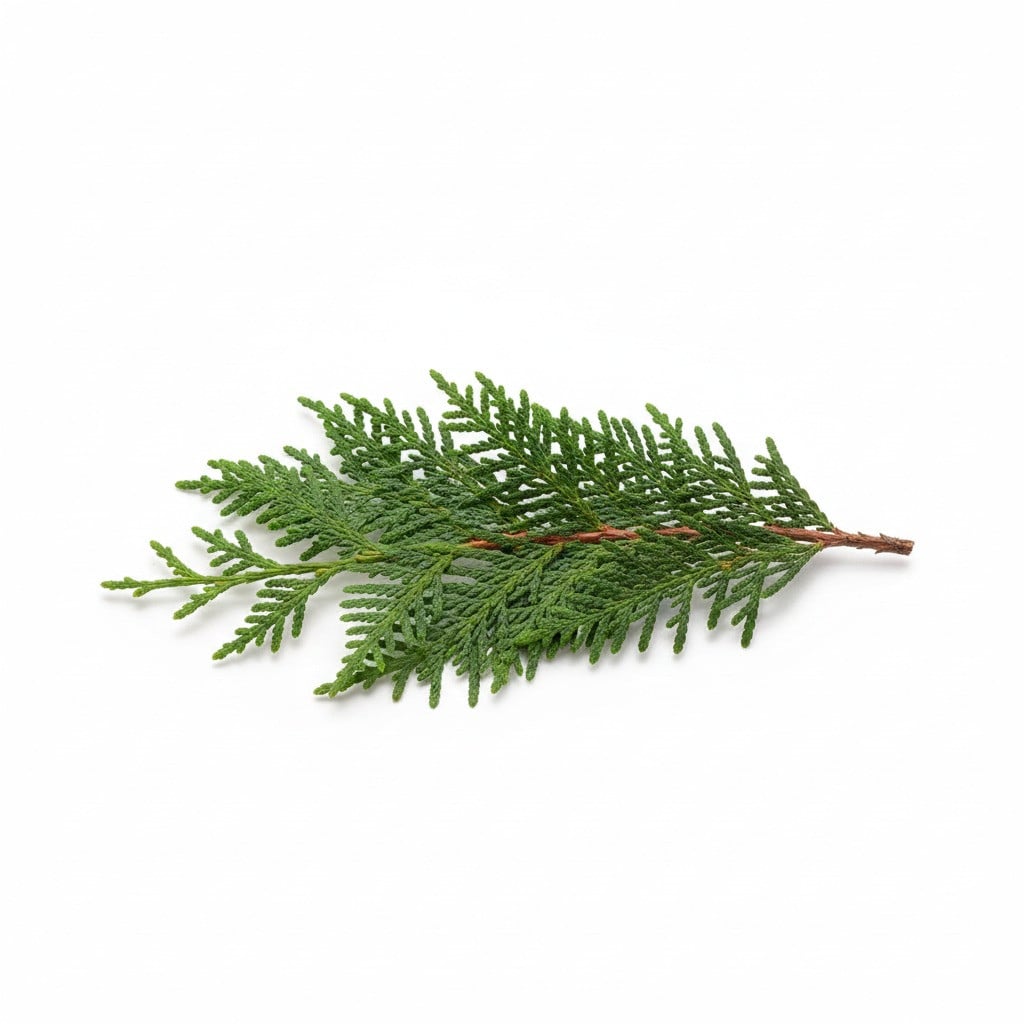
Tree of Life, Thuja
Thuja
Plant family
- others -
Season Overview
Propagating
Planting
Harvest
Harvest
J
F
M
A
M
J
J
A
S
O
N
D
1ST YEAR
FOLLOWING YEARS
Details


Light requirement
Sunny

Water requirement
Moist

Soil
Medium (loamy)
Nutrient requirement
Medium

Light germinator

Germination temperature
18 – 22 °C (Degrees Celsius)

Plant distance
100 cm

Row spacing
100 cm

Seeding depth
1.5 cm
Instructions
Description
The arborvitae (Thuja) is also usually called by its botanical genus name Thuja in German and is particularly popular as an evergreen hedge plant. However, thuja hedges are being planted less and less these days, as they - like the exposed aggregate concrete slabs that were very common at the time - have a dusty 1970s flair. Nevertheless, thuja hedges do have their advantages, as they are extremely frost-hardy and wind-resistant. They also grow quickly, are inexpensive and, as evergreens, are completely opaque all year round. Botanically, the plant genus Thuja belongs to the cypress family (Cupressaceae). As such, the various Thuja species also have the typical scaly leaves that cling closely to the branches. Growth In the garden, the evergreen hedge plant is usually the western arborvitae. It grows naturally in the north-east of America and in Canada in the so-called boreal coniferous forests, which in places extend as far as the Arctic Circle. Growing freely, it reaches a height of 20 meters and more. The trees can live to be around 180 years old and reach a trunk diameter of almost two meters. The Western arborvitae has a densely branched, conical crown and arching branches. The bark is orange-brown and longitudinally fissured. The scale-like leaves sit flat against the shoots and are matt green on the upper side in the wild species and often olive green in winter. The shoots and leaves spread a very aromatic scent when rubbed. The arborvitae is monoecious, i.e. it bears male and female flowers on one plant, but separately from each other. The male cones are only about two millimetres in size and reddish, the female cones are initially light green, later light brown and up to eight millimetres long, they have a conical shape and are located at the tips of the shoots. The mature cones open and release winged seeds. There are a whole range of varieties of the Western arborvitae for the garden, which differ in their different foliage colors and growth forms. They all grow more compactly than the wild species and are more suitable for the garden. The Giant arborvitae is larger and more vigorous than the Western arborvitae. It is widespread in Pacific North America from northern California to southern Alaska, where it can reach heights of over 60 meters. It is also very suitable as a hedge, but tends to require more frequent pruning. In North America, it is particularly important as a forestry tree. The red and very light wood has an aromatic scent and is somewhat sensitive to pressure. It is also sold under the name "Red Cedar" in the building materials trade in this country.
Origin:
Northeast America, Canada, Northern California, Alaska
Growing tips
Location Arborvitae grow best in full sun, but will also tolerate light shade. It is important that the soil is moist and does not dry out in summer. Arborvitae grow best in calcareous, sandy loam soil. However, the woody plants can adapt very well to different soil types and pH values and will also grow on acidic sandy soils with a good supply of humus and soil moisture. Use Arborvitae are popular as fast-growing, evergreen hedges. Thuja hedges grow very densely and provide excellent privacy and wind protection. As the wild species are very vigorous, it is better to use the somewhat more delicate, narrow-growing arborvitae varieties 'Smaragd' or 'Holmstrup' for hedges. Some small, cushion-like or spherical varieties are also suitable for rock gardens or heather gardens as well as for grave design, as long as the soil does not dry out too much in summer. With a good water supply, the various dwarf forms can also be cultivated as hardy container plants. Narrow columnar arborvitae are also often planted in gardens with a Mediterranean character as a substitute for the true cypress (Cupressus sempervirens), which is not hardy in our region. As arborvitae tolerate frequent pruning well, they can also be grown as spherical or pyramidal topiaries. You can also simply let the wild species of arborvitae grow freely in the garden as solitary trees: over the decades, they lose their "cemetery character" and show increasingly loose growth with age. Old trees have a picturesque, longitudinally fissured bark and a beautiful, pyramid-shaped crown. Pruning thuja Thuja hedges need to be pruned regularly to keep them dense and compact. Avoid pruning your thuja too heavily, i.e. to the unscaled shoot areas, as the plants will then only sprout sparsely again. Stronger rejuvenation pruning down to the old branches will result in the plants remaining bare. It is therefore very difficult to bring an old thuja hedge back into shape if it has not been pruned for a few years. Strong-growing thuja hedges need two topiary cuts per year: the first towards the end of June and another at the end of August. Arborvitae are poisonous - in all parts of the plant! Even skin contact with the shoots can cause redness and itching in sensitive people. Ingestion can cause irritation of the mucous membranes and gastrointestinal complaints. The cause of the symptoms of poisoning is a monoterpene called thujone. Caring for the arborvitae Most attention must be paid to the otherwise rather undemanding arborvitae after planting. In the first three years, care should be taken to ensure that the plants receive sufficient moisture. This is all the more important the larger and older the arborvitae are when they are planted. Later on, the plants will be so well rooted that they will be able to draw moisture from deeper layers of soil. Mulching, for example with grass cuttings, helps to prevent the soil from drying out in spring and summer. With two prunings per year, fertilizing the thuja with around two liters of compost per square metre is also recommended in spring. The humus also improves the soil structure and water retention capacity of the soil. Propagating thuja The wild species of the arborvitae can be propagated by sowing in the fall. The seeds need a cold stimulus to germinate. The many Thuja varieties are best propagated by cuttings from mature shoots in late summer. So-called cuttings are used for propagation: these are one to two-year-old side shoots that are torn off the main shoot. The remaining strip of bark is shortened with a sharp knife, the lower side shoots are removed and the shoots are placed in potting compost. Rooting is very reliable under a transparent cover at soil temperatures above 20 degrees, but can take up to eight weeks. Diseases and pests The arborvitae is not always diseased when its leaves turn brown. In winter, the foliage of wild species and some varieties usually turns brown. This serves as frost protection and can be more pronounced in very cold winters. Leaves and shoots can also turn brown in prolonged drought and due to road salt damage. Some fungal diseases can lead to browning of needles. Depending on the pathogen, dark brown to black spore deposits are usually found on the dead shoots. Other fungal diseases attack the roots, especially in waterlogged locations, with the result that the entire plant often dies. Thuja leaf miners are found on the plants. Occasionally there are also infestations of tree and scale insects.

Companion Plants

Antagonistic Plants
Diseases
Root Rot
Pests
Leaf-miner flies
Schildläuse
Spider mites