Yews

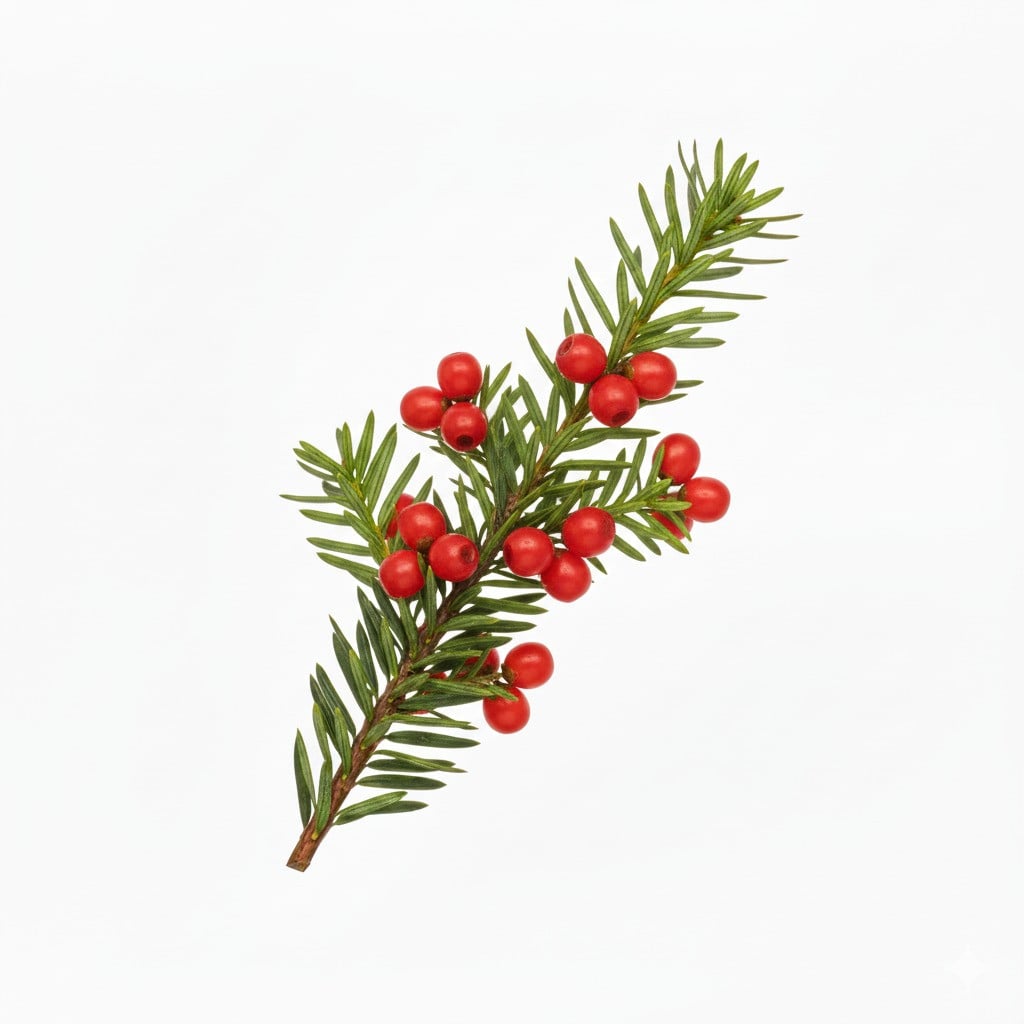
Yews
Taxus
Plant family
- others -
Season Overview
Planting
Harvest
J
F
M
A
M
J
J
A
S
O
N
D
1ST YEAR
FOLLOWING YEARS
Details

Light requirement
Semi-shaded

Water requirement
Moist

Soil
Medium (loamy)
Nutrient requirement
Medium

Dark germinator

Germination temperature
20 – 25 °C (Degrees Celsius)

Plant distance
200 cm

Row spacing
300 cm

Seeding depth
1 cm
Instructions
Description
The yew is a popular evergreen conifer in gardens. It is most commonly found as a topiary or opaque hedge plant. However, as the genus name "Taxus" suggests, the yew is a poisonous tree for humans and animals. The poison of the yew can lead to severe symptoms of poisoning and even death in both humans and animals. The poison taxine is found in the needles, seeds and wood of the tree. To date, a total of ten different yew species are known, which are found throughout the northern hemisphere. In Germany, the European yew (Taxus baccata) and the Japanese yew (Taxus cuspidata) are the most common. The latter is characterized by lighter, broader needles and is somewhat smaller in comparison. The European yew is characterized by its dark green, shiny needles. On the underside of the trees, a matt, light green color predominates. Most yews initially form several short trunks. The crown can be either highly oval, roundish or completely irregular. Mature yews reach a total height of between 10 and 18 meters. The width of these specimens is between 8 and 15 meters. However, it takes several decades to reach this size. In nutrient-rich soil, young yews grow between 20 and 25 centimetres in the first few years. The growth of older specimens is somewhat slower. The yew can also be recognized by its horizontally protruding side branches. Occasionally these also grow slightly upright. The side branches of most yews lean downwards. The bark of young specimens is still green at first, but turns reddish-brown over time. The yew belongs to the deep-rooted family. Nevertheless, fibrous fine roots can often be found on the surface in the immediate vicinity of yews. The yew begins to flower in spring between March and April. A special feature of yews is that each specimen bears either male or female flowers. While male flowers are characterized by a yellow color and are located in the axils of the needles, the female flowers all have a uniform seed length. The seeds themselves are dark and woody and are located inside a scarlet-red seed coat.
Origin:
Europe, Asia, North America
Growing tips
In principle, yews are fairly undemanding and do not require any special care. However, there are a few little things you need to bear in mind to make them feel right at home in your garden: Location Although yews can easily be placed in both sunny and shady areas, they prefer a location in partial shade or shade. Yews are hardy conifers, but are visibly weakened in winters with little snow and cold easterly winds. Soil conditions At first glance, the evergreen hedge plant feels at home in almost any soil. The only thing to avoid is damp soil with waterlogging. To improve the water permeability of the soil, a drainage system is a welcome solution. Prolonged periods of drought sap the yew's strength. It is therefore advisable to water it appropriately during long periods of drought, both in summer and winter. Fertilizing and pruning Regular fertilization is not necessary in good locations. It is perfectly sufficient to give the yew some nutrients with compost in spring. To keep the plant in shape, annual pruning is advisable. You should always wear appropriate protective clothing when doing this. Although direct skin contact with the yew is not dangerous, yew sap can occasionally cause an allergic reaction, which is why it is advisable to wear protective clothing. Yews (Taxus) are robust plants, but they can also be attacked by various diseases and pests. Here are some of the most common problems and how you can recognize and treat them: Diseases: Phytophthora (root rot): Symptoms: Yellow needles, wilting symptoms, death of the plant. Causes: Waterlogging, prolonged warm weather. Treatment: Removal of affected plants, fungicide treatment. Needle scald: Symptoms: Brown needles, especially in winter. Causes: Cold, drought, lack of nutrients. Treatment: Sufficient watering, protection from cold, fertilization. Pests: Mealy cup scale: Symptoms: White, waxy deposits on twigs and branches. Treatment: Insecticide treatment, avoidance of nitrogen-emphasized fertilization. Furrowed weevil: Symptoms: Bay-like feeding on leaf edges, feeding damage to roots. Treatment: Collection of the beetles, use of nematodes to control the larvae. Scale insects: Symptoms: Growth disorders, discoloration, needle drop. Treatment: Removal of affected plant parts, use of insecticides.

Companion Plants

Antagonistic Plants
Diseases
Root Rot
Pests
Schildläuse