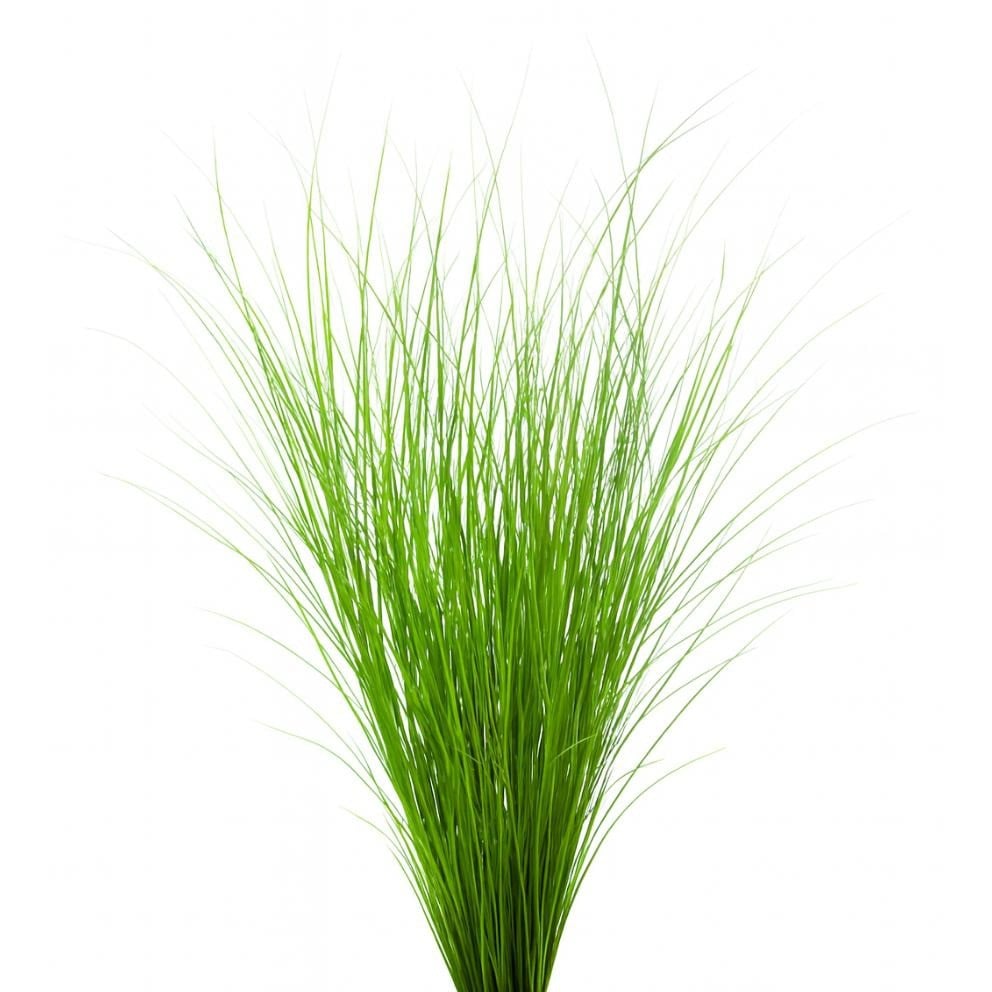
Neuseeländische Segge 'Phoenix Green'

Variety
Neuseeländische Segge 'Phoenix Green'
Approved Data
created by Alex&Sempi at 26.02.2026
Features
Resistances
robust
hardy down to -20°C
Color
light green / pale green
Location
light: sunny to semi-shady
Taste
not edible
Growth habit
wind pollination
Fruit shape
Typ: Schließfrucht - Achäne
Season Overview
Sowing
Harvest
Harvest
J
F
M
A
M
J
J
A
S
O
N
D
1ST YEAR
FOLLOWING YEARS
Description
The sedge 'Phoenix Green' is a delicate ornamental grass with very fine foliage. Its upright light green leaves add wonderful structure to a perennial bed. Few perennials bring such a fresh green accent to a garden with their foliage. In a pot or balcony box, the fine texture of the leaves takes center stage. In fall and winter, this evergreen perennial retains its fresh appearance. It makes a wonderful focal point in an autumnal or wintery balcony box. With a maximum height of just 40 cm, Carex howardii 'Phoenix Green' offers many planting possibilities in the garden. This vigorous perennial forms stately round clumps over time. Dark green or red-leaved medium-sized perennials provide a colorful contrast to the 'Phoenix Green' sedge. In June, inconspicuous brown flowers form, growing only slightly higher than the foliage. They emphasize the invigorating fresh color of the foliage with their compact, knotty spikes. The upright growth of the sedge 'Phoenix Green' is what makes this robust and undemanding perennial so appealing. The powerful character of the foliage leaves results from their special leaf structure. The leaf blade is slightly folded, resulting in a triangular cross-section. An additional pith provides firm support from the inside. Sedges (Carex) form a genus of evergreen and wintergreen grasses. They belong to the sedge family (Cyperaceae). There are over 2,000 species of sedges. The species are found almost worldwide and thrive in cold and temperate climates. The plants are perennial herbaceous. Numerous sedge species are popular ornamental grasses. Due to their adaptability and decorative foliage, they can be used as eye-catching clumps or dense ground cover. The range of leaf colors and growth forms is enormous. The different species occur in the wild on the moist soils of meadows and forests. They can also be found in fens, on marshy water edges, or on dry, sandy, or stony substrates. Most species are native to North America and East Asia. The Latin genus name Carex refers to the cutting leaves of sedges. Distribution Sedges are found in almost all regions of the world. However, they are mostly found in cooler, temperate regions. The genus is particularly common in North America and East Asia. It is not found in tropical lowlands. Only a few species occur in Southeast Asia. In Africa, there are no Carex species south of the Sahara. In contrast, there are around 480 species of sedges in North America alone. Growth Sedges develop dense clumps. Many species grow upright, while others spread creeping with runners and are therefore suitable as ground cover. The growth heights of sedges range from 20 to 120 cm within the different species. Leaves The foliage of the Carex genus is wintergreen or evergreen within the different species. Sedges can be distinguished from other grasses mainly by their leaf shape. The mostly triangular leaves are notable for their V- or M-shaped cross-section and the light-colored pith inside. Only in a few species is the leaf blade thread-like, rounded, or curled. The leaves are either basal or grow along the axis. Shoot axes with nodes or internodes are found in a few species. There is a variety of colors in the world of sedges. These are mainly shades of green. Green-white or yellow-green leaves are also found. There are also species with reddish-brown, bronze-colored, or chocolate-brown coloring. This group of sedges is mainly native to New Zealand. Flower The flowering period of sedges ranges from March to September. In all species of sedges, both female and male flowers develop on a single stem. The male flowers are located at the tips of the shoots and are inconspicuous. The female flowers resemble cones. The spiked inflorescences are grouped together as spikes, panicles, or clusters. Fruit Sedges usually form lens-shaped achenes that grow to a few millimeters in size. These are either pointed or rounded. Habitat Plants of the genus Carex often colonize moist to wet habitats. Some species occur in the Arctic tundra, while others are native to mountainous regions or forests. They usually prefer semi-shaded to shady places in wind-protected locations with high humidity. Many sedges line lake and pond shores or dune regions. The genus is extremely adaptable. Use Sedges are popular ornamental grasses due to their variety of colors and shapes. They look great in modern gardens. They can be combined with other grass varieties or with numerous decorative foliage plants. Low-growing sedges are suitable for extensive greening, while other species attract attention in the partial shade of trees or bushes. The grasses retain their attractive foliage color into winter and decorate the garden in fall and winter. They make beautiful neighbors with horned violets, Christmas roses, and many other plants. Ecological significance Sedges are an important part of natural habitats. They provide food for insects such as butterfly caterpillars—some species even specialize in sedges, including the caterpillars of the marsh grass moth (Deltote uncula). Their dense clumps also create hiding places and nesting opportunities for birds, amphibians, and small mammals. In wetlands, sedges help to stabilize the soil and provide valuable structures for dragonflies and other water-bound animals. This makes them not only ecologically significant, but also valuable helpers in the garden for greater diversity and vitality.
Non hybrid
Frostproof
Growing tips
Carex howardii 'Phoenix Green' prefers a sunny to semi-shady location. The plant loves well-drained, loose soil. If all the basics are right, the sedge 'Phoenix Green' is robust and requires little care. It is adapted to the climate of the northern hemisphere and can manage without further protection during the winter dormancy. 🌞 Location & soil - Semi-shady to sunny, cool to moderately warm locations - Many sedges grow naturally on moist forest and meadow soils (always slightly damp, no waterlogging) - in fens or on marshy water edges (very moist to wet) - Some species prefer dry, sandy to stony locations - Wind-tolerant - mostly humus, loose, gravelly - Usually medium nutrient requirements - Usually slightly acidic to neutral (pH 5-7), low in lime A few drought-loving species are lime-tolerant or lime-loving 🌱 Sowing & planting - Direct sowing: March-May / September-October (cold germination) - Substrate: humus, loose, fine, slightly moist - Germination temperature: 15-20 °C / 2-5°C - Germination time: 3-8 weeks - Sowing depth: 0.2 cm (light germinator) - Planting distance: 25-60 cm - Propagation: Division in spring or fall 💧 Care - Watering: keep evenly moist, no tap water (in the morning or evening) - Drought-tolerant species can tolerate short periods of drought - Fertilization: light basic fertilization in spring, otherwise not necessary - Cut off old foliage close to the ground in spring (March/April), not in fall - Only clean out evergreen species, do not cut them down completely 🌿 Good neighbors - Ferns, funkia, Caucasian forget-me-not, foam flower, fairy flower Lungwort, geraniums, purple bellflower, bergenia, marsh marigold Pipe grass, horsetail (partial shade, moist) - Astilbe, hellebore, forest grasses, ostrich fern, honeysuckle, saxifrage, ligularia (shade, moist) - Feather grass, blue fescue, sage, catmint, yarrow, coneflower, Sedum, thyme, oregano (sun, dry) 🚫 Bad neighbors - Ivy, goutweed, periwinkle, Waldsteinia - Bamboo, Japanese knotweed, mint - (lavender, thyme, sage, quaking primrose, sedum) - Dahlias, delphiniums, sunflowers 🍂 Diseases - Fungal infections - Rust - Root rot 🐌 Pests - Aphids - Cicadas - Caterpillars - snails
Details


Light requirement
Semi-shaded

Water requirement
Moist

Soil
Medium (loamy)

Nutrient requirement
Medium

Light germinator

Germination temperature
15 - 20 °C (Degrees Celsius)

Plant distance
20 cm

Row spacing
30 cm

Seeding depth
0.2 cm

Companion Plants

Antagonistic Plants

Diseases
Root Rot
Powdery mildews
Pests
Cicadas
Caterpillars
Land snails
Aphids