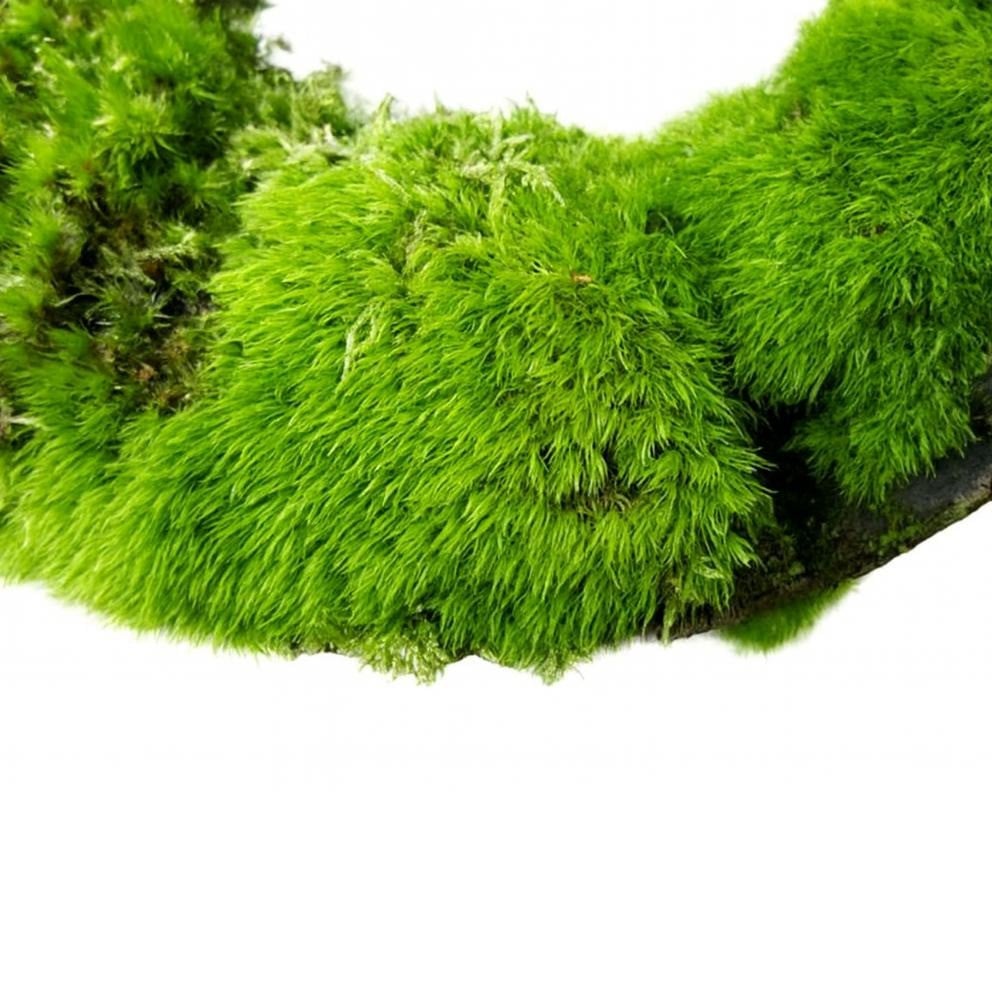
Berg-Gabelzahnmoos (Wildform)

Variety
Berg-Gabelzahnmoos (Wildform)
Approved Data
created by Alex&Sempi at 01.03.2026
Features
Resistances
resistant
robust
Little susceptible
fully hardy
hardy down to -30°C
Growth habit
Game Variety
leaves: densely leafed
growth habit: cushion-shaped
Blätter: gekräuselt
Wuchsform: epiphytisch
growth habit: upright
growth habit: ground cover
strong leaves
strong lateral shoot development
growth habit: cushion-like growth
small leaves
Spear shaped leaves
ground cover
Blätter: zugespitzt
Blätter: einfach
Blätter: rinnenförmig
Höhe: 1 - 10 cm
Color
light green / pale green
medium green
Taste
not edible
Toxizität: ungiftig
Location
biotope: forest
Biotop: Felsen, Mauer
Pflanzung: Waldbeet
Gartenstil: Waldgarten
Fertilization: nutrient-poor
pH value: acidic soil (4-6)
fertilization: low-lime
Soil: mineral
Heat requirement: cool
Herkunft: einheimisch, indigen
Boden: organisch
Fruit shape
capsule
straight
slightly curved
Size: very small
Form: aufrecht wachsend
Season Overview
Sowing
Harvest
Harvest
J
F
M
A
M
J
J
A
S
O
N
D
1ST YEAR
FOLLOWING YEARS
Description
Mountain fork moss (Dicranum montanum) is a common epiphytic moss. Dicranum montanum is a common epiphytic moss that usually colonizes the bark of beech, pine, and birch trees. It prefers acidic, nutrient-poor, and low-calcium substrates. It is particularly common in forests, but also occurs on rocks. Frequent accompanying mosses are Dicranum scoparium, Hypnum cupressiforme, and Tetraphis pellucida. The moss is circumboreal in distribution. In Europe and Germany, it is one of the most common epiphytic mosses on trees and is relatively insensitive to air pollutants. Growth Dicranum montanum forms dense, fresh to yellowish-green cushions. The individual plants, which grow up to 5 cm high, have a dense, brown rhizoids felt. The dry, twisted to coiled leaves tend to curl to one side when moist. They taper to a long, widely serrated awl-shaped tip and can grow up to 4 mm long and 0.4 mm wide. The midrib ends at the tip of the leaf and occupies about 1/5 of the leaf. The thick-walled, unpunctured lamina cells are elongated rectangular in the middle of the leaf and about 25-50 µm long and 7-11 µm wide. At the leaf tip, the cells are significantly shorter to subsquare. The inconspicuous leaf wing cells are slightly swollen. The fork-toothed mosses (Dicranum) are a genus of leafy mosses from the Dicranaceae family. Depending on the source, there are 92 species or 140 to 150 species worldwide. Characteristics Mosses of this genus are usually vigorous plants that often form extensive lawns or larger cushions. The mostly upright, simple or forked stems can grow to over 10 centimeters in height and are covered with a more or less dense, whitish to reddish-brown rhizoids felt. The leaves are usually lanceolate, often sickle-shaped and turning to one side, less often straight, often grooved and hollow at the top and sharply or bluntly pointed, with differentiated leaf wing cells and a simple rib extending to the tip of the leaf or protruding. The leaf cells are elongated-rectangular to linear, often shorter to rounded-square in the upper part of the leaf. The long seta bears an upright to inclined and straight or curved spore capsule with a long-beaked lid and 16 peristome teeth forked to the middle.
Non hybrid
Frostproof
Growing tips
🌞 Location & soil Mosses are not tied to a single location, but use a wide range of habitats - the decisive factors are humidity, microclimate and a suitable substrate. - Shady to semi-shady - Cool to moderately warm - Soil, dead wood, bark, stones, rocks, walls, roofs, water, bogs - low in nutrients, rich in humus, mineral, acidic to alkaline - permanently moist to episodically dry 🌱 Planting - Spores: tiny spores are ejected from spore capsules. These spread over a large area and germinate on moist, suitable substrates. - Division: Remove a piece of moss and place it on a new substrate. - "Inoculation": chop up the moss, mix with water and spread on the substrate (even growth on stone, wood or soil) - Actively "planted": place on suitable substrate and keep conditions stable. - They do not need soil, but adhere to stone, wood, bark or soil. - Constant moisture is important, especially in the first few weeks. - In the garden, they are suitable as ground cover, lawn substitutes or for shady areas. - Indoors, they only last in closed containers (bottle garden, terrarium). - Optimal planting period: April to September (15-20°C) 💧 Care - Watering: water regularly, rainwater, No waterlogging, compacted soil possible - Remove weeds, leaves and needles - Fertilization: none - No soil cultivation - Protection from direct sunlight ❄️ Winter protection Mosses are among the most cold-resistant land plants. Many species can survive at temperatures far below freezing because they are allowed to freeze without their cells being destroyed. 🌿 Good neighbors - Plants must tolerate low levels of nutrients. - They must not grow too tall. - They should not form dense root systems. - They must like moisture. - They must not shade or overgrow mosses. - Ferns, forest grasses, sedges, liverworts, wood anemones, woodruff, dwarf funcias (woodland bed) - Rushes, cotton grass, broom heather, bog lily, carnivorous plants (bog bed) - Saxifrage, thyme, sedum, dwarf grasses (rock garden) - Japanese maple, ferns, dwarf bamboo, holly (Japanese garden) - Primula, violets, crocuses, snowdrops, lily of the valley, star moss (ornamental garden) 🚫 Bad neighbors - Lawn and ornamental grasses, sunflowers - Funkias, asters, phlox, large ferns, mint - Ivy, periwinkle, golden strawberries, chokecherry, guelder rose - Nettle, lupine, dahlias, roses, geraniums, clover - Lavender, thyme, oregano, rosemary, sedum - Steppe and prairie plants 🍂 Diseases - Fungal infestation - Algae growth 🐌 Pests - Springtails - fungus gnats - birds - Snails
Details


Light requirement
Semi-shaded

Water requirement
Moist

Soil
Light (sandy)

Nutrient requirement
Low

Light germinator

Germination temperature
15 - 20 °C (Degrees Celsius)

Plant distance
1 cm

Row spacing
1 cm

Seeding depth
0.1 cm

Companion Plants

Antagonistic Plants
Aster
Clover / Trefoil
Coneflower (Echinacea)
Dahlia
Evergreen
Funk
Geranie/Pelargonie
Grasses - feather-bristled grasses, lamp-cleaning grasses
Grasses - Fescue
Grasses - Other
Grasses - Pampas grass
Grasses - reeds, cattails, bulrushes
Ivy
Lavender
Lupine / Bluebonnet
Mint
Oregano
Phlox, flame flower
Rose
Rosemary
Rudbeckia (Coneflower / Black-eyed-susans)
Stinging nettle
Succulents
Succulents - Agave family
Succulents - Cacti
Sunflower
Thyme

Diseases
Dry rot of crucifers
Pests
Springtails
Land snails