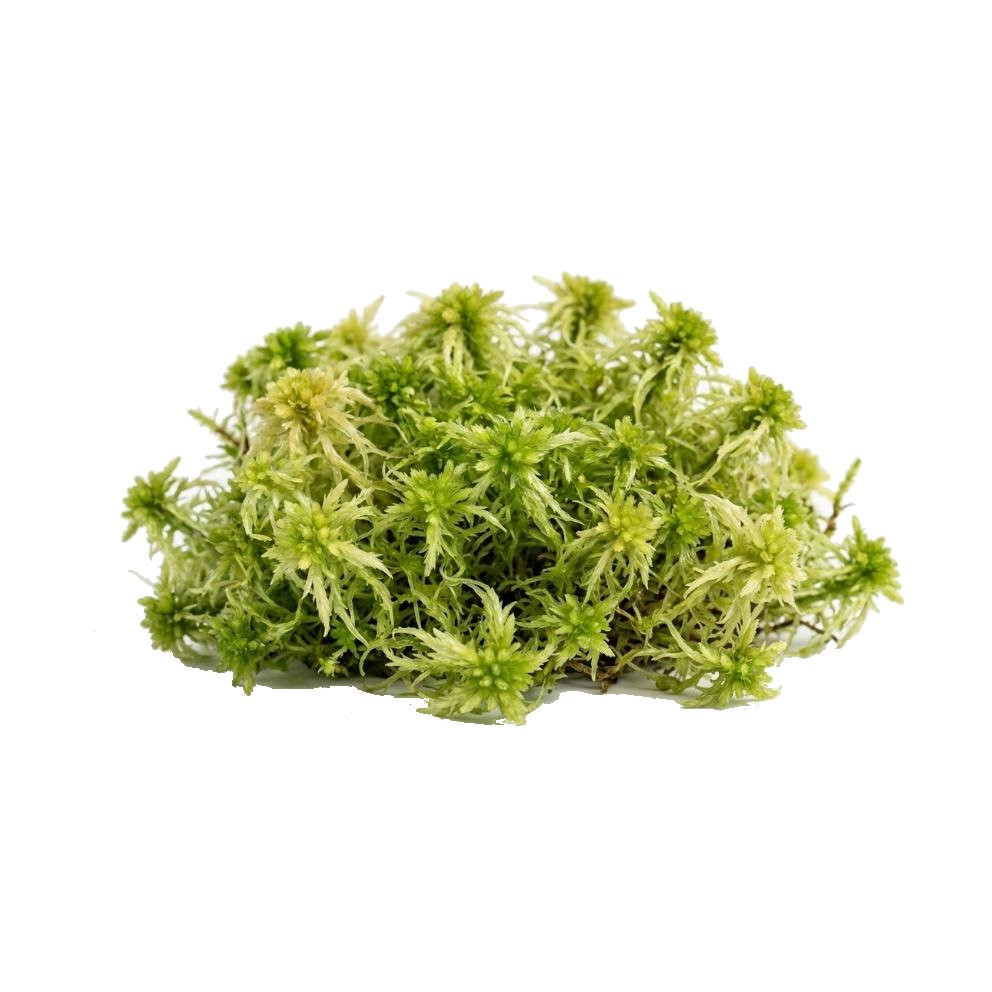
Torfmoose / Bleichmoose (Wildform)

Variety
Torfmoose / Bleichmoose (Wildform)
Approved Data
created by Alex&Sempi at 27.02.2026
Features
Color
yellow
green
brown
dark brown
brown-black
Leaves red
Fruit: yellow-green
Blätter: gelbgrün
Stamm, Stiel: grün
Samen: braun
Samen: gelb
Samen: ocker
Stamm, Stiel: gelbgrün
Growth habit
lifespan: perennial
Game Variety
growth habit: curved
growth habit: ground cover
normal growth
growth habit: dwarf growing
leaves: leafy
wide: over 400 cm
growth habit: cushion-shaped
height: 10 - 20 cm
small leaves
slow growth
propagation by spores
propagation by division
leaves slim
ground cover
Blätter: zugespitzt
Geschlechtertyp: zweihäusig
Befruchtung: Wasser
Keimung: Lichtkeimer
Blätter: weich/zart
Blätter: einfach
Breite: 5 - 10 cm
Geschlecht: getrenntgeschlechtlich
Blätter: wasserspeichernd
Blüte: keine
Höhe: 1 - 10 cm
Pflanzentyp: Sporenpflanze
Wurzeltyp: keine
Resistances
resistant
fungus resistant
robust
Snail resistant
drought tolerant
moisture tolerant
Little susceptible
fully hardy
hardy down to -30°C
nässetolerant
Nährstoffarmut-tolerant
Winterhärte bis -40°C
Winterhärte bis -50°C
Location
planting: outdoor
light: sunny to semi-shady
biotope: mountain area
Soil moisture: water-retentive
Fertilization: nutrient-poor
light: light shade.
pH value: acidic soil (4-6)
fertilization: low-humus
planting: heat protected
soil moisture: consistently moist
fertilization: lime-free
Soil: loosened
water: no tap water
fertilization: peat-based
Water: generously
Water: deeply
Soil moisture: moist to wet
Planting: pond / pond's edge
biotope: swamp / moor
biotope: stream / pond / shoreline
Heat requirement: cool
Licht: vor Mittagssonne geschützt
Biotop: Arktis / Subarktis
Good companions: moisture-loving
Nachbarn schlecht: trockenheitsliebend
Good companions: shade tolerant
Nachbarn schlechte: kalkliebend
Nachbarn schlechte: sonnenliebend
Nachbarn schlechte: stark wuchernd
Nachbarn schlechte: hoher nährstoffbedarf
Nachbarn gute: mit niedrigen Nährstoffbedarf
Nachbarn gute: hochwachsend
Nachbarn gute: niedrigwachsend
Gartenstil: Naturgarten
Herkunft: einheimisch, indigen
Boden: karg
Pflanzung: Moorbeet
Biotop: Feuchtwiese
Düngung: nicht erforderlich
Luftfeuchte: hoch
Boden: organisch
Fruit shape
smooth, sleek
capsule
globular
Size: very small
Taste
not edible
Toxizität: ungiftig
Season Overview
Sowing
Harvest
Harvest
J
F
M
A
M
J
J
A
S
O
N
D
1ST YEAR
FOLLOWING YEARS
Description
Occurrence Mosses grow wherever moisture, low light, or nutrient deficiency suppress other plants. Common locations: • Forests (forest floors, tree bark, dead wood) – many species such as cypress moss or golden hair moss • Moors – especially peat mosses, which build entire ecosystems and store CO₂ • Rocks, walls, roofs – pioneer species such as cushion mosses or silver pear moss • Water bodies – spring moss and other aquatic species in streams and lakes • Tundra and polar regions – mosses dominate there because they can still photosynthesize at low temperatures • Deserts – only sporadically, but surprisingly resilient; some species even grow under quartz scree Characteristics Like ferns and lichens, mosses are flowerless spore plants that reproduce through alternation of generations, i.e., the life cycle and reproduction of moss plants always consists of two successive generations that also differ externally. Mosses grow to a height of only a few centimeters and have no roots, but rather cell filaments (rhizoids). The rhizoids do not serve to conduct water, but rather have a purely supportive function. The water balance of mosses is determined by the humidity of their environment, i.e., they can only absorb water from the air or through precipitation and, due to the lack of a water conduction system through roots, not from the soil. Like ferns and lichens, mosses are among the oldest living plants on earth: they can live for several thousand years, as evidenced by a find of approximately 10,000-year-old bark moss in Antarctica in 1981. Worldwide, bryology, the science of mosses, distinguishes between approximately 16,000 different species of moss, with just over 1,100 occurring in Europe. Subdivided according to growth form and structure, the following list identifies three important groups or divisions of mosses: • Hornworts (Anthocerotophyta) • Leaf mosses (Bryophyta) • Liverworts (Marchantiophyta) Hornworts are rarely found in Germany, Austria, and Switzerland in the form of the genera Anthoceros or Notothylas. Most other species of hornworts are native to tropical climates. Interesting fact Contrary to their names, tree moss (Pseudevernia furfuracea), oak moss (Evernia prunastri), and Iceland moss (Cetraria islandica) or Icelandic moss/Lichen Islandicus are not moss species, but lichens. Irish moss (Chondrus crispus) is also not a type of moss, but an algae (red algae) that is one of the smallest plants on earth. Contrary to its name, star moss (Sagina subulata) is also not a type of moss, but belongs to the seed plants. Ecology As the lowest layer of soil, mosses play an important role in the ecosystem alongside fungi, wood sorrel, and hazelwort. They provide a habitat, hiding place, or food source for many insects, reptiles, and small animals such as mice and hedgehogs. Many moss species are also important for storing and slowly releasing large amounts of water in heaths, moors, forests, and meadows during rainfall, as mosses can store many times their weight in fog moisture and rainwater. Without the high absorbency of moss, surface water would run off more quickly instead of slowly seeping into the ground. The soil would gradually be washed away by the rain, resulting in soil erosion. In addition, many species of moss are able to filter nutrients from precipitation and make them available to their environment. Mosses grow in the wild on rocks, stones, wood, and the bark of deciduous trees, conifers, or fruit trees without harming them as parasites. For this reason, moss should not be removed from plants or garden trees. An exception is the care of fruit trees, where loose pieces of bark are removed along with lichens and mosses so that pests cannot settle underneath. Mosses are naturally occurring indicator plants and bioindicators that can indicate pollutants in the environment and ecosystem: Examples include the acidification of soil and water, the sulfur content in the air, and heavy metals in particular. Compared to seed plants or ferns, mosses react more quickly to environmental pollution because they have no roots and can absorb pollutants from the air or through precipitation very well with their relatively large surface area in relation to their mass and size. Intensive forestry and agriculture, with the removal of dead wood, reduction of wetlands, pollutant emissions, and the lowering of the groundwater level, have endangered the existence of many mosses. They are therefore protected by nature conservation laws. Medical use Due to its disinfecting (antiseptic) healing properties, peat moss is used in medicine and naturopathy for peat baths and peat packs. Many mosses can also reduce or deactivate microorganisms such as bacteria and fungi. They were therefore used in the past as wound compresses and for the production of wound ointments. In the Middle Ages, they were even used as toilet paper and diapers. In traditional Chinese medicine (TCM), many types of moss are used as medicinal herbs and plants because of their antimicrobial properties. They are used to make a moss tincture that is said to be beneficial for sore throats, tonsillitis, and ear infections. Furthermore, TCM believes that mosses have a healing effect on skin diseases and skin damage such as eczema or burns. Fragrance garden Although, unlike flowering plants, they do not produce essential oils to attract insects, some mosses have specific fragrances (terpenoids) that make them ideal for a fragrance garden. • Fragrant liverwort (Lophocolea heterophylla) Intense, spicy, valerian-like. Most impressive for visitors. • Marchantia polymorpha Strong, spicy-earthy, mushroom-like. Very characteristic and easily noticeable. • Thuja moss (Thuidium tamariscinum) Intense forest aroma, resinous and coniferous. Very pleasant and easily recognizable. • Cypress moss (Hypnum cupressiforme) The scent is earthy, slightly resinous, mushroom-like, and woodsy. The scent of sweet moss is reminiscent of a coniferous forest and is perceived as more subtle than the classic moss scent. • Haircap moss (Polytrichum commune) The scent is fresh, grassy, and tea-like. Compared to liverworts, the scent is subtle to neutral, and the visual impression of sweet moss outweighs the scent. • Sphagnum mosses (peat mosses) The scent is mild, peaty, rather sweet, and slightly medicinal. The smell is reminiscent of damp moorland or humus. Fragrant moss has a strong preservative effect and was formerly used as a wound dressing because of its humic acids, which give it this smell and its antibacterial properties. The scent of these mosses usually only develops when they are crushed and crushed or when they are moist. Pioneer plants Mosses can occur in extreme locations and have been pioneer plants since ancient times in the colonization of new extreme habitats such as clay soil, rocky ground, or burnt soil. Certain mosses can even survive extreme drought for several years, even in cold weather, by entering a state of dormancy. As soon as moisture is available in the environment again, the moss (like Sleeping Beauty) comes back to life and continues to grow. Mosses are also pioneer plants because, unlike vascular plants, they can photosynthesize even at very low temperatures and in low light conditions. Moss shares its characteristics as a soil pioneer with lichen, which, as a pioneer plant, can even colonize extreme locations such as rocks at high altitudes and decompose them with its lichenic acid. Economic use Many mosses are effective against bacteria, fungi, and snails and are therefore suitable as alternative plant protection products. Of particular economic importance among all moss species are peat mosses, which are used in gardens and nurseries to loosen and improve the water storage capacity of the soil. Peat is also used as potting soil and plant substrate for container plants and potted plants because roots develop particularly well in it. This is because peat or sphagnum moss can store a particularly large amount of water, which is why it is also suitable as a substrate for transporting plants. In the past, moss species such as hanging moss, peat moss, and Widerton moss were used as a material for waterproofing wooden houses or boats because of their strong swelling effect when exposed to moisture. Until the 20th century, peat was also an important fuel in industry and for the railroad. Some types of moss, such as white moss, are used to decorate architectural models and in model railway construction. Mosses are also cultivated in aquariums, such as Java moss (Taxiphyllum barbieri), which is native to Southeast Asia, Christmas moss (Vesicularia montagnei) and willow moss (Fontinalis antipyretica). In natural aquarium design (aquascaping), these species not only serve to aesthetically enhance stones and roots, but also fulfill ecological functions: they improve water quality by absorbing nutrients and, as dense cushions, provide an indispensable habitat and spawning ground for fish and shrimp in the aquarium.
Frostproof
Growing tips
🌞 Location & soil Mosses are not tied to a single location, but use a wide range of habitats - the decisive factors are humidity, microclimate and a suitable substrate. - Shady to semi-shady - Cool to moderately warm - Soil, dead wood, bark, stones, rocks, walls, roofs, water, bogs - low in nutrients, rich in humus, mineral, acidic to alkaline - permanently moist to episodically dry 🌱 Planting - Spores: tiny spores are ejected from spore capsules. These spread over a large area and germinate on moist, suitable substrates. - Division: Remove a piece of moss and place it on a new substrate. - "Inoculation": chop up the moss, mix with water and spread on the substrate (even growth on stone, wood or soil) - Actively "planted": place on suitable substrate and keep conditions stable. - They do not need soil, but adhere to stone, wood, bark or soil. - Constant moisture is important, especially in the first few weeks. - In the garden, they are suitable as ground cover, lawn substitutes or for shady areas. - Indoors, they only last in closed containers (bottle garden, terrarium). - Optimal planting period: April to September (15-20°C) 💧 Care - Watering: water regularly, rainwater, No waterlogging, compacted soil possible - Remove weeds, leaves and needles - Fertilization: none - No soil cultivation - Protection from direct sunlight ❄️ Winter protection Mosses are among the most cold-resistant land plants. Many species can survive at temperatures far below freezing because they are allowed to freeze without their cells being destroyed. 🌿 Good neighbors - Plants must tolerate low levels of nutrients. - They must not grow too tall. - They should not form dense root systems. - They must like moisture. - They must not shade or overgrow mosses. - Ferns, forest grasses, sedges, liverworts, wood anemones, woodruff, dwarf funcias (woodland bed) - Rushes, cotton grass, broom heather, bog lily, carnivorous plants (bog bed) - Saxifrage, thyme, sedum, dwarf grasses (rock garden) - Japanese maple, ferns, dwarf bamboo, holly (Japanese garden) - Primula, violets, crocuses, snowdrops, lily of the valley, star moss (ornamental garden) 🚫 Bad neighbors - Lawn and ornamental grasses, sunflowers - Funkias, asters, phlox, large ferns, mint - Ivy, periwinkle, golden strawberries, chokecherry, guelder rose - Nettle, lupine, dahlias, roses, geraniums, clover - Lavender, thyme, oregano, rosemary, sedum - Steppe and prairie plants 🍂 Diseases - Fungal infestation - Algae growth 🐌 Pests - Springtails - fungus gnats - birds - Snails
Details


Light requirement
Semi-shaded

Water requirement
Moist

Soil
Medium (loamy)
Nutrient requirement
Low

Light germinator

Germination temperature
15 - 20 °C (Degrees Celsius)

Plant distance
1 cm

Row spacing
1 cm

Seeding depth
0.1 cm

Companion Plants

Antagonistic Plants
Aster
Clover / Trefoil
Coneflower (Echinacea)
Dahlia
Evergreen
Funk
Geranie/Pelargonie
Grasses - feather-bristled grasses, lamp-cleaning grasses
Grasses - Fescue
Grasses - Other
Grasses - Pampas grass
Grasses - reeds, cattails, bulrushes
Ivy
Lavender
Lupine / Bluebonnet
Mint
Oregano
Phlox, flame flower
Rose
Rosemary
Rudbeckia (Coneflower / Black-eyed-susans)
Stinging nettle
Succulents
Succulents - Agave family
Succulents - Cacti
Sunflower
Thyme

Diseases
Dry rot of crucifers
Pests
Springtails
Land snails