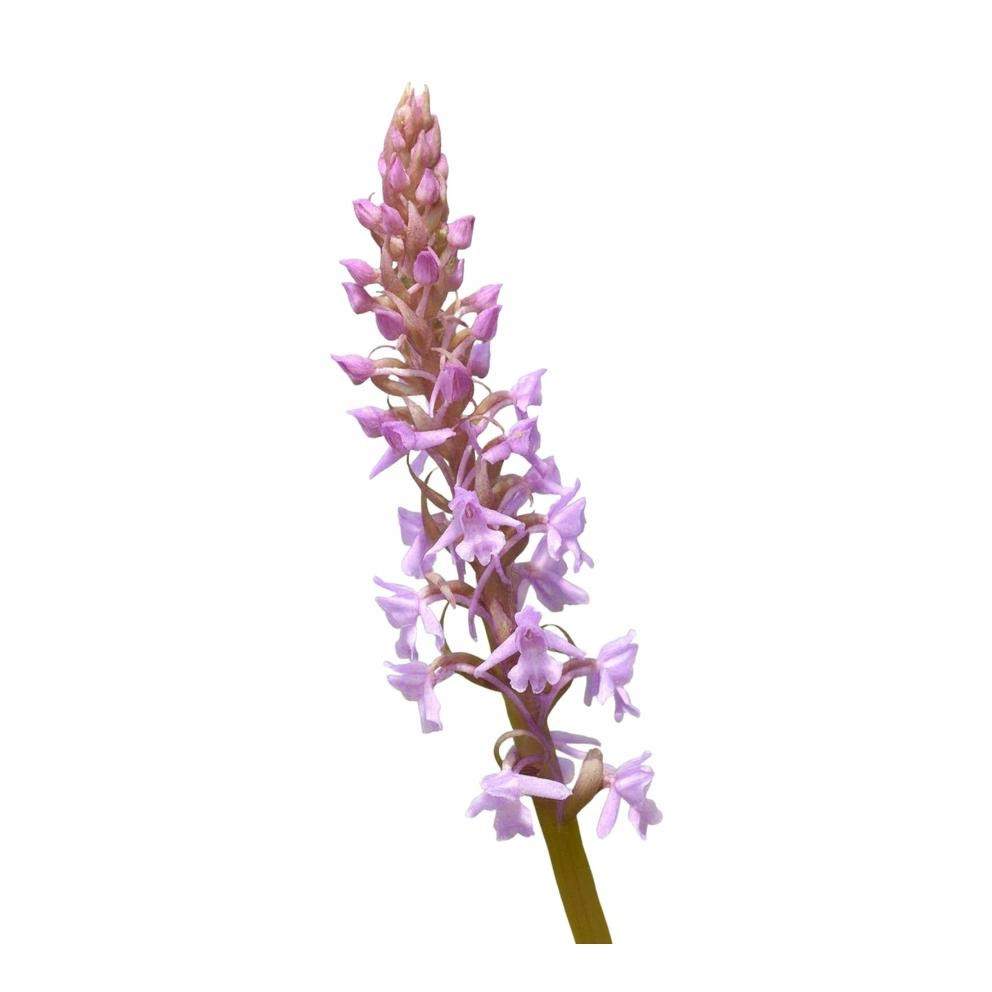
Mücken-Händelwurz / Große Händelwurz (Wildform)

Variety
Mücken-Händelwurz / Große Händelwurz (Wildform)
Approved Data
created by Alex&Sempi at 21.02.2026
Features
Growth habit
lifespan: perennial
Game Variety
growth habit: upright leaf position
growth habit: horst-forming
leaves: loosely leafed
flower: flowering
leaves: Deciduous
Cold germination
normal growth
cross-pollination
ornamental plant
self-seeding
panicle-shaped flower
height: 50 - 60 cm
wide: 20 - 30 cm
height: 40 - 50 cm
height: 30 - 40 cm
height: 60 - 80 cm
hermaphroditic
growth habit: upright flower stems
root type: bulb, tuber
entire leaves
small flowers
spicate flowers
non-woody
no lateral shoot development
Spear shaped leaves
propagation by seeds
propagation by offsets
leaves slim
perennial
insect pollination
Blätter: zugespitzt
Blätter: mittelgroß
Geschlechtertyp: einhäusig
Keimung: Lichtkeimer
Blätter: weich/zart
Blüte: duftend schwach
Wuchsform: krautig
Blätter: einfach
Schnitt: nicht erforderlich
Blätter: länglich
Wuchs: mittel
Blüte: gespornt
Blütenform: zygomorph (spiegelbildlich)
Lebenszyklus: zieht im Herbst ein
Wuchsform: terrestrisch
Life cycle: sprouts in spring
Vermehrung: samenfest
Stamm, Stiel: rund
Stamm, Stiel: fleischig
Stamm, Stiel: kahl
Blätter: rinnenförmig
Location
planting: bed
planting: outdoor
planting: house wall / wall
light: sunny to semi-shady
Soil: permeable soil
soil moisture: no waterlogging
biotope: mountain area
Fertilization: nutrient-poor
fertilization: minimal
light: Full sun
soil moisture: well-drained
biotope: forest
Soil moisture: dry to moderately moist
fertilization: low-humus
planting: heat protected
Soil: light to medium-heavy
Soil: sandy to loamy
Wind: windverträglich
fertilization: low-nitrogen
Soil: loosened
Water: Adequate
Water: sparingly
pH value: neutral to alkaline (7-8)
Soil moisture: moderately dry to fresh
Planting: rock garden / alpine garden
Planting: edge of wooded areas or beneath trees
Planting: pots, tubs, or boxes
Light: Sun
biotope: swamp / moor
fertilization: no peat
Heat requirement: cool
Boden: kalkhaltig
Nachbarn gute: trockenheitsliebende
Nachbarn schlecht: feuchtigkeitsliebend
Nachbarn schlechte: Schattenpflanzen
Good companions: calcium-loving
Good companions: sun-loving
Nachbarn schlechte: stark wuchernd
Nachbarn schlechte: hoher nährstoffbedarf
Nachbarn gute: mit niedrigen Nährstoffbedarf
Nachbarn schlechte: hochwachsend
Nachbarn gute: niedrigwachsend
Gartenstil: Naturgarten
Pflanzung: Rabatte
Pflanzung: Treppenrand
Biotop: Magerrasen, Trockenwiese
Pflanzung: Staudenbeet
Gartenstil: Präriegarten
Herkunft: einheimisch, indigen
Pflanzung: Hügelbeet
Boden: flachgründig (0-30)
Boden: karg
Pflanzung: Moorbeet
Pflanzung: Waldbeet
Biotop: Feuchtwiese
Düngung: nicht erforderlich
Gartenstil: Waldgarten
Biotop: Ruderalflächen
Pflanzung: Wiese
Fruit shape
elongated
triangular
smooth, sleek
capsule
small
Oberfläche: trocken
Form: aufrecht wachsend
Resistances
resistant
robust
disease resistant
fully hardy
hardy down to -30°C
Standorttolerant
Color
light green / pale green
light brown
glossy
Flower: light pink
medium green
yellow brown
dark rose
Flower: pink
Flower: light-violet
Oberfläche: matt
Frucht: goldgelb
Farbe: einfarbig
Stamm, Stiel: grün
Wurzel: weiß
Seeds: white/cream
Wurzel: beige
Samen: beige
Blattrippen: hellgrün
Stamm, Stiel: hellgrün
Taste
not edible
Toxizität: ungiftig
Season Overview
Sowing
Harvest
Harvest
J
F
M
A
M
J
J
A
S
O
N
D
1ST YEAR
FOLLOWING YEARS
Description
The sweet sprites (Gymnadenia) are a genus of plants in the orchid family (Orchidaceae). The genus comprises around 26 species, including those of the former genus Nigritella (black orchid). The genus name Gymnadenia is derived from the Greek gymnos, meaning naked, and aden, meaning gland (i.e., "naked gland"), referring to the often exposed viscidium in the flowers. The genus Gymnadenia is Palearctic, Some species are endemic and a few species are widespread. It comprises about 26 species, including the species of the former genus Nigritella (black orchid). There are also a large number of hybrids. Some species are endemic and a few species are widespread. It comprises about 26 species, including the species of the former genus Nigritella. There are also a large number of hybrids. Growth Gymnadenia species grow terrestrially as perennial herbaceous plants of medium height. The relatively thick, fleshy tubers are palmate with several slender, somewhat fleshy roots. The independently erect stem is slender to sturdy, round, fleshy, and glabrous. The leaves are arranged alternately on the stem. The simple leaf blades are linear-band-shaped to elliptical, and the longitudinally folded base of the blade envelops the stem. Leaf sheaths are often present at the base of the stem. Many flowers are densely clustered in terminal, head-shaped to elongated, racemose inflorescences. There are few lanceolate, sterile bracts. The fertile bracts are shorter to slightly longer than the ovary. The sessile, inferior ovary is usually slightly twisted, making the flowers resupinate (not twisted in the species of the former genus Nigritella). The glabrous ovary is narrow-cylindrical or spindle-shaped. The relatively small to medium-sized, hermaphroditic flowers are zygomorphic and trifoliate. The cylindrical spur is often slightly curved and shorter to longer than the ovary, with a blunt or bilobed tip. The tepals are pink to dark purple or, rarely, white. The middle, concave sepal and the lateral, straight petals often bend together in a helmet shape, with the two petals being slightly shorter than the sepal. The two free lateral sepals are usually spread out and bent back. The lip (labellum) is broad-rhombic to obovoid and simple to distinctly three-lobed. The column is short. The erect anthers are elongated or ovate and have two thecae. There are two club-shaped pollinia. The relatively small to elongated rostellum (adhesive gland) is indistinctly three-lobed. The two relatively small staminodia are almost spherical and located laterally at the base of the fertile anther. The two very large stigmas are located laterally at the base on each side of the column. The capsule fruits are upright. Ecology Gymnadenia species are tuberous geophytes. They have endotrophic orchid-type mycorrhiza. Attractants and pollinators In two species (mosquito orchid and fragrant orchid), 45 and 44 volatile aromatic substances, respectively, were identified by gas chromatography that attracted butterflies, of which 37 and 25 species, respectively, could be identified. In the mosquito orchid, benzyl acetate, eugenol, and benzoic acid benzyl ester were identified as attractants, while in the fragrant orchid, benzyl acetate, benzaldehyde, phenylethanal, 1-phenyl-2,3-butanedione, phenylethyl acetate, eugenol, and an unidentified component were identified as attractants.
Non hybrid
Frostproof
Growing tips
Location Light: Sunny to semi-shady, no extreme midday heat. Soil: Fresh to moderately moist, humusy, rich in lime, well-drained. Suitable for: Natural gardens, wet meadows, dry meadows, extensively maintained flower meadows. Planting Time: Spring or fall. Tubers: Plant flat, soil not too rich in nutrients. Spacing: 20-30 cm, as they can form clumps. Care Watering: Keep the soil evenly fresh to slightly moist. Avoid waterlogging Fertilization: No fertilization - they prefer lean soils. Winter hardiness: Fully hardy down to -20 °C. Propagation: By seed (slow, requires mycorrhizal fungi). Vegetatively by tuber formation. Special features Flowering time: June to August, depending on species. Flower colors: Pink to purple, fragrant, attract many insects. Height: 30-70 cm. Species diversity: Several species in Europe, e.g. Gymnadenia conopsea (mosquito orchid), Gymnadenia odoratissima (fragrant orchid). Ecological importance: Important wild orchids, pollinator-friendly.
Details


Light requirement
Sunny

Water requirement
Dry

Soil
Medium (loamy)

Nutrient requirement
Low

Light germinator

Plant distance
25 cm

Row spacing
35 cm

Seeding depth
4 cm

Companion Plants

Antagonistic Plants

Diseases
Root Rot
Grey mold
Fusarium
Pests
Land snails
Larvae
Aphids
Voles