Glockenblumen - lat campanula

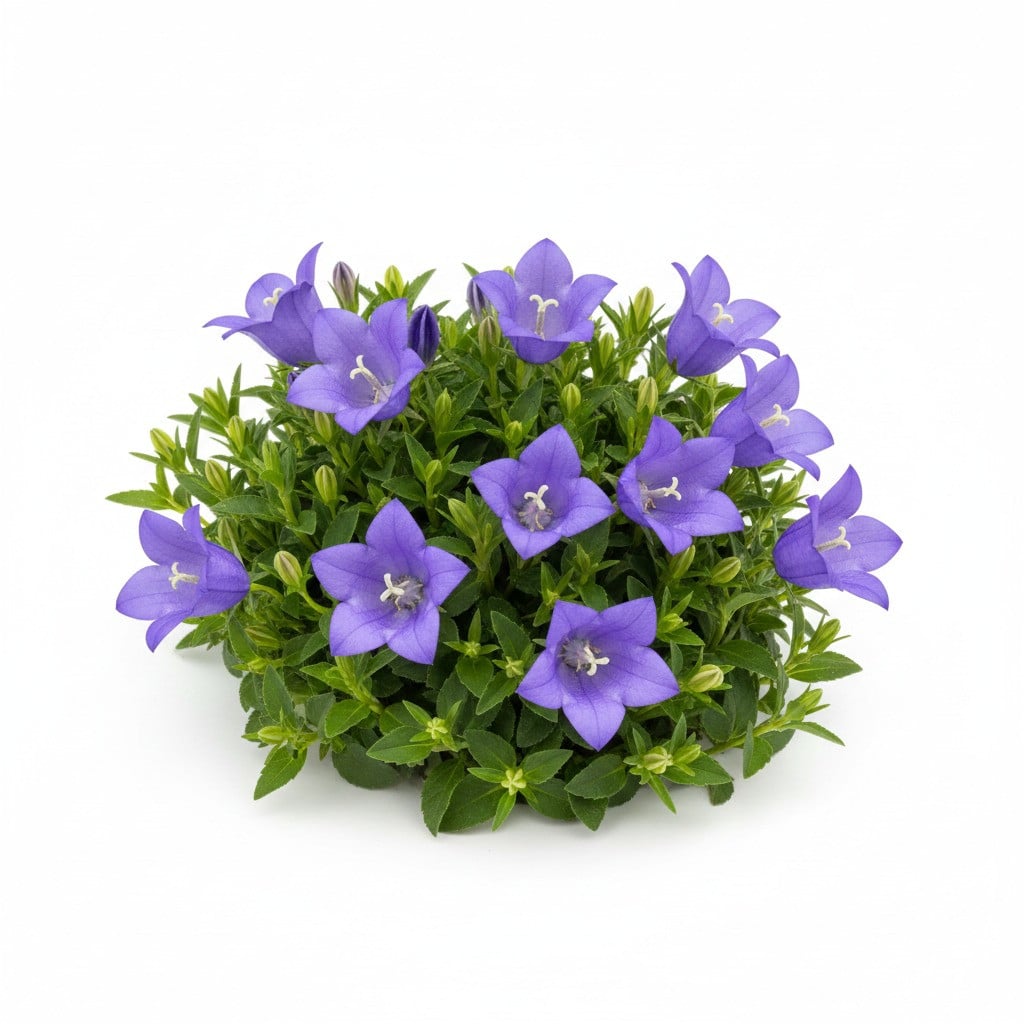
Glockenblumen - lat campanula
Campanula
Plant family
Bellflower family (Campanulaceae)
Season Overview
Propagating
Planting
Harvest
J
F
M
A
M
J
J
A
S
O
N
D
1ST YEAR
FOLLOWING YEARS
Details


Germination temperature
15 – 20 °C (Degrees Celsius)

Plant distance
20 cm

Row spacing
20 cm

Seeding depth
Not specified
Instructions
Description
Bellflowers are usually perennial, herbaceous plants. They typically bloom in shades of blue to purple, though white-flowering varieties also exist. Depending on the species, the ideal growing conditions vary widely. Some need almost swamp-like habitats, while others are classified as rock garden perennials. Several varieties are used as leafy vegetables, and some blossoms are not only beautiful in a vase but also excellent for culinary uses, for example candied. Other types are said to have healing properties, especially for relieving cold symptoms.
Growing tips
If you are interested in bluebells, we recommend that you find out which variety is suitable for your desired location. It is also worth noting that there are beautiful native varieties, some of which are also on the red list. Insects also enjoy the flowers. What more could you want than to fill your salad bowl with flowers from the bed and do something good for the environment at the same time?

Companion Plants
No companion plants

Antagonistic Plants
No antagonistic plants

Diseases
No diseases

Pests
No pests