Orchids - Dendrobium

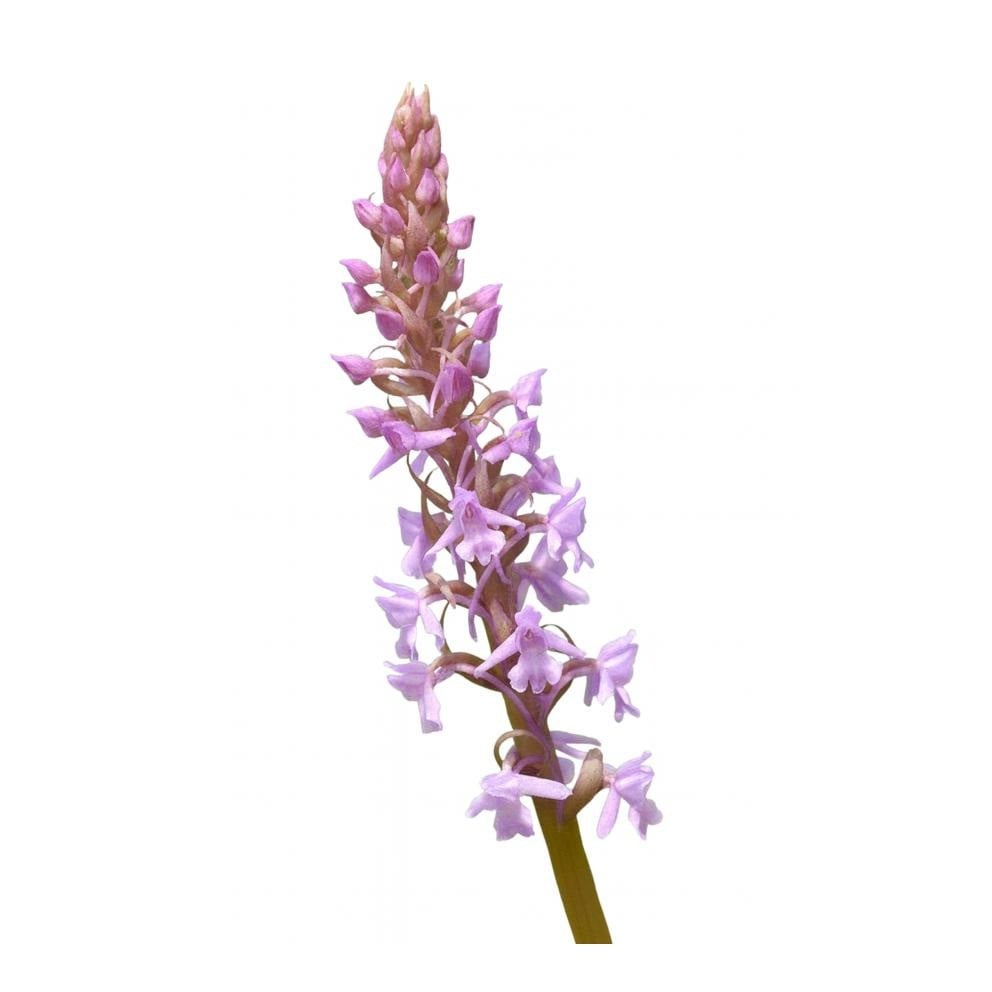
Orchids - Dendrobium
Gymnadenia
Plant family
Orchid family (Orchidaceae)
Cultivation Break
0 Years
Season Overview
Sowing
Harvest
Harvest
J
F
M
A
M
J
J
A
S
O
N
D
1ST YEAR
FOLLOWING YEARS
Details


Light requirement
Sunny

Water requirement
Dry

Soil
Light (sandy)

Nutrient requirement
Low

Light germinator

Plant distance
25 cm

Row spacing
35 cm

Seeding depth
4 cm
Instructions
Description
Gymnadenia is a genus of plants in the orchid family (Orchidaceae). The genus comprises around 26 species, including the species of the former genus Nigritella. The genus name Gymnadenia is derived from the Greek gymnos: naked and aden: Gland, (i.e. "naked gland"), it refers to the often exposed adhesive disk (viscidium) in the flowers. The genus Gymnadenia is Palaearctic, widespread in the west from the Iberian Peninsula through Europe, western and central Asia to China (five species, three of which are found only there), Korea and Japan in the east. Some species are endemic and a few species are widespread. It comprises about 26 species, including the species of the former genus Nigritella. There are also a large number of hybrids. Growth Gymnadenia species grow terrestrially as perennial herbaceous plants of medium height. The relatively thick, fleshy tubers are palmately divided, each with several slender, somewhat fleshy roots. The independently erect stem is slender to sturdy, round-stemmed, fleshy and glabrous. The leaves are arranged alternately on the stem. The simple leaf blades are linear-banded to elliptical and the longitudinally folded blade base envelops the stem. Leaf sheaths are often present at the base of the stem. Many flowers are densely clustered in terminal, cephalic to elongated, racemose inflorescences. There are a few lanceolate, sterile bracts. The fertile bracts are shorter to slightly longer than the ovary. The sessile, inferior ovary is usually somewhat twisted, making the flowers resupinate (not twisted in the species of the former genus Nigritella). The glabrous ovary is narrow-cylindrical or spindle-shaped. The relatively small to medium-sized, hermaphrodite flowers are zygomorphic and three-celled. The cylindrical spur is often slightly curved and shorter to longer than the ovary, with a blunt or two-lobed end. The petals are pink to dark purple or rarely white. The central, concave sepal and the lateral, straight petals often bend together in a helmet shape; the two petals are somewhat shorter than the sepal. The two free, lateral sepals are usually spread out and bent back. The lip (labellum) is broad-rhombic to obovate and simple to distinctly three-lobed. The column is short. The erect anthers are elongated or ovoid and have two thecae. There are two club-shaped pollinia. The relatively small to elongated rostellum (adhesive gland) is indistinctly three-lobed. The two relatively small staminodes are almost spherical and are located laterally at the base of the fertile anther. The two very large stigmas are located laterally at the base on each side of the column. The capsule fruits are erect. Ecology Gymnadenia species are tuberous geophytes. An endotrophic mycorrhiza of the orchid type is present. Attractants and pollinators Gas chromatography identified 45 and 44 volatile aroma compounds that attracted butterflies in two species (mosquito orchid and fragrant orchid), of which 37 and 25 species could be identified. Acetic acid benzyl ester, eugenol and benzoic acid benzyl ester were identified as attractants in the case of mosquito hand-root, while acetic acid benzyl ester, benzaldehyde, phenylethanal, 1-phenyl-2,3-butanedione, phenylethyl acetate, eugenol and an unidentified component acted as attractants in the case of fragrant hand-root.
Origin:
Iberian Peninsula, Europe, West and Central Asia, China, Korea, Japan
Growing tips
Location Light: Sunny to semi-shady, no extreme midday heat. Soil: Fresh to moderately moist, humusy, rich in lime, well-drained. Suitable for: Natural gardens, wet meadows, dry meadows, extensively maintained flower meadows. Planting Time: Spring or fall. Tubers: Plant flat, soil not too rich in nutrients. Spacing: 20-30 cm, as they can form clumps. Care Watering: Keep the soil evenly fresh to slightly moist. Avoid waterlogging Fertilization: No fertilization - they prefer lean soils. Winter hardiness: Fully hardy down to -20 °C. Propagation: By seed (slow, requires mycorrhizal fungi). Vegetatively by tuber formation. Special features Flowering time: June to August, depending on species. Flower colors: Pink to purple, fragrant, attract many insects. Height: 30-70 cm. Species diversity: Several species in Europe, e.g. Gymnadenia conopsea (mosquito orchid), Gymnadenia odoratissima (fragrant orchid). Ecological importance: Important wild orchids, pollinator-friendly.

Companion Plants

Antagonistic Plants

Diseases
Root Rot
Grey mold
Fusarium
Pests
Land snails
Larvae
Aphids
Voles