Morning glories

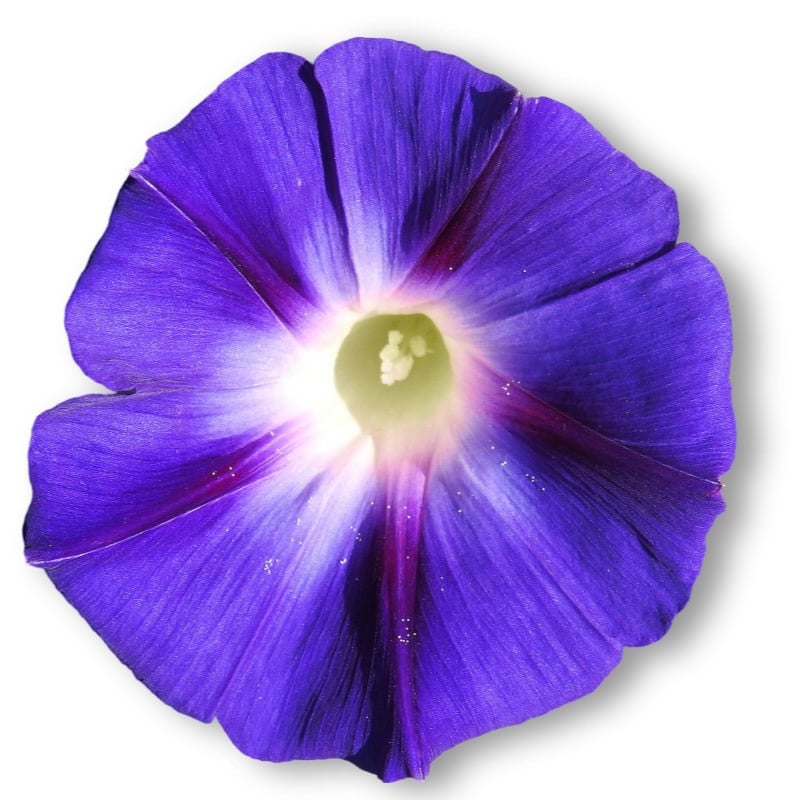
Morning glories
Ipomoea spec.
Plant family
Morning Glory family (Convolvulaceae)
Season Overview
Propagating
Planting
Harvest
Harvest
J
F
M
A
M
J
J
A
S
O
N
D
1ST YEAR
FOLLOWING YEARS
Details


Light requirement
Semi-shaded

Water requirement
Moist

Soil
Light (sandy)

Nutrient requirement
High

Light germinator

Germination temperature
15 - 20 °C (Degrees Celsius)

Plant distance
40 cm

Row spacing
50 cm

Seeding depth
0.5 cm
Instructions
Description
Showy bindweed originates from the tropics and subtropics. Of the approximately 650 species worldwide, only two are native to the Mediterranean region. The genus botanically known as Ipomoea - sometimes also Ipomea - is the most species-rich in the bindweed family (Convolvulaceae) and, with the sweet potato (Ipomoea batatas), has one of the most important useful plants in its ranks. Many ornamental climbing plants with colorful funnel-shaped flowers play an important role in garden culture. Appearance and growth The genus Ipomoea consists of mostly climbing plants that can twine themselves up climbing supports with shoots up to five meters long. If there is no support or cords to pull them up, they twine and creep along the ground. The creeping shoots of the sweet potato develop from an edible tuber. Ipomoea species rarely grow as upright herbaceous plants or shrubs. There are also said to be floating species. In our climate, the annuals to perennials are usually cultivated as annuals and are appreciated for their exuberant flowering throughout the summer. However, the bindweed plants have one peculiarity: the flowers of many bindweeds open in sunny places before dawn and are sometimes already faded by midday. But by the next morning, new flowers have already appeared. The often funnel-shaped flowers appear in shades of white, red or blue. The leaves sit alternately on the plants and can be of different shapes: from whole-margined to toothed to lobed. Uses The ornamental forms of morning glories are suitable for trellises, fences and pergolas. The annual climbing plants are a popular privacy screen in the garden. Sweet potatoes, on the other hand, can be grown as a vegetable. Ornamental forms of sweet potato, selected for their decorative leaves, are used for decorative purposes in summer floral arrangements. Both useful and ornamental plants can be found in the bindweed genus: While the funnel bindweed 'Milky way' (Ipomoea purpurea 'Milky way', left) is characterized by its white, star-shaped flowers, the sweet potato (Ipomoea batatas, right) is mostly characterized by its nutritious tubers.
Origin:
Tropics, subtropics
Growing tips
Sowing and planting morning glories To grow morning glories, sow the seeds in pots in the greenhouse from March to April and prick out three to four plants in a pot with a diameter of twelve centimetres or sow three to five seeds per pot directly. Tip: Soak the seeds in water overnight. After germination, it is important to attach stakes for the bindweed to climb up. Pre-cultivation should take place in as light a place as possible at around 15 degrees Celsius and above. If you do not have optimal conditions for growing, you can use pre-grown plants from the trade. The heat-loving young plants are planted outdoors after the Ice Saints in mid-May. Prepare the soil well, as morning glories need a very deep and nutrient-rich soil because they are very hungry due to their strong growth. Care tips Prunus bindweed needs a climbing support and must be watered and fertilized sufficiently. Are morning glories hardy? The tropical species do not tolerate sub-zero temperatures and need minimum temperatures of seven to ten degrees Celsius. Most morning glories are therefore cultivated here as annuals. Propagation Depending on the species, bindweed can be propagated by seed or by cuttings. Head or semi-mature cuttings are taken from summer onwards. The seeds are grown indoors. Only Ipomoea purpurea, the hardiest species for our climate, can be sown directly outdoors from April/May. Diseases and pests Pruning bindweed can have problems with whitefly and red spider mite.

Companion Plants

Antagonistic Plants
Broccoli
Broccoli raab / Stem cabbage / Cima di rapa
Brussels sprouts
Cabbage (Cabbage)
Cabbage (Pointed cabbage)
Cabbage (red cabbage)
Cabbage (Savoy cabbage)
Cauliflower
Collard greens
Collard greens (Kale)
Collard greens (Tuscan kale / Dinosaur kale / Palm tree kale)
Funk
Kohlrabi / German turnip / Turnip cabbage
Make
Napa cabbage / Chinese cabbage
Pumpkin / Squash

Diseases
Septoria
Root Rot
Angular leaf spot of cucumber
Powdery mildews

Pests
Aphids
Spider mites
White fly