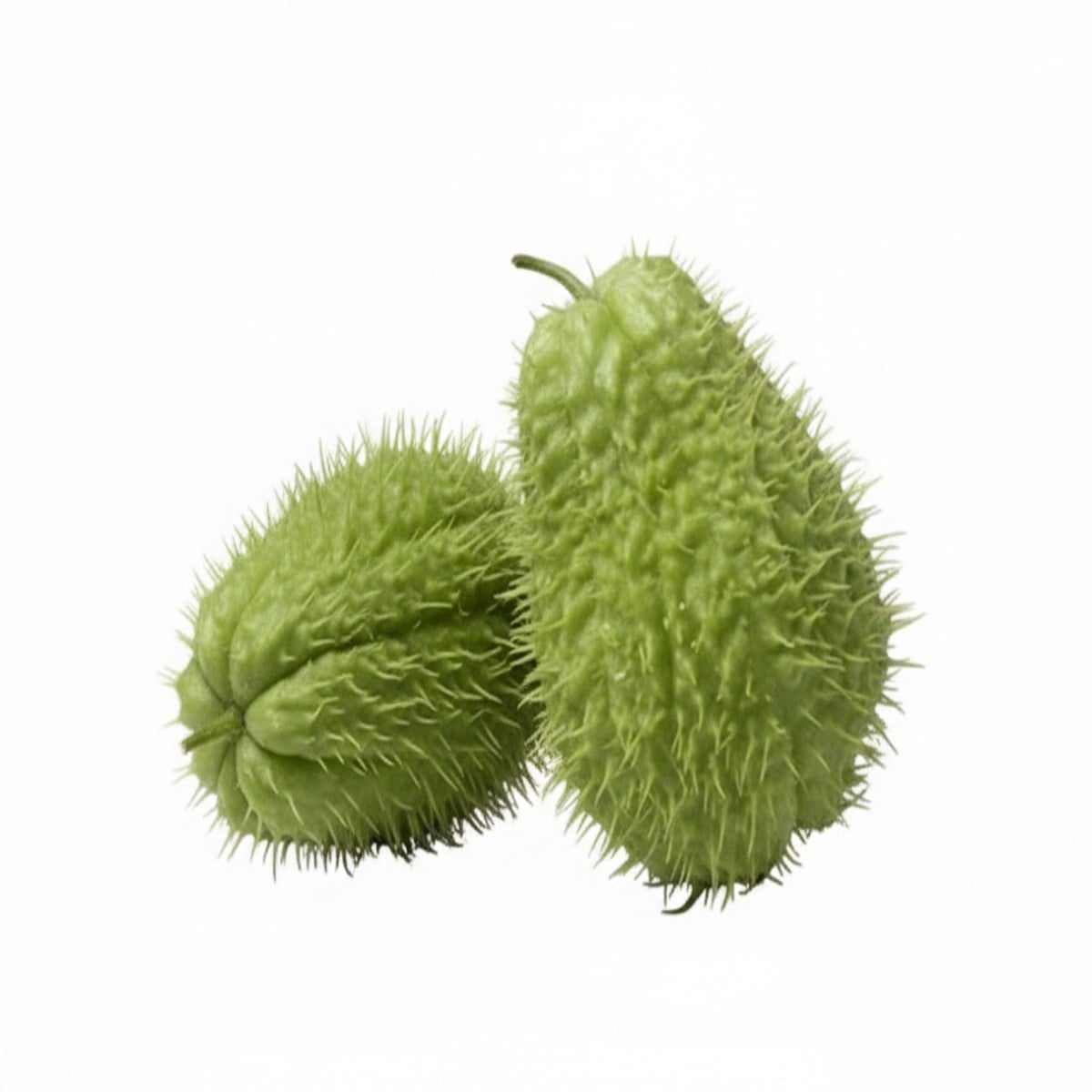
Stachelige Chayote 'Green Spiny'

Variety
Stachelige Chayote 'Green Spiny'
created by Alexandro at 18.02.2026
Features
Growth habit
growth habit: rank
growth habit: high ranking
growth habit: high
harvest: profitable
wide: over 400 cm
root type: bulb, tuber
height: over 400 cm
root type: shallow-rooted
lifespan: perennial
Color
green
Blüte: hellgrün/blassgrün
Taste
cabbage flavor
Apple aroma
Cucumber aroma
Resistances
Fusarium wilt-resistant
Aphid-resistant
powdery mildew resistant
drought tolerant
Location
planting: greenhouse
planting: outdoor
Heat requirement: high
planting: house wall / wall
fertilization: high
Planting: mounds / ridges
soil moisture: no waterlogging
Fertilization: nutrient-rich
light: Full sun
Soil: light
Soil: light to medium-heavy
Fruit shape
grooved
drop-shaped
pear-shaped
bottle-shaped
thick
wrinkled
egg-shaped
large
hairy
spiny
Typ: Schließfrucht - Beere
Season Overview
Propagating
Planting
Harvest
J
F
M
A
M
J
J
A
S
O
N
D
Description
The chayote (Sechium edule) belongs to the cucurbit family (Cucurbitaceae). It is a vigorous climber and, in addition to the fruit, the young shoots and roots are also edible. The light to dark green, pear-shaped fruits with their firm flesh grow to between 10 and 20 cm in size and weigh up to 1 kg. The skin has grooves and spines. They can only be stored for a short time, as the seed inside the fruit quickly begins to germinate. The plant is actually perennial, but due to its sensitivity to frost, it rarely survives the winter in our climate. It can also be grown in pots, and it is best to attach the vines to a trellis. The taste is reminiscent of zucchini or kohlrabi.
Non hybrid
Not frost resistant
Growing tips
Chayote likes it warm and in cool regions it is recommended to grow it in a greenhouse, although it can take up a lot of space. It is a heavy feeder. Plants that like partial shade can grow well under its tendrils. The crop rotation should be observed. To grow the chayote, simply place the ripe fruit halfway into the soil (the pot should hold at least 5 liters). Keep the soil in the 2-3 only slightly moist and place in a warm place (25-29°C). Roots and shoots should then have formed. Now water well and tie the plant up. After the last frosts, plant out and place in the fertilized soil at a 45° angle up to the base of the shoot. Continue to water and fertilize regularly. Shoots should be shortened or cut off from time to time, as otherwise the plant can gain the upper hand and at the same time ensure healthy growth. Several chayote plants next to each other increase the yield but are not necessary for fertilization as they are pollinated by insects. The fruits are harvested when they are still hard, as they can rot quickly. Harvest before the first frost at the latest. Treatment with horsetail tea prevents mildew.
Details


Light requirement
Sunny

Water requirement
Moist

Soil
Medium (loamy)

Nutrient requirement
High

Germination temperature
22 – 28 °C (Degrees Celsius)

Plant distance
100 cm

Row spacing
100 cm

Seeding depth
7 cm

Companion Plants

Antagonistic Plants

Diseases
Soft rot
Grey mold
Downy mildew
Powdery mildews

Pests
Land snails
Spider mites
Leaf-miner flies
Aphids
White fly