Violets

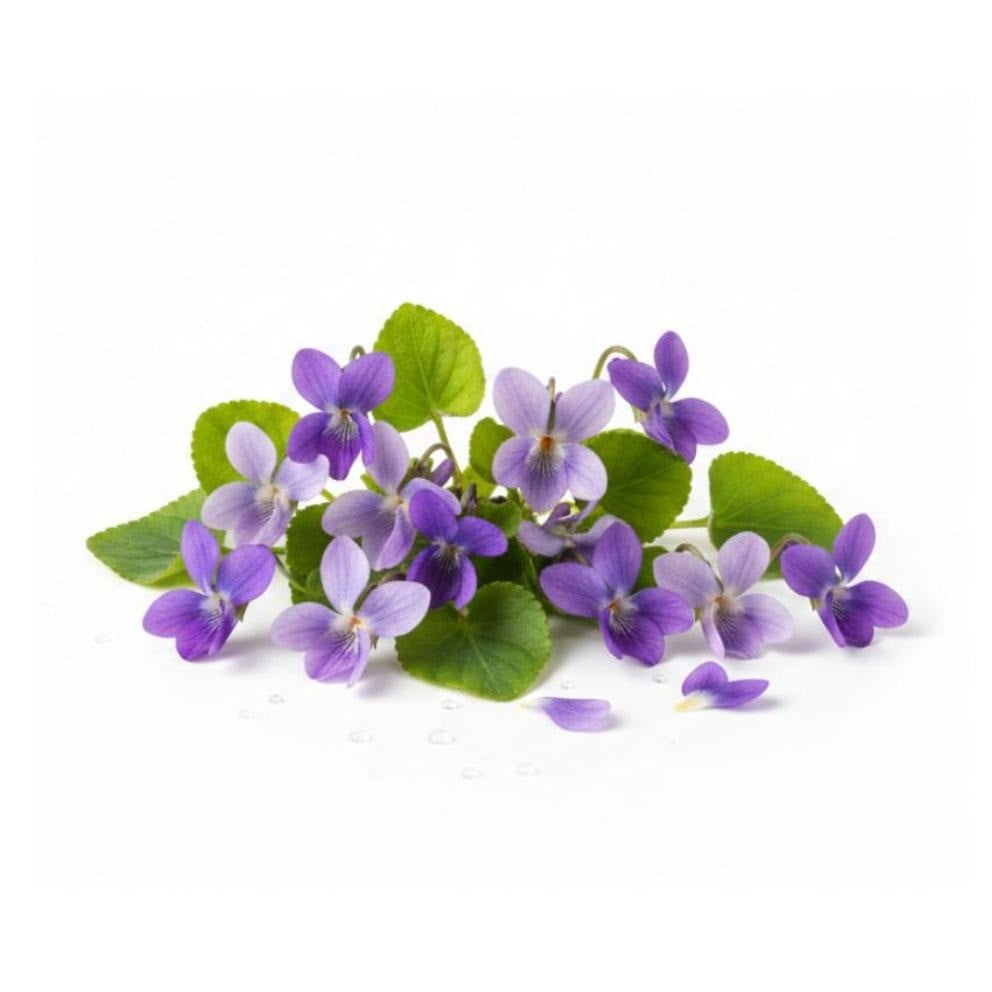
Violets
Viola
Plant family
Violet family (Violaceae)
Cultivation Break
0 Years
Season Overview
Propagating
Planting
Harvest
J
F
M
A
M
J
J
A
S
O
N
D
1ST YEAR
Details


Light requirement
Semi-shaded

Water requirement
Moist

Soil
Medium (loamy)
Nutrient requirement
Medium

Dark germinator

Germination temperature
15 - 18 °C (Degrees Celsius)

Plant distance
20 cm

Row spacing
25 cm

Seeding depth
0.5 cm
Instructions
Description
The genus Violets or Violas belongs to the family of violets (Violaceae). There are 400-650 species. Pansies, horned violets and scented violets are popular species. Violets are annuals to perennials, and are suitable as ground covers and group plants for flower beds. They grow to about 10 inches tall. Their flowers come in colors ranging from yellow to red, purple and blue, and rarely whitish, brownish or black. They are grown as an ornamental, medicinal and culinary plant, and also for cosmetic purposes.
Origin:
In the temperate regions of the world, especially North America, the Andes and Japan.
Growing tips
Cut off after flowering in the fall. The soil should never dry out. Often self-propagate by self-seeding or insects. Otherwise by seed or cuttings. Sow in spring or fall on a mild, frost-free day. Cold germinators. Winter hardy. Sowing time depends on variety. Good planting partners are white Christmas roses, ornamental sedges or bulbous flowers, evergreens, ferns, liverworts, foamworts, funcias, lily of the valley, astilbes, bellflowers, lungworts, deadnettles, crocuses, snowdrops and winter bulbs.

Companion Plants
Anemone
Bergenias
Borage
Chard
Chervil
Chives
Coriander / Cilantro
Crocus
Currant
Daffodils / Narcissus
Elderberry
Funk
Hazelnut
Hellebores
hornbeams
Knotted flowers
Kohlrabi / German turnip / Turnip cabbage
Lettuce (Common chicory)
Lettuce (Endive / Escarole / Erisée)
Lettuce (Lamb's lettuce)
Lettuce (Lettuce)
Lettuce (Puntarelle / Cicoria di catalogna / Cicoria asparago)
Lettuce (Radicchio / Italian chicory)
Lettuce (Sugar loaf)
Lily of the valley
Lung herbs
Make
Maples
Parsley
Primula
Privet
Purple bellflower, silver bellflower
Quadriceps
Radishes
Rock pear (Amelanchier)
Root parsley
Rowanberries / Serviceberries
Snowdrop
Sour cherry / Tart cherry
Spinach (Summer)
Spinach (Winter)
Sweet woodruff / Sweetscented bedstraw
Wild Cherry / Bird Cherry / Sweet Cherry
Wild garlic

Antagonistic Plants
Abyssinian cabbage / Ethiopian mustard
Bean ((Scarlet) runner bean)
Bean (Broad bean / Faba bean / Field bean)
Bean (Dwarf bean)
Bean (Hyacinth bean / Lablab-bean)
Bean (Lima Bean)
Bean (Runner bean)
Beetroot
Blueberry
Broccoli
Broccoli raab / Stem cabbage / Cima di rapa
Brussels sprouts
Brussels sprouts
Cabbage (Cabbage)
Cabbage (Pointed cabbage)
Cabbage (red cabbage)
Cabbage (Savoy cabbage)
Carrots
Cauliflower
Celery (Celeriac / Celery root)
Celery (Celery)
Celery (Leaf celery / Chinese celery)
Cherry laurel
Chickpea
Chili
Chinese kale - Kai-lan / Chinese broccoli
Collard greens
Collard greens (Kale)
Collard greens (Tuscan kale / Dinosaur kale / Palm tree kale)
Common mugwort
Coneflower (Echinacea)
Courgette / Zucchini
Cucumber (Caigua)
Cucumber / Gherkin
Dill
Evergreen
Garden squash - Patisson / UFO squash
Garlic
Garlic chives
Grasses - Bamboos
Grasses - feather-bristled grasses, lamp-cleaning grasses
Grasses - Pampas grass
Grasses - reeds, cattails, bulrushes
Grasses - Sedges, Rushes
Hair cucumbers / snake gourds
Ivy
Jerusalem artichoke / Topinambur
Large cranberry / American cranberry
Larkspur
Lavender
Leeks
Lingonberry / Partridgeberry / Mountain cranberry
Mint
Mizuna / Japanese mustard greens
Napa cabbage / Chinese cabbage
Onion
Onion (Spring onion)
Oregano
Ornamental pumpkin
Pak Choi
Parsnip
Pea
Peony
Pepper / Paprika
Pines
Potato
Pumpkin / Squash
Rapeseed
Rapeseed - Sheer cabbage / Siberian cabbage
Rapini / Broccoli rabe
Rhododendron
Rosemary
Rutabaga / Swedish turnip
Sage
Soybean
Spruce trees
Stem herbs
Sunflower
Sweet pea
Sweet potato
Thyme
Tomato (Bush tomato)
Tomato (Cocktail bush tomato)
Tomato (Cocktail Stake Tomato)
Tomato (Stake tomato)
Tree of Life, Thuja
Turnip
Turnip greens - Choy Sum / Chinese flowering cabbage
Turnip greens - Mizuna
Turnip greens - Tatsoi
Turnip-rooted chervil
Turnips - Oilseed turnips
Turnips - Wild turnips
Vegetable cabbage - Forage cabbage
Vegetable cabbage - Ribbed cabbage / Portuguese cabbage
Vegetable cabbage - wild cabbage / ancient cabbage
Yalta tomatoes

Diseases
Downy mildew
Root Rot
Powdery mildews
Grey mold

Pests
Caterpillars
Aphids
Land snails